

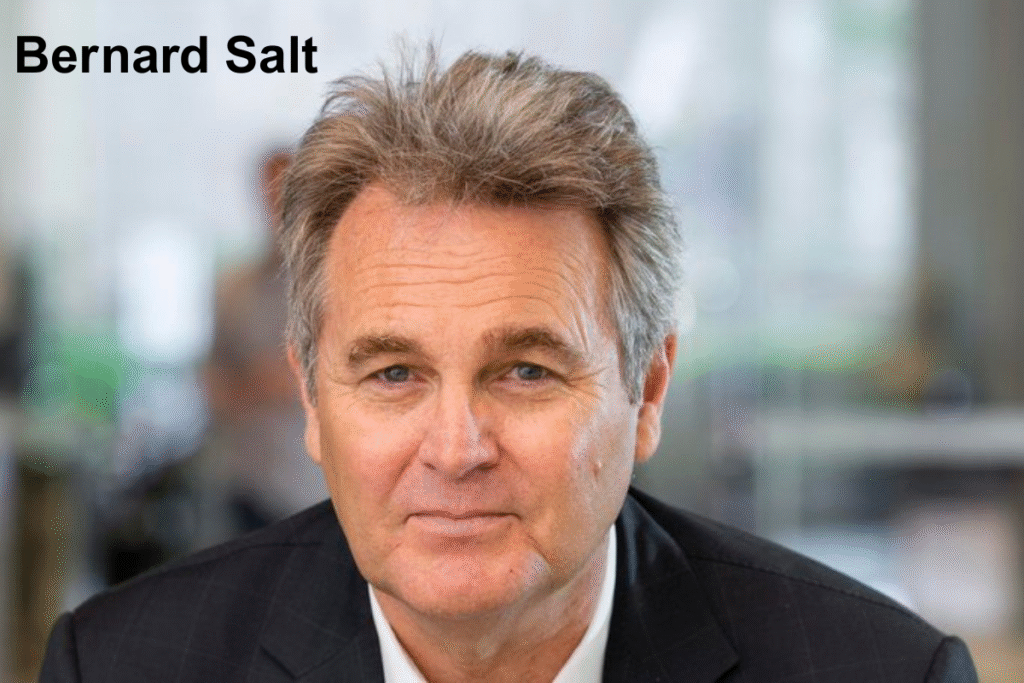
Bernard Salt has become one of the most recognisable public voices in Australia when it comes to understanding demographic change, generational behaviour and shifting cultural patterns. Over the past two decades, his columns, books, presentations and media appearances have made complex population data and social analysis accessible to everyday readers, business leaders, policy makers and regional communities across the country. Salt’s ability to take raw demographic information and translate it into memorable phrases, cultural observations and provocative questions has given him a distinctive presence in the Australian media landscape. He has defined and popularised concepts that have become part of national conversation, including the “Seachange Shift”, the “Man Drought”, the “Goats Cheese Curtain”, and what might be his most famous contribution to modern debate, the phrase “smashed avocados.”
Salt is best known for his long-running role as a columnist for The Weekend Australian Magazine, where he has written weekly pieces since the early 2000s. These columns capture emerging population movements, lifestyle preferences and generational shifts long before they become mainstream topics of discussion. His language has a way of summarising big national changes with everyday examples drawn from regional communities, middle-Australia behaviours and subtle cultural patterns. In doing so, he has allowed readers to see themselves and their families in demographic data rather than viewing population change as something distant and abstract.
Early Focus on Demography and Published Work
Bernard Salt’s published work forms the backbone of his public contribution. His first major book, “The Big Shift”, was released in 2001 and quickly became one of Australia’s most talked-about examinations of population change. The book explored how settlement patterns were changing from one part of the country to another, how suburbs and regions were evolving, and how demographic trends would affect housing, migration, lifestyle and economic development in the decades ahead. “The Big Picture”, published in 2006, continued this line of inquiry but became more reflective about cultural change, social values and the deeper narratives of Australian life. “Man Drought”, released in 2008, became particularly influential for its examination of gender patterns, relationship dynamics and the balance of men and women in different parts of the country. Later works such as “The Big Tilt” in 2011 and “Decent Obsessions” in 2013 illustrated Salt’s growing interest in cultural behaviour, generational differences, urban growth, sustainability and long-term planning.
These books established Salt as one of the nation’s leading interpreters of demographic information. Rather than simply presenting statistics, he sought to understand what those numbers meant for ordinary Australians — how regional towns might change in the future, what trends might influence property demand, whether certain age groups would reshape labour markets, and how changing family structures would influence social policy. Readers of his books often comment that he writes about data in a way that feels personal, relevant and conversational, offering a style that combines academic thinking with practical observation.
Professional Career and Business Advisory Work
Bernard Salt built much of his career in corporate advisory work. For several decades he was a Partner in a global advisory firm, where he specialised in demographic advice for business strategy, consumer trends and market forecasting. He met with corporate boards, industry leaders, government agencies and policy advisers who wanted to understand long-term patterns before making investment or planning decisions. His consulting approach has always been based on reading population data in plain language, identifying trends early and helping decision-makers think beyond short-term market conditions.
In 2017 Salt founded The Demographics Group, an independent business dedicated to analysing population change for commercial, urban planning, retail, infrastructure and strategic projects. The Demographics Group produces data-driven presentations, research reports, board briefings and keynote speeches that help organisations structure decisions around demographic realities rather than assumptions. The consultancy works across many fields including residential development, finance, telecommunications, education, healthcare, aged care, consumer products and government planning. Its public presence reinforces Salt’s reputation as someone whose expertise is not just media-based but deeply rooted in professional advisory work.
Media Presence, Public Commentary and Communicating Trends
Salt’s media career expanded beyond newspaper columns. Over a three-year period he hosted a business television program on Sky Business titled “The Next Five Years.” The show was built around interpreting future trends and providing insight into what different economic, social and population shifts might mean in the medium term. His ability to communicate ideas through television extended his reach beyond traditional print audiences and allowed business viewers to connect directly with emerging demographic concepts.
Salt later presented a top-rating podcast called “What Happens Next,” in which he explored upcoming challenges and opportunities in Australian life through a forward-looking lens. The podcast reflected his belief that demographic thinking must include not only data but imagination — a willingness to consider how new patterns might emerge and how values might continue to shift. Across all media formats, he has retained a consistent tone: conversational, often humorous, occasionally provocative, but always relying on observable information.
His weekly column in The Weekend Australian Magazine remains one of his most visible contributions. These columns often begin with an ordinary observation — a supermarket product, a commuter pattern, a small town name, a coast road or a new cultural habit — and develop into persuasive pieces about the future shape of society. In this respect, Salt has bridged the gap between statistical analysis and cultural storytelling by showing how everyday lifestyle choices reflect deeper demographic forces.
Academic and Professional Recognition
Bernard Salt is not simply a media figure or corporate consultant. His academic credentials contribute to the authority with which he writes and speaks. He served as an adjunct professor at Curtin University Business School in Perth from 2011 to around 2019 or 2020, offering a bridge between educational institutions and real-world demographic analysis. He has also held board positions in education, arts and cultural organisations, reflecting his broader engagement with public life beyond media and consulting.
Salt was awarded the honour of Member of the Order of Australia (AM) in the 2017 Australia Day Honours. This recognition marked his contribution to demography, social commentary and corporate advisory work, affirming the national significance of his approach to explaining trends, behaviours and long-term patterns. Being recognised at this level indicates how much public discourse has been shaped by his vocabulary and his interpretation of Australian demographic shifts.
Influence on National Debate: The “Smashed Avocado” Moment
One of the reasons Bernard Salt has been spoken about so extensively in Australian media is his knack for capturing cultural tension in a single phrase. In 2016 he wrote a column suggesting that some younger Australians might be spending money on café items such as “smashed avocados” instead of saving for property deposits. His intention was to draw attention to generational spending patterns and consumer behaviour, but the phrase quickly escalated into a national talking point. It triggered debate over whether individual lifestyle choices were connected to housing affordability, whether structural problems were the real issue, and whether generational expectations had shifted in ways that older Australians did not always recognise.
The “smashed avo” discussion gained global attention and became one of the cultural reference points of modern Australian commentary. Even those who disagreed with Salt’s argument acknowledged that he had effectively highlighted a broader conversation about cost of living, youth priorities, debt, intergenerational equity and property ownership in Australia. Although the debate was contentious, it reinforced Salt’s position as someone whose writing can influence how Australians talk about difficult issues.
Public Approach to Demography and Storytelling
Salt’s reputation is built not just on observation, but on interpretation. He is known to convert numerical information into social language and identity markers, whether that means describing cultural lines between urban suburbs, recognising distinct consumer groups or identifying behavioural patterns linked to location. Expressions like the “Seachange Shift” illustrate his observation that certain Australians are leaving cities to pursue a lifestyle by the water. The “Man Drought” frames demographic imbalance in rural areas where women outnumber men. The “Goats Cheese Curtain” refers to cultural divides that appear through food choices, signalling different attitudes and values between communities.
The language he uses is memorable, but behind the humour sits an argument grounded in census data, migration figures, age distribution, housing demand and job availability. Salt insists that demographic data is not static; it is shaped by aspiration, emotion, nostalgia, career opportunity and family choice. In this way, he depicts demography not simply as population science but as the study of what people want and how those desires shape Australia.
Continuing Impact and Current Role
Bernard Salt continues to write, research, speak and consult on demographic issues. His focus remains on identifying upcoming shifts that could influence business decisions, government planning, regional development, consumer strategy and social understanding. His work encourages audiences to think long-term: not just what is happening in the present but what is coming over the next decade.
He remains a constant presence in public policy discussion because he raises questions that cut across sectors. How will aging populations shape healthcare and retirement economics? What does remote work mean for regional property markets? How are cultural values changing in suburbs once considered traditional or predictable? Which Australian regions are gaining population momentum and which are losing it? These questions are not just abstract matters of curiosity; they determine where businesses invest, where governments prioritise funding and how communities evolve.
Salt’s writing continues to attract readers because it represents a blend of professional analysis and social commentary. His approach does not lecture; instead it invites readers to reflect on their own habits, their family histories and their sense of belonging in an evolving country. He often writes about small things — cafés, country towns, supermarkets, commuter trains, street names, textiles, food trends, rental markets — and then turns these elements into gateways to bigger thoughts about identity, economy and change.
Bernard Salt’s Influence on Regional Population Movements
One of Bernard Salt’s recurring interests is the way population movement reshapes Australian regions over time. He has focused particularly on the shift from major cities to coastal and regional communities, a trend he famously described as the “Seachange Shift.” According to Salt, lifestyle preferences, work-from-home opportunities, affordability pressures and changing values have encouraged many Australians to reconsider metropolitan living. His research highlights an evolving relationship between coastal life, small-town identity and quality of life. Salt argues that regional growth has implications for infrastructure planning, healthcare, education, employment and real estate strategy. He has also monitored the evolution of smaller cities such as Ballarat, Bendigo, Wollongong and the Sunshine Coast, pointing out that these places often attract working families, remote professionals and new industries. Through his commentary, Salt has encouraged government agencies to think long term about transport, digital connectivity and land supply to ensure regional growth remains sustainable.
The Demographics Group and Its Role in Corporate Decision-Making
The Demographics Group, founded by Bernard Salt in 2017, is central to his ongoing impact on business strategy and planning. The group provides advisory services that translate demographic data into practical strategic understanding. Its research is used by corporate boards, infrastructure planners, property developers, retail groups and financial institutions to anticipate future demand. Salt’s presentations often use census data and market analysis to show how shifts in age distribution, immigration, household size and regional migration can influence commercial performance. Many Australian companies seek demographic briefing sessions before launching new products, entering new markets or completing multi-million-dollar investments. Salt’s consultancy has developed a reputation for identifying opportunities long before they appear through conventional economic reporting. In this way he ensures demographic thinking becomes part of commercial planning rather than an afterthought.
How Bernard Salt Communicates With a National Audience
Bernard Salt has developed a communication style that resonates widely with Australian audiences. His columns in The Weekend Australian Magazine are designed to speak to ordinary readers without relying on specialist academic language. He often begins with an observation from daily life, then gradually introduces demographic context that reveals wider social patterns. This approach has made demography feel accessible for people who may never have considered the topic before. Salt also uses humour, irony and conversational phrasing to hold attention while introducing meaningful information. He frequently frames demographic change as a human story rather than a spreadsheet of numbers. It is this style that has made him a household name, especially during debates about generational behaviour, property ownership and lifestyle choices. His writing does not avoid controversy, but it remains grounded in observable data.
Bernard Salt’s Concepts and Cultural Vocabulary
Over time Salt has created a vocabulary of demographic concepts that become shorthand descriptors for cultural shifts. The “Goats Cheese Curtain” describes the social divide between regions that favour inner-city artisan supermarket products and those that do not. The “Man Drought” identifies areas where demographic imbalance creates more women than men of marriageable age. He also coined terms such as “PUMCINS” and “VESPAs,” which refer to lifestyle identities within consumer culture. These phrases do not simply entertain; they contextualise demographic findings in a memorable way. Salt argues that language determines how trends are perceived and whether they receive attention from policy makers and business leaders. By applying informal terms to formal data, he gives readers tools to think about their communities, neighbourhoods and life decisions through a demographic perspective. These creative descriptions have become part of Australian social commentary and are often repeated in media discussions.
Using Demographic Thinking to Understand Housing and Affordability
Housing affordability has been one of Salt’s enduring areas of commentary. While he is commonly associated with the “smashed avocado” debate, his broader analysis focuses on structural forces behind property pricing. Salt has consistently called attention to population growth, supply constraints, land release policies, finance availability and cultural expectations around home-ownership. He believes that discussions on affordability should include the lower end of the housing market rather than just headline median price figures. His research encourages governments, councils and developers to analyse where demand will exist over the next decade, especially where infrastructure upgrades coincide with population shift. Salt’s writings show that demographic thinking offers a framework for understanding how property markets evolve, not only in capital cities but in regional centres and outer suburban growth corridors.
Conclusion
After more than two decades in the public eye, Bernard Salt remains a defining figure in Australian demographic commentary. He has carved out a unique role between consultancy, media writing and public interpretation of social change. His influence lies not just in being a demographer, but in shaping the vocabulary through which Australians talk about themselves. Whether through “smashed avocados”, “Man Drought”, “Seachange Shift” or the countless other phrases he has introduced into debate, he has managed to make demographic trends feel personal, relatable and sometimes provocative.
Salt’s research helps decision-makers and everyday Australians alike understand how society is shifting, and his ability to tell stories through data has made him an enduring presence in national conversation. His contribution has been recognised academically, commercially and through national honours. While many aspects of his private life remain unknown, his public achievements are clear, well documented and influential. Bernard Salt has demonstrated that demography, when communicated with clarity and imagination, becomes more than numbers. It becomes a way of seeing who we are, how we change and what the future might look like for generations of Australians to come.
FAQs
Who is Bernard Salt?
Bernard Salt is an Australian demographer, columnist, author and business adviser known for analysing population trends, generational behaviours and social change. He writes a weekly column in The Weekend Australian Magazine and has authored several best-selling books on demography and culture.
What is Bernard Salt’s demographics?
Bernard Salt is best known for using demographic data to explain how Australians live, move, spend and change over time. His work explores trends such as regional migration, ageing populations, housing demand, lifestyle shifts and cultural identity across Australian communities.
Does Bernard Salt have a podcast?
Yes. Bernard Salt hosted a popular podcast called “What Happens Next”, where he discussed emerging social, economic and lifestyle trends affecting Australia’s future.
Where does Australia’s salt come from?
Most commercial salt in Australia comes from solar salt fields located in Western Australia, South Australia and Queensland. Major production areas include Shark Bay, Onslow and Port Hedland, where seawater is evaporated in large ponds to produce salt for domestic use and export.
What is the No.1 podcast in the world?
The number one podcast globally changes over time, but “The Joe Rogan Experience” is consistently ranked as one of the most listened-to podcasts worldwide across major streaming platforms.
What is the most profitable small business in Australia?
Profitability varies, but high-performing small business sectors in Australia often include online retail, digital marketing services, property maintenance, bookkeeping, trades, and food delivery businesses. Profit depends on location, demand and operating costs.
What is the number one podcast in Australia?
Podcast rankings shift regularly, but long-time top performers in Australia have included programs such as The Kyle & Jackie O Show, Casefile True Crime, and Hamish & Andy across major platforms like Apple Podcasts and Spotify.
What is Richard Fidler doing now?
Richard Fidler is still active as a broadcaster and author. He is known for his long-running ABC program Conversations, interviewing notable Australians and international guests about their lives and experiences.
What is the highest viewed podcast ever?
In terms of global reach and total streams, long-form podcasts such as The Joe Rogan Experience have generated some of the highest listener numbers on record, with individual episodes reaching tens of millions of plays.