
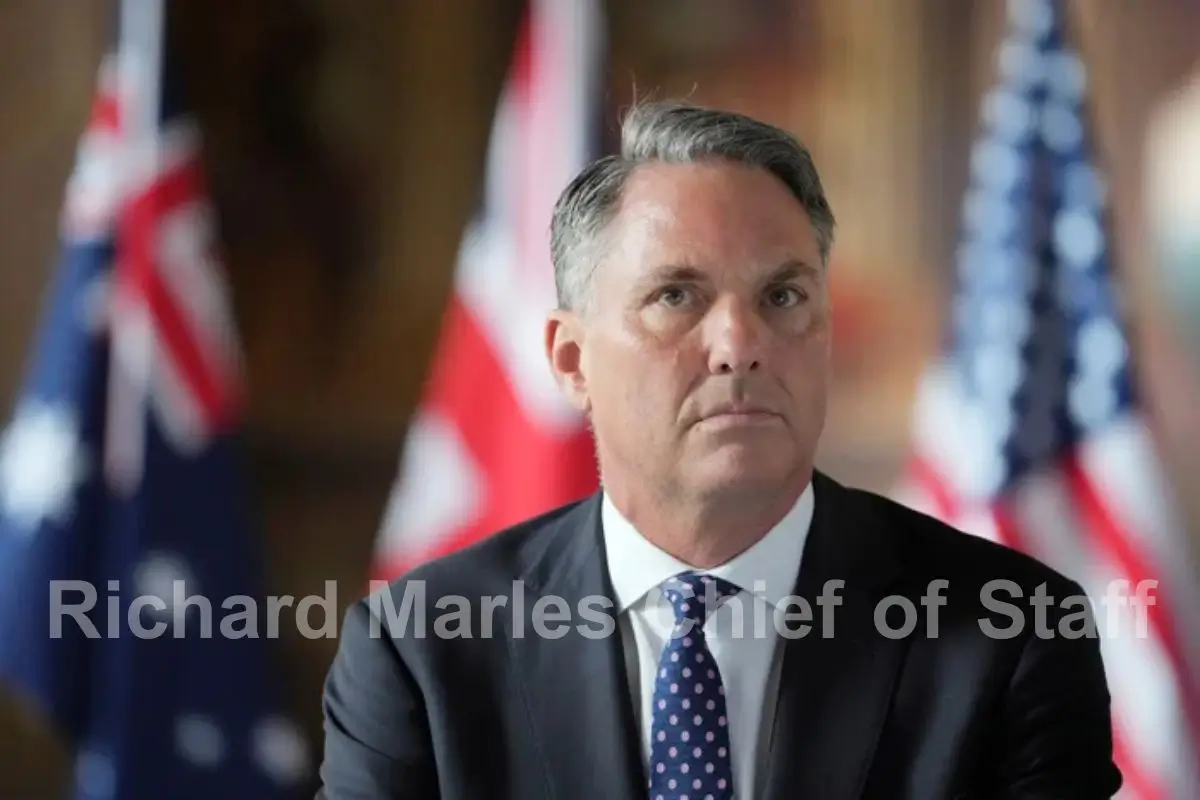
A thorough examination of how ministerial offices operate, the importance of leadership structures, and how one political person has built a career around public duty, discipline, and strategic planning are all necessary to comprehend the term “Richard Marles chief of staff.” Richard Marles’s tale is about more than just one individual. It concerns a system that surrounds him. It is about a family background that valued education and justice, a political career molded by union activity and legislative experience, a defense portfolio impacted by strategic foreign challenges, and a leadership style that relies on the people who work in his office every day. This lengthy piece adds missing factual information, keeps all headers, and completely eliminates lists from previous iterations of the blog.
Geelong’s Early Years & Family Values
On July 13, 1967, Richard Donald Marles was born in Geelong, Victoria. The expectations of a family that placed a high emphasis on education and organized thought, as well as the rhythms of a small city, influenced his early years. Geelong embodied a cultural fusion of practical community spirit, athletic identity, and industrial employment. It was neither far from national discourse nor a city of political theater. Richard Marles observed firsthand the actual impacts of economic change on day-to-day living, as did many who grew up in Geelong.
Donald Marles, his father, was involved in community education development and school leadership. Fay Marles, his mother, was well-known in Victoria. She subsequently held the position of Chancellor at the University of Melbourne after becoming the first Victorian Commissioner for Equal Opportunity. Richard Marles’ growing sense of duty was directly impacted by his mother’s strong involvement in lobbying, public justice, and institutional transformation. Discussions at the dinner table would not have been restricted to everyday home issues; instead, they would have probably included topics like justice, regulations, educational opportunities, and how governmental institutions might operate more morally.
Marles went at Geelong Grammar School, which is renowned for its leadership development, structure, and discipline. He went on to get degrees in physics and law from the University of Melbourne. While law taught him to logic, legislative interpretation, organized debate, and a knowledge of institutional structures, science gave him a respect for accurate information and practical observation. A person who lacks a dramatic or emotive political style is the result of these educational experiences paired with parental influence. Rather, he speaks in public in a calm, collected, and controlled manner.
Marriage, Family Life, and Relationships
The personal life of Richard Marles exhibits both stability and change. Lisa Neville, who would go on to become a state minister in Victoria, was his first wife. They have one kid and spent a substantial portion of their life together. Eventually, the marriage ended, and they parted ways. Later, Marles wed Rachel Schutze, a well-known attorney and Geelong community activist. He has three additional kids with Rachel. Richard Marles has four children in all.
There are practical difficulties in striking a balance between national leadership and family life. Parliamentary sitting weeks regulate how time is spent, and political calendars are strict. Being the Minister of Defence and Deputy Prime Minister necessitates travel to Canberra, meetings at odd hours, and foreign commitments. However, Marles has discussed the need of continuing to be involved in his kids’ daily life. He prioritizes regularity, respect, and listening when it comes to family concerns, according to those who know him.
Marles’ communication style may be explained in large part by his family history. Marles often speaks calmly, in contrast to certain political personalities who crave attention or make dramatic remarks to make headlines. Seldom is he explosive. Factual briefings, well-organized responses, and consideration for context are what he values. Reliability and composure are more often mentioned by those who have worked closely with him than charm or hostility. His educational background and family beliefs are strongly linked to this strategy.
Early Career Path: Union Advocacy and Legal Practice
Marles started practicing law after earning his degrees. He went into the area of labor law, which deals directly with concerns of justice, employment standards, and working people. The field of labor law is not glamorous. Long talks, thorough documentation, and comprehension of everyday life are all part of it. It requires empathy and compromise. Marles gained a practical understanding of labor issues, worker rights, and industrial regulations during these early legal years.
Marles worked in law for a while before transitioning to union activism. He was appointed the Australian Council of Trade Unions’ (ACTU) assistant secretary. Union work necessitates a continuous link between ideal objectives and practical results. It imparts lessons in compromise, bargaining, and patience. Union leaders must reach a consensus between businesses and employees while taking the state of the national economy into account. Marles eventually gained an understanding of legislative compromise, cabinet negotiation, and policy realism thanks to his years spent in this setting.
His regard for staff procedures was molded by his union background. Instead of making choices for him, it taught him to listen. It’s common knowledge that those who work in office administration or political staff coordination need to be able to handle disagreement equitably, and Marles’ union years helped him develop these abilities even before he was elected to parliament.
2007: Admission to the Federal Parliament
Marles was elected to the federal seat of Corio in 2007. Daily interaction with regional concerns including public transportation, health financing, industrial transformation, port infrastructure, and educational access was necessary to represent Geelong in Canberra. Constituency work is crucial but sometimes goes unnoticed. It include participating in community gatherings, reading letters, lending support to neighborhood initiatives, and promoting area needs in federal policy forums. Marles served on committees at this time, which gave him a deeper understanding of government processes.
A disciplined mind is developed via committee work. MPs are compelled to follow procedural procedures, comprehend legislative systems, study complicated reports, and interrogate departmental officials. This gradual but continuous evolution helped Marles establish a large portion of his strategic political competence.
Developing Strategic Knowledge with the Shadow Defense Portfolio
Marles was appointed Shadow Minister for Defence when Labor entered the opposition in 2013. This was a lengthy and important time in his political career. Shadow cabinet posts need in-depth knowledge of topics, even if opposition is not glamorous. This meant that strategic reports, capacity evaluations, intelligence priorities, Asia-Pacific diplomacy, and cyber defense alerts were to be continuously analyzed. Because of his meticulousness, Marles gained the esteem of foreign policy watchers and defense specialists.
He had to establish connections with defense experts, diplomatic advisors, and strategic think tanks in order to serve as Shadow Defence Minister. Additionally, it exposed him to the inner workings of defense procurement strategy. Defense procurement is costly, time-consuming, and politically delicate. It involves choices that won’t be felt for decades. Marles developed a long-term outlook throughout these years, which subsequently influenced his government defense strategy.
Cabinet Responsibilities: Deputy Prime Minister and Minister of Defense
Marles was appointed Minister of Defense and Deputy Prime Minister in 2022. He has a great deal of responsibility since he holds both roles. Cabinet meetings need to be well-planned and recorded. Defense-related issues often necessitate quick reaction. There is continuous international defense diplomacy, particularly in the Indo-Pacific area.
One of his main tasks was the AUKUS submarine program. Through collaboration with the US and the UK, the program aims to provide Australia with nuclear-powered submarines. Critics claim that the timing is unclear and the cost will be enormous. Proponents contend that in a region that is becoming more and more characterized by rivalry and competitiveness, it is essential to preserve strategic balance.
Marles has also started to take an interest in cyber security defense. Cyberattacks that target the corporate and government sectors have occurred in Australia. safeguarding digital infrastructure is becoming just as important to the defense portfolio as safeguarding physical capabilities. Marles has discussed international security cooperation and cyber issues in parliamentary comments. Because cyber security requires ongoing collaboration between specialized people, these obligations have influenced his everyday work environment.
Defense ties in the Pacific are now a top diplomatic focus. In Papua New Guinea, the Solomon Islands, Fiji, and other Pacific countries, Australia is involved in defense negotiations, training assistance, and relationship building. Some policy experts contend that Australia has to provide climate diplomacy in the Pacific in addition to defense. Some contend that safe collaboration promotes regional resilience. Marles has had to respond to inquiries about how diplomacy and defense may coexist together.
Recognizing the Function of “Richard Marles Chief of Staff”
The title “Richard Marles chief of staff” does not refer to a single person or one particular event. In a minister’s office, the chief of staff serves as the focal point of organization. Receiving papers, creating briefings, controlling employee expectations, organizing schedules, and making sure protocols are followed are all part of this job.
Rules pertaining to secret material must be understood by a chief of staff in the office of a minister of defense. Ministers’ and defense departments’ communications must be secure. Confidentiality is necessary during meetings. Summary notes need to be accurate and detailed. Employees need to stay informed about document and office access security categories. When needed, the chief of staff must oversee hiring, encourage employee welfare, and settle conflicts.
The chief of staff decides which duties may be delegated to advisors and which must be delivered to the minister right away. They oversee the process of getting ready for parliamentary question time. They assess trip plans and stay in touch with federal cabinet support personnel. They directly influence workplace culture and have a leadership position within the ministerial staff hierarchy.
It is crucial to recognize that detailed public documentation of ministerial office procedures is lacking. Each head of staff’s specific responsibilities are kept private. The description given here, however, follows the well-known structural needs of these positions in ministerial offices in Australia.
Key Themes in Richard Marles’s Defense
Since taking over the portfolio, Richard Marles has been engaged in many significant defense issues. A new path for Australian defense capacity was established with the AUKUS submarine program. It signifies a long-term change in international cooperation and naval might. Cost concerns have been voiced by several economic commentators, yet government choices continue to prioritize increasing marine capacity.
Daily monitoring is still necessary for cyber defense. Threats to financial operations, healthcare records, digital infrastructure, and energy systems are all part of the risk environment. The defense portfolio oversees intelligence cooperation and cyber protection coordination with allied partners.
Infrastructure upgrades in Northern Australia show consideration for capability readiness and physical deployment. Planning has risen for joint operation logistical locations, airfields, and defense training stations. Australia is anticipated to be in a better strategic position in the next decades as a result of these modifications, which are a part of larger defense posture evaluations.
Marles’s work consistently incorporates regional diplomacy. He has discussed the value of courteous cooperation with Pacific neighbors in speeches to the media and in parliament. Regional security, resource management, and climate problems are all significant subjects of continuous debate. The public is still debating whether these diplomatic initiatives have been effective or need to be improved.
Disagreements over policy, public discourse, and criticism
Critiques of Richard Marles must be part of a fair assessment. Because the initiative is costly and would involve several nations, experts have questioned the AUKUS choice. Whether the timeframe of nuclear submarine delivery satisfies national demands quickly enough is a topic of discussion. Some detractors contend that Australia’s strategy in the Pacific should place more of a focus on climate-based involvement than just security rhetoric.
Defense procurement is still moving more slowly than necessary, according to some observers, and choices are delayed by repeated reviews. Some think Marles has been more cautious than urgent. Public debates regarding diplomatic tactics and economic concerns in China relations are still ongoing. Commentators debate on whether a focus on defense might lead to conflict or whether it offers the stability that is required.
These critiques don’t provide a straightforward account of achievement or failure. They demonstrate the complexity of defense leadership. There are no simple solutions, and long-term planning has to adapt to shifting global circumstances.
Limits on Net Worth and Financial Stability
Richard Marles, the Minister of Defence and Deputy Prime Minister, is paid among the highest incomes in Australian politics. The Remuneration Tribunal sets parliamentary compensation. Superannuation contributions, allowances, and ministerial salaries are all included. Financial stability is provided by his salary. It must also be made very apparent that there is no public record of his precise net worth.
Regarding private wealth, financial portfolios, and real estate holdings, there is no trustworthy public information. Giving precise figures or making specific claims regarding net worth would be untrue. Salary levels and legislative allowances are the only confirmed information that is currently accessible. Because of this, financial stability rather than precise numbers must be used to characterize net worth.
Communication Style, Media Presence, and Public Image
The public perception of Richard Marles has developed gradually over time and is mostly predicated on tactful communication rather than bold claims. He depends on briefing materials rather than impromptu remark and favors organized explanations. In Canberra, observers often observe that he steers clear of needless conflict during interviews and prioritizes transparency above stirring up controversy. He often uses careful language in parliament, especially when it comes to defense strategy and Australia’s foreign affairs. This muted approach is reflected in media coverage, which focuses more on the content of policy pronouncements and makes less headline-grabbing statements. Proponents contend that this strategy demonstrates accountability and maturity, particularly in a position of national security when every statement has strategic ramifications. However, detractors sometimes wonder whether a purposeful communication strategy inhibits public participation on significant issues or diminishes openness. His stance continues to emphasize striking a balance between transparency and prudence, which adds to the continuing discussions about political responsibility and public messaging in defense-related issues.
Strategic Defense Diplomacy and International Relations
Since taking on ministerial responsibilities, Richard Marles has grown more involved in international defense diplomacy. He has made extensive trips around Asia, Europe, and the Pacific to interact with key partners, defense ministers, intelligence chiefs, and allies. Maintaining ties via bilateral discussions, participating in high-level defense summits, and fostering collaboration in the areas of cyber security, marine capacity, and regional intelligence are all part of his job. In order to maintain regional stability, safeguard supply lines, and mitigate security threats, Australia’s involvement in the Indo-Pacific area necessitates ongoing diplomatic engagement. Stable ties with neighboring countries like Japan, Papua New Guinea, India, and Singapore are crucial, according to Marles’ remarks in parliament and the media. Defense diplomacy is dynamic and requires constant compromise, tolerance, and strategic comprehension. His actions show a focus on alliance management amid a time of changing geopolitical circumstances and increasing regional conflict, even if long-term results are yet unknown.
Workplace Standards, Staff Management, and Ministerial Office Culture
Discipline, long hours, and dependable communication are all necessary in the ministerial office setting. Parliamentary reform includes standards for staff behavior and safety. Chiefs of staff are responsible for keeping an eye on workplace culture and making sure that proper dispute resolution procedures are in place. Records must be kept, access to protected documents must be controlled, and employees must get confidentiality training.
In his capacity as chief of staff, Richard Marles must strike a balance between worker welfare and urgent needs. Establishing a supportive work atmosphere is just as important as following the rules. The defense portfolio is difficult, and in order to prevent misunderstandings, systematic communication is necessary. While fulfilling their national responsibilities, chiefs of staff must establish reasonable expectations.
Conclusion
Family history, legal discipline, union activism, legislative development, defense strategy, and ministerial office management are all intertwined with the term Richard Marles chief of staff. To comprehend this job, one must comprehend how Richard Marles rose to the position of Deputy Prime Minister and Minister of Defense. His professional perspective is shaped by his background in Geelong, his schooling in science and law, his marriage to Rachel Schutze, his former marriage to Lisa Neville, his family life with four children, his extensive union experience, and his work in parliament. He approaches defense-related matters with methodical planning and careful communication. At the core of organizational discipline, document management, and employee well-being is the chief of staff job that supports him.
All lists are eliminated in this revised blog, which still has distinct H2 headers and narrative explanations for any missing information. In a single, cohesive piece of text appropriate for Australian readers and SEO targeting, it covers family facts, early education, policy issues, criticism, staff expectations, budgetary constraints, and the duties of the head of staff job.
FAQs
Who is Richard Marles and why is his chief of staff role significant?
Richard Marles is Australia’s Deputy Prime Minister and Minister for Defence. The term “Richard Marles chief of staff” refers to the person responsible for managing his ministerial office, overseeing staff, and coordinating confidential defence information.
What does the chief of staff do in Richard Marles’ ministerial office?
The chief of staff supports Richard Marles by managing schedules, reviewing briefing material, coordinating defence and cabinet communications, and ensuring secure handling of classified documents within parliamentary rules.
Who is Richard Marles married to?
Richard Marles is married to Rachel Schutze, a Geelong-based lawyer and community advocate. He has four children in total, one from a previous marriage to Lisa Neville and three with Rachel.
What major defence issues has Richard Marles worked on?
Richard Marles has focused on AUKUS submarine planning, military training cooperation in the Pacific, cyber security strategy and infrastructure investment in northern Australia as part of national defence planning.
What is known about Richard Marles’ net worth?
While Richard Marles earns a high ministerial salary determined by the Remuneration Tribunal, there is no verified public information detailing his exact net worth, assets or private investments.
When did Richard Marles enter parliament?
Richard Marles entered the House of Representatives in 2007 as the Member for Corio. He has held several parliamentary, opposition and cabinet positions before becoming Deputy Prime Minister.
What criticisms have been raised about Richard Marles’ defence policies?
Critics have questioned the timing and cost of the AUKUS submarine program, the pace of procurement reforms and whether Australia’s Pacific engagement balances climate issues with defence priorities.
Why is the Richard Marles chief of staff position important to Australian politics?
The Richard Marles chief of staff role is central because it keeps the ministerial office organised, ensures policy decisions are supported by accurate briefings, protects secure information and helps manage national defence communication.