
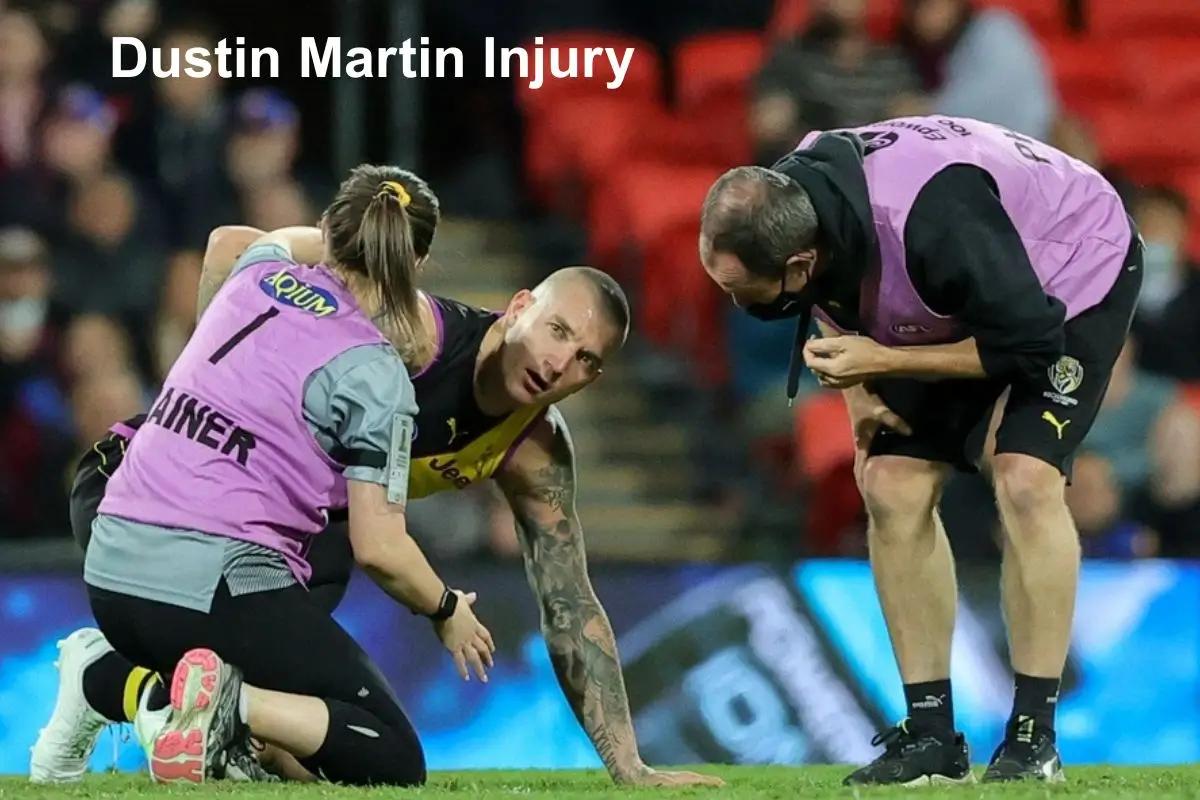
Dustin Martin’s injury history has become one of the most talked-about stories in the AFL, beginning with a sickening collision in 2021 that left him with a damaged kidney and continuing through a series of fitness setbacks, personal leave, media scrutiny and speculation about his future. What started as a single on-field moment at Metricon Stadium has slowly developed into a complex narrative involving club frustration, rumours of internal tension, questions about motivation and even the possibility of a move away from Richmond. Today, “Dustin Martin injury” is no longer just a match report, it is a headline that touches on health, identity, leadership, loyalty and the pressure of being one of the game’s most decorated players.
The Moment That Changed Richmond’s Season
The phrase “Dustin Martin injury” has become a storyline all on its own in Australian football. It started as a race-against-time medical update in 2021, but over the years evolved into a saga encompassing rehabilitation protocols, club decisions, media scrutiny, contract negotiations, fan hopes and even speculation about a change of club. For many fans, Martin’s physical decline was gradual and subtle, almost imperceptible but the moment at Metricon on 16 July 2021 marked the clear demarcation between the “before” and “after” eras for Richmond’s storied campaign. That night, the Tigers’ three-peat hopes were shaken, but no one fully grasped just how lasting the impact would be.
A Violent Collision at Metricon Stadium
Twenty-one minutes into the third quarter, Richmond were pressing hard to turn the momentum. The ball was deep inside forward fifty; pressure around the contest was intense. In a common midfield battle, Mitch Robinson from Brisbane delivered a heavy contest. The collision seemed routine, until Martin’s form collapsed. He crumpled in obvious pain, clutching his side, and moments later was helped off the field. Cameras lingered on his face a grimace of agony, eyes squeezed shut and commentators stopped talking. The atmosphere shifted instantly from charged excitement to stunned silence.
Broadcast Reaction and Player Vision
On live television, the replay ran again and again. Analysts hesitated. It was clear: this wasn’t a bump or a straightforward hip knock. Martin folded at the waist, breath caught, before staggering out of the play. Trainers helped him to the bench. Crowd noise died, replaced by shouts and concern. On social media, fans repeated the same question: “Is he okay?” No one at that moment could know how serious it would become. AFL.com.au later flagged the clip with the headline “Dusty grimaces in agony after crunching hit,” sparking waves of speculation across forums and fan pages.
Richmond Fightback Despite Injury
Remarkably, Richmond didn’t collapse. After Martin left, midfielders and forwards redistributed responsibility. The Tigers kicked five unanswered goals in that quarter, rolling Brisbane back and turning potential despair into temporary hope. Final margin: 20 points. While the win gave Richmond breathing room on the ladder, inside the changing rooms the vibe was different. The victory felt hollow for many: their best weapon had walked off with what looked like a serious injury. Players avoided celebrating too heavily. The medical team began by administering on-field first aid, but the atmosphere had shifted. The scoreline told one story; behind closed doors, a far heavier concern took hold.
Hospital Admission and Kidney Injury Diagnosis
Martin was whisked to hospital immediately after the game. Once scans were completed, the news was worse than many predicted. Club doctor Greg Hickey addressed the media the next day. He confirmed a vague wording that masked just how dangerous internal organ trauma can be. He said Martin remained stable, had been seen by a urologist, and was expected to make a full recovery. But the more sobering announcement was this: “Given the delicate nature of the injury and recovery timeline, he will not play football again this season.” The phrase “for the rest of 2021” sent a ripple through AFL coverage: a triple premiership favourite was effectively sidelined with little notice.
Medical experts not affiliated publicly with Richmond later explained what this meant. Unlike a torn muscle that slowly heals, kidney trauma carries risk of internal bleeding, organ swelling, and possible re-injury under contact. Even innocuous collisions during training could reignite complications. As a result, Martin’s rehabilitation process was cautious and long. Daily scans, blood-urea monitoring, ultrasound reviews just stepping onto a football ground became a matter requiring medical clearance.
Secondary Injuries in the Same Match
That night did not only injure Martin. Kamdyn McIntosh went down with a hamstring strain and was holding his leg in obvious discomfort by the final quarter. David Astbury walked off with an ankle knock, limping noticeably as he left the field under medical attention. The combined effect strained Richmond’s ability to train, manage list health and maintain consistency. With finals looming, losing Martin the linchpin of their finals strategy and having backup injuries spread across the team intensified external pressure on club medical and coaching staff. Each scan, each rehab session became scrutinised by fans, pundits, media and rival clubs.
Post-Match Comments and Tactical Analysis
At the post-match press conference, Damien Hardwick sought to salvage confidence. He admitted the gravity of losing Martin but maintained belief. “The story’s ours to write. The ball’s in our court. We just need to play as well as we can and hopefully we make the finals. I reckon if we get there we’re going to cause some grief. We’ll back ourselves in and see how we go.” The quote tried to inspire resilience typical of a coach under pressure but for many supporters it rang of desperation.
Brisbane coach Chris Fagan was less diplomatic. He dissected Brisbane’s collapse, saying they “turned the ball over without pressure” and allowed Richmond “uncontested inside-50 entries,” including five goals in that pivotal third quarter run. “We didn’t capitalize enough from the opportunities we had and produced too many unforced errors,” Fagan observed. The contrast between Richmond’s tenacity without Martin and Brisbane’s breakdown under pressure became a recurring talking point in post-match analysis. For many pundits, it proved that while Richmond could win without Martin in the short term, the loss of a player with his finals pedigree would show up under sustained finals pressure.
Travel, Fixture Requests and Club Movements
The morning after the victory and hospital admission, Richmond flew back to Melbourne, yet their wheels were already turning. Geelong had submitted a request to host the Grand Final rematch at GMHBA Stadium instead of the MCG, citing local scheduling and contract commitments. Hardwick responded calmly: “Completely understandable. We’re happy to play anywhere, anytime. We’ve travelled a fair bit this year so it’s not going to hold any fears for us.” The comment highlighted a wider issue teams now face balancing traditional venue expectations with injury-fatigue management and travel load, especially when key players are in uncertain health. For Richmond, the fixture decision was more than commercial: it reflected a readiness to adjust plans around a player’s wellbeing.
Recovery Timeline and Return to Football
Recovering from kidney trauma is a fraught process far more complicated than returning from a hamstring or ankle sprain. Martin’s recovery involved bed rest, strict dietary and fluid monitoring, imaging scans, and avoiding contact or abrupt movement. The training load was drastically reduced. For months he refrained from full sessions; instead, he followed a light cardio program, core strengthening and monitored running drills. Club insiders privately admitted they treated each step with caution, often rehearsing scenarios in the medical room about long-term renal health and eventual return-to-play protocols.
By early 2022, Martin returned to senior matches. His performances had peaks of vintage brilliance. He broke tackles, kicked goals from pressure, and delivered match-winning snaps. But the consistency that once defined him evaporated. Recovery blocks returned. He missed matches sporadically for soreness or minor knocks, nothing as serious as a broken bone, but chronic soft-tissue issues and long-term fatigue became recurrent. Supporters often debated whether the 2021 hit had permanently changed him, even after clearance to return.
The 300th Game and Sudden Disappearance
A milestone many believed practical immortality in the sport: 300 AFL games. Martin achieved this in Round 14 of 2024 against Hawthorn. That night should have been the beginning of a farewell chorus: fans cheering, commentators noting legacy, club officials preparing a send-off. Instead, what followed was a strange silence. Martin didn’t travel with the club to Perth, then missed Adelaide and GWS trips. A back complaint in Round 16 against Carlton was confirmed but not specified in detail. Richmond listed him as “test” week after week. No timetable was given. Media was left to interpret every day off as rumor, and fans began suspecting the final chapter of Martin’s career might not be written on the field, but in draft reports, contract lists and speculation columns.
New Zealand Trip, Golf Story and Club Frustration
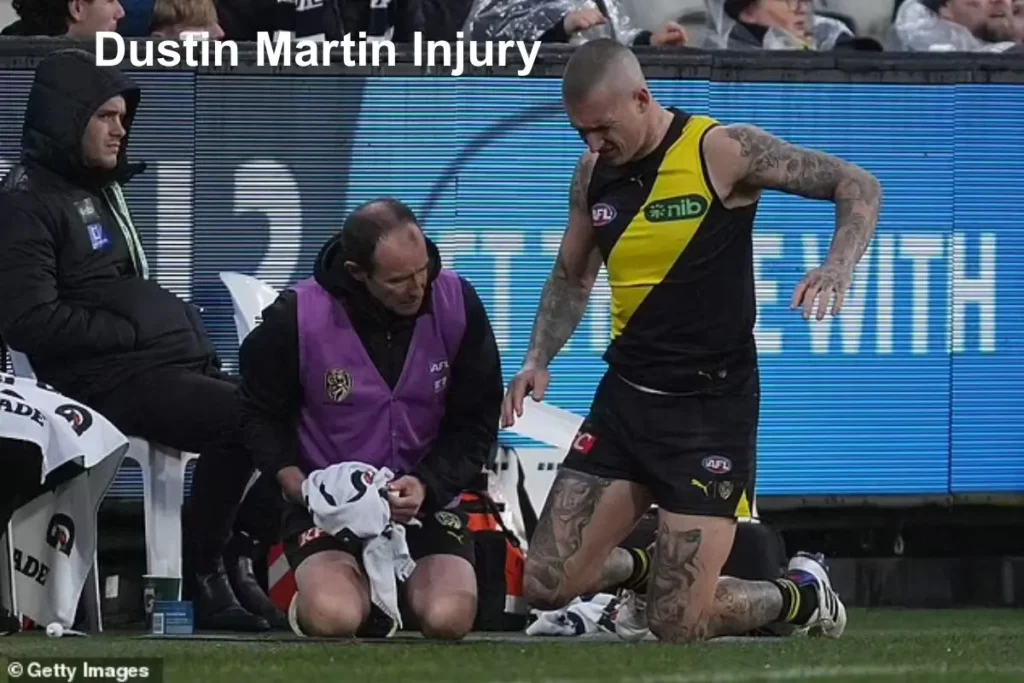
In the midst of uncertainty, AFL journalist Sam McClure publicly stated on Nine’s Footy Classified that Martin had travelled to New Zealand during his supposed recovery period. He revealed that Martin was granted personal leave at the start of the week, presumably to visit friends and family, but then added the bombshell: two days later Martin played a round of golf. According to sources at Richmond, those within club rooms reportedly “had no idea about the game of golf.” When asked, club officials reportedly “didn’t confirm nor deny whether it took place.”
The fallout was swift. People within the club, speaking off the record, expressed frustration with poor communication and lack of clarity. McClure claimed “multiple people at Richmond and people at Gold Coast” had told him Martin had, “to some degree, checked out.”
The senior former player and media voice Matthew Lloyd summarised it heavily: “What a circus, then, it’s been.” Suddenly, the conversation around the “Dustin Martin injury” shifted. It was no longer only about medical diagnosis or match availability. It was about club culture, respect, transparency, trust and what it means to be a champion when the body and spirit drift from the field.
Gold Coast Rumours and Possible Reunion
As the speculation gathered pace, another narrative gained prominence: a move to the Gold Coast Suns. Damien Hardwick, once Martin’s premiership coach at Richmond, had already accepted the senior coaching role at Gold Coast by then. When asked directly about Martin, Hardwick refused to dismiss rumours. He said, “Dustin’s a contracted player at Richmond. That’s obviously for Dustin to decide and Richmond to work their way through.” He reinforced that “every single club would be crazy if they didn’t make an assessment.” The words, while neutral on the surface, carried weight.
The Suns’ coaching group included former Richmond premiership personnel assistant Shaun Grigg and ex-star Alex Rance among them. These links provided familiarity, trust and the potential for smoother transition. For a veteran player with chronic physical wear, a club offering lighter training, warmer climate, and personal connections made the idea appealing to many observers. Trade whispers intensified in industry circles, with some insiders expressing surprise if Martin stayed in Melbourne beyond 2025.
Unrestricted Free Agent Status Explained
A key technical detail sometimes overlooked in fan talk: Martin is an unrestricted free agent. What this means under AFL rules is that he can leave Richmond and join any club once his contract expires. Richmond cannot match offers or trigger compensation mechanisms. In effect, Martin holds full control over his immediate AFL future. For the club, this raises stakes: if they want a proper farewell, they need clarity soon. For Martin, freedom offers flexibility to stay and fight for fitness, take a final year at Richmond, or begin a new chapter elsewhere without trade-related complications.
League-Wide Injury Context and Off-Season News
The broader AFL environment during this period has been dominated by injury updates, retirements, and list reshuffles. Melbourne selected Jake Bowey as their likely 2026 skipper, yet he suffered a Lisfranc foot injury that sidelined him for months. St Kilda’s new recruit Jack Silvagni grapples with recurring groin pain. Essendon’s Nic Martin was ruled out for the entire 2026 season after further knee surgery. Sydney skipper Callum Mills is recovering from a hamstring strain. Collingwood’s Darcy Moore has undergone shoulder surgery. Meanwhile, several clubs offered train-on spots to delisted players or aging veterans: Jaidyn Stephenson (Port Adelaide), Jayden Laverde (GWS), and others. All that movement illustrates the churn inherent to AFL yet none have generated the same intense scrutiny or layered questions as Dustin Martin’s situation, because his absence isn’t due to one reportable injury, but ongoing combination of health, motivation and speculation.
Why Martin’s Story Stands Apart
In most cases league-wide, recovery is managed medically by muscle tears, knee reconstructions, ligament repairs. The public receives a scan report and a timeline. For Martin, it’s been different. Much of his recent absence stems from internal organ trauma (kidney), soft tissue issues, and then a mysterious back complaint. Overlay that with periods away from club facilities, off-site travel, leave for personal reasons, and shadowy media reports about golf or overseas trips, and the story becomes messier. It ceases to be a simple medical bulletin; it becomes a cultural incident, a club management dilemma and a social media debate. That complexity makes “Dustin Martin injury” a different beast to typical AFL injury news.
Silence, Privacy and Supporter Anticipation
Martin himself has rarely spoken publicly. He avoided extended interviews, declined social media statements, and remained private about his off-field circumstances. That silence whether chosen out of respect for privacy or wary of media scrutiny, created a vacuum. In that vacuum, rumours flourished. Media, fans and businessmen speculated over holiday photos, flight logs, alleged golf days, training attendance sheets and future team lists. Some supporters demanded transparency; others pleaded for respect. For many, it became a moral question: does a star owe the club and fans clarity at the end of his career or simply privacy and dignity?
Conclusion:
The “Dustin Martin injury” story is not over. What began with a collision at Metricon Stadium has evolved into a multifaceted saga — one involving medical recovery, club culture, media pressure, fan emotion, trade possibilities, and questions of identity. Richmond’s 2021 premiership dream was shattered momentarily that night; their broader culture shifted over the following years. Today, none of the outcomes seem certain. Does Martin get one final game at the MCG? Does he move north with Hardwick and become a Sun? Or does he walk away quietly, leaving questions unanswered and supporters nostalgic?
What is clear is that Dustin Martin’s impact on Richmond and the AFL is indelible. His Norm Smith medals, his finals performances, his highlight-reel goals and his cultural legacy are secure. But the final chapter, the farewell, the acknowledgement or the reinvention remains unwritten. And until there is clarity, the phrase “Dustin Martin injury” will continue to carry weight across stadiums, social media, football newsrooms and fan lounges alike.
FAQs
What was Dustin Martin’s internal injury?
Dustin Martin suffered a significant kidney injury after a brutal collision with Brisbane’s Mitch Robinson in Round 18, 2021. The internal trauma required hospital observation and ended his season immediately.
Which player injured Neymar?
Colombian defender Juan Camilo Zúñiga was the player who injured Neymar during the 2014 FIFA World Cup quarter-final, causing a serious back injury.
Did Dustin Martin’s dad pass away?
Yes, Dustin Martin’s father, Shane Martin, passed away in December 2021 while living in New Zealand. His death had a major emotional impact on Dustin and contributed to time away from football.
Is Dustin Martin playing?
As of the most recent updates, Dustin Martin has missed multiple games due to a back issue and ongoing fitness concerns. Richmond repeatedly listed him as a “test,” creating uncertainty about his return.
Who is a better dribbler than Neymar?
Debates in world football often compare Neymar with players like Lionel Messi and Ronaldinho, who are widely considered among the best dribblers in history.
Did Zúñiga apologise to Neymar?
Yes, Zúñiga later apologised publicly for the challenge that injured Neymar in 2014, saying he had no intention of hurting him.
Did Neymar fully tear his ACL?
Neymar has suffered multiple injuries throughout his career, including ligament problems, but a full ACL tear is not part of his major documented football injuries. His most serious long-term issues have been metatarsal fractures, ankle injuries and spinal trauma in 2014.
What did Ancelotti say about Neymar?
Carlo Ancelotti has made various comments about Neymar over the years, especially during transfer windows. He has called Neymar a “decisive player,” stating that on his best days he can change a match on his own.