
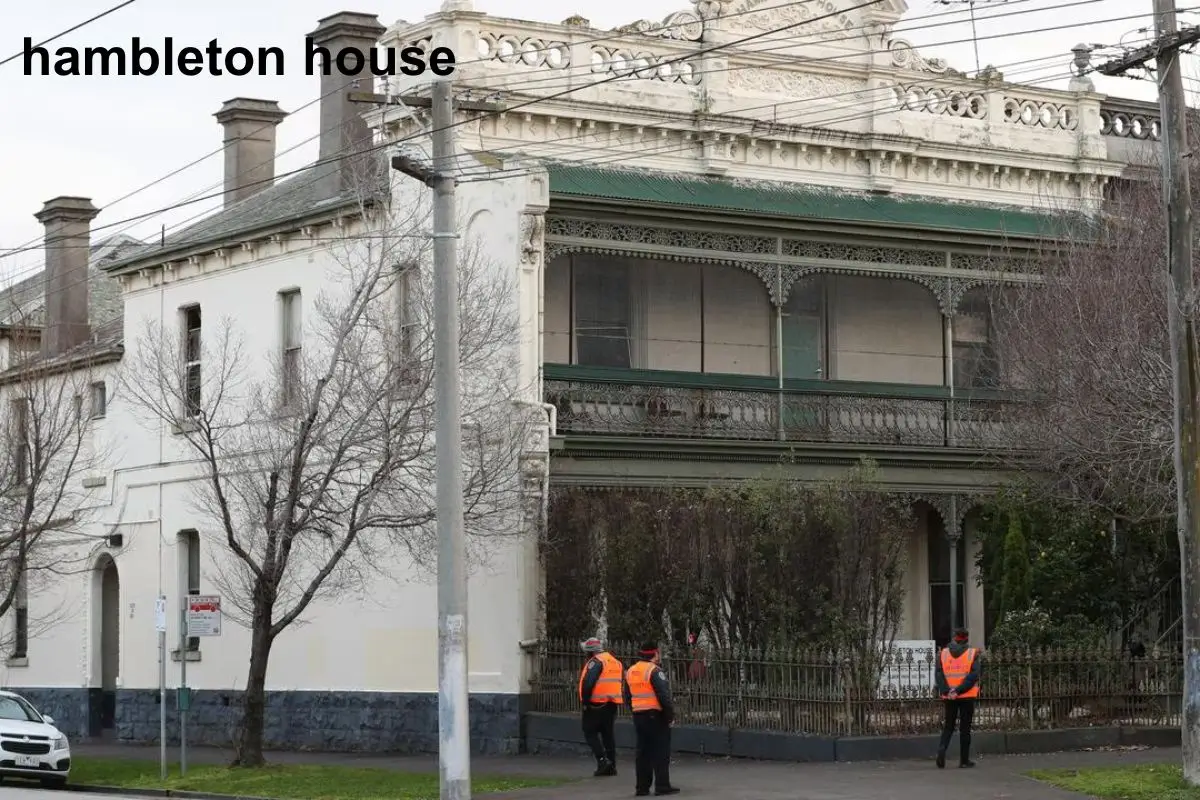
Hambleton House has long been one of Albert Park’s most iconic properties. Once celebrated for its Victorian elegance, it later fell into decline, operating as a troubled boarding facility that drew attention during the COVID-19 pandemic. Now, under the ownership of hospitality visionaries Al and Rebecca Yazbek, the mansion is stepping into a new era. Its revival represents not just a physical restoration, but a cultural and historical renaissance for one of Melbourne’s most prestigious streets.
A Mansion That Once Symbolized Melbourne’s Golden Age
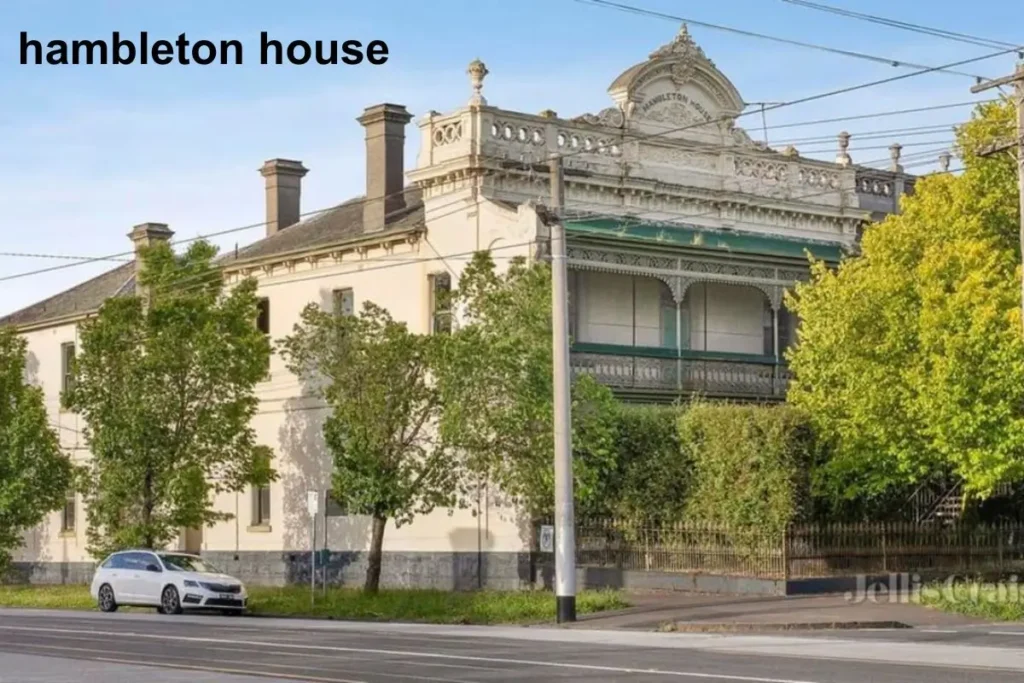
Constructed in the late 19th century, Hambleton House epitomized Melbourne’s boom-era wealth and European architectural influence. St Vincent Place, designed as a residential square with landscaped central gardens, was intended to showcase elegance and prestige. Victorian architecture dominated, with features such as ornate cast-iron balconies, sweeping verandas, tall ceilings, intricate plasterwork, and spacious rooms designed to impress both guests and neighbors.
Hambleton House, with its twenty principal rooms, was among the largest and most commanding residences on the street. Its grand drawing rooms, formal dining hall, servant quarters, and expansive bedrooms were complemented by high ceilings, marble fireplaces, patterned tiles, and detailed timber work. Its triple street frontage and northern orientation made it a landmark in Albert Park, admired for both its scale and design excellence.
From Grandeur to Decline: The Boarding House Era
By the early 1900s, maintaining such a property became increasingly difficult. Economic shifts, world wars, and changes in family structures led to the conversion of many St Vincent Place mansions into boarding houses. Hambleton House was no exception. Large rooms were subdivided into smaller units, balconies were repurposed for extra tenants, and communal areas lost their original character.
Residents of these boarding houses often faced cramped and modest living conditions. While the houses served a social purpose, accommodating those in need, the adaptation inevitably took a toll on the buildings’ historic integrity. Over decades, Hambleton House’s interior details suffered damage, and its exterior slowly faded from its original glory.
A Troubled Chapter: COVID-19 and License Revocation
During the COVID-19 pandemic in 2020, Hambleton House became a focal point for public scrutiny. An outbreak at the facility exposed its deteriorating conditions to the authorities and public alike. Images of police officers and health officials in full protective suits outside the mansion underscored the gravity of the situation.
The Department of Health and Human Services investigated the property, finding overcrowding, inadequate hygiene, and structural issues. The facility’s license was revoked, forcing residents to relocate and prompting the owners to consider selling the property. This moment marked the mansion’s lowest point, bringing both national attention and local concern.
A Visionary Purchase by the Yazbeks
In 2024, Al and Rebecca Yazbek, founders of the acclaimed Nomad Group, purchased Hambleton House for approximately $11 million. The couple is renowned for transforming historic spaces into contemporary, luxurious venues that respect architectural heritage. Their acquisition signaled a commitment to restoring the mansion to its original purpose: a single, grand residence.
The Yazbeks’ design philosophy emphasizes craftsmanship, sustainability, and a blend of heritage with modern functionality. Their purchase has been widely praised by local residents, heritage advocates, and architectural experts as the ideal combination of vision and expertise required to restore Hambleton House.
A Rare Architectural Treasure
Despite years of decline, Hambleton House retains remarkable original architectural features. Ceiling roses, cast-iron balconies, decorative plasterwork, timber staircases, bay windows, patterned tiles, and marble fireplaces remain, hidden beneath layers of boarding-house modifications. These details provide a solid foundation for restoration.
Heritage architects consider Hambleton House a rare opportunity to revive a largely untouched Victorian mansion. Unlike many other historic homes in Melbourne, its period layout and design elements have survived, offering a blueprint for faithful restoration while integrating modern amenities.
The Cultural Significance of St Vincent Place
St Vincent Place is recognized as one of Australia’s most historically significant residential precincts. Its classical garden-square design, symmetrical streets, and central landscaped gardens make it a unique example of urban planning inspired by London. Every property contributes to the overall heritage character of the precinct.
Preserving Hambleton House is crucial to maintaining this identity. Beyond aesthetics, it safeguards the historical narrative of Melbourne’s residential evolution. The mansion represents an era of wealth, craftsmanship, and social aspiration, embodying the story of a city growing in prominence.
How the Community Reacted to the Sale and Restoration
Local residents welcomed the mansion’s sale to the Yazbeks with optimism. For decades, neighbors had witnessed Hambleton House’s decline, safety concerns, and its impact on the streetscape. The news of restoration was seen as a relief and a positive turning point.
Community groups and heritage advocates expressed support, emphasizing that returning the mansion to a single-family residence would enhance property values, preserve the historical integrity of St Vincent Place, and restore the street’s sense of prestige. The project is widely viewed as a model for sensitive heritage restoration.
The Future Market Value and Investment Potential
Hambleton House’s restoration carries significant financial and cultural potential. With its large footprint, triple street frontage, and heritage significance, the mansion could achieve a valuation exceeding $20 million. Comparable properties along St Vincent Place have sold for more than $11 million, even without full restoration.
Real estate experts emphasize that Hambleton House represents one of Melbourne’s rare opportunities to acquire and restore a major Victorian mansion. Its combination of size, location, and historical integrity ensures that it is a prime investment for both financial and cultural returns.
The Restoration Process: Bringing Back Its Former Glory
Restoring Hambleton House will involve meticulous work. Key elements of the project will include:
- Reinstating original room proportions and layouts
- Repairing or recreating decorative plasterwork, cornices, and ceiling roses
- Restoring timber flooring, staircases, and archways
- Preserving marble fireplaces, stained glass, and cast-iron balconies
- Integrating modern heating, cooling, lighting, and safety systems without compromising heritage character
The restoration will require collaboration between heritage architects, artisans, and engineers to ensure a faithful yet modernized transformation. The goal is to retain the mansion’s original soul while creating a comfortable, functional home for contemporary living.
Historical Timeline and Notable Residents
Hambleton House’s story is interwoven with the history of Albert Park. Initially a family residence for Melbourne’s elite, it transitioned to a boarding facility during the early 20th century. Over the decades, it housed hundreds of tenants, adapting to social and economic changes in the city. The COVID-19 outbreak of 2020 marked the end of this era, making way for its new chapter under the Yazbeks.
The property’s longevity and survival through wars, economic depression, and social transformation make it not just a building, but a living record of Melbourne’s urban and social evolution.
The Neighborhood and Lifestyle
Albert Park is renowned for its leafy streets, proximity to the city, and sense of community. St Vincent Place offers both tranquility and accessibility, making it a highly desirable residential location. Hambleton House’s restoration will not only preserve a key heritage property but also contribute to the neighborhood’s ongoing prestige. Future residents will enjoy expansive gardens, scenic views of the central parkland, and easy access to the city’s cultural, dining, and lifestyle amenities.
Conclusion: Hambleton House A Legacy Reclaimed
Hambleton House stands as a testament to Melbourne’s rich architectural heritage, its journey from grandeur to decline, and now to renewal. What was once a troubled boarding facility has found new life under visionary owners who respect both its history and its potential. As the mansion undergoes restoration, it promises to reclaim its rightful place among Albert Park’s most prestigious residences, serving as a symbol of resilience, craftsmanship, and the enduring value of preserving heritage.
The revival of Hambleton House is more than a property transformation; it is the restoration of a legacy, ensuring that future generations can appreciate the beauty, history, and cultural significance of one of Melbourne’s most iconic homes.
FAQs
Where is Hambleton House?
Hambleton House is located at No. 44 St Vincent Place, Albert Park, Victoria, Australia. It is situated on one of Melbourne’s most prestigious streets, known for its Victorian mansions and landscaped central gardens.
Which tech entrepreneur pays $12 million for an ex-boarding house in Albert Park?
While the exact purchase price may vary in reports, high-profile buyers, including hospitality entrepreneurs Al and Rebecca Yazbek, have acquired Hambleton House, transforming it from a former boarding house back into a luxury residence.
Who manages Albert Park?
Albert Park is managed by the City of Port Phillip, the local government authority responsible for urban planning, heritage preservation, community services, and maintaining public spaces in the area.
Are house prices in Australia going up?
House prices in Australia vary by city and region. As of 2025, property values in major cities like Sydney and Melbourne are gradually stabilizing after recent fluctuations, with some suburbs experiencing growth while others are plateauing or slightly declining.
Do wealthy suburbs turn into buyers’ markets as house prices slump?
Yes. Even affluent suburbs can become buyers’ markets if demand slows or economic conditions affect affordability. During price corrections, high-end properties may stay on the market longer, giving buyers more negotiating power.
Do Australians need a $130,000 salary to afford average rent?
Affording rent depends on location. In high-demand cities like Sydney or Melbourne, a salary around $130,000 may be necessary for renting large or premium apartments, while smaller properties or outer suburbs require significantly less.
How much income do you need to buy a $650,000 house in Australia?
To buy a $650,000 house, lenders generally recommend an annual income of $100,000–$120,000, depending on deposit size, interest rates, and personal expenses. A 20% deposit reduces the required mortgage and improves borrowing capacity.
Should I buy a house now or wait until 2025 in Australia?
The decision depends on financial readiness, interest rates, and market conditions. Some experts suggest waiting if prices are expected to stabilize or fall, while others recommend buying sooner to lock in rates and start building equity. Consulting a mortgage broker or financial advisor is advised before making a purchase.