
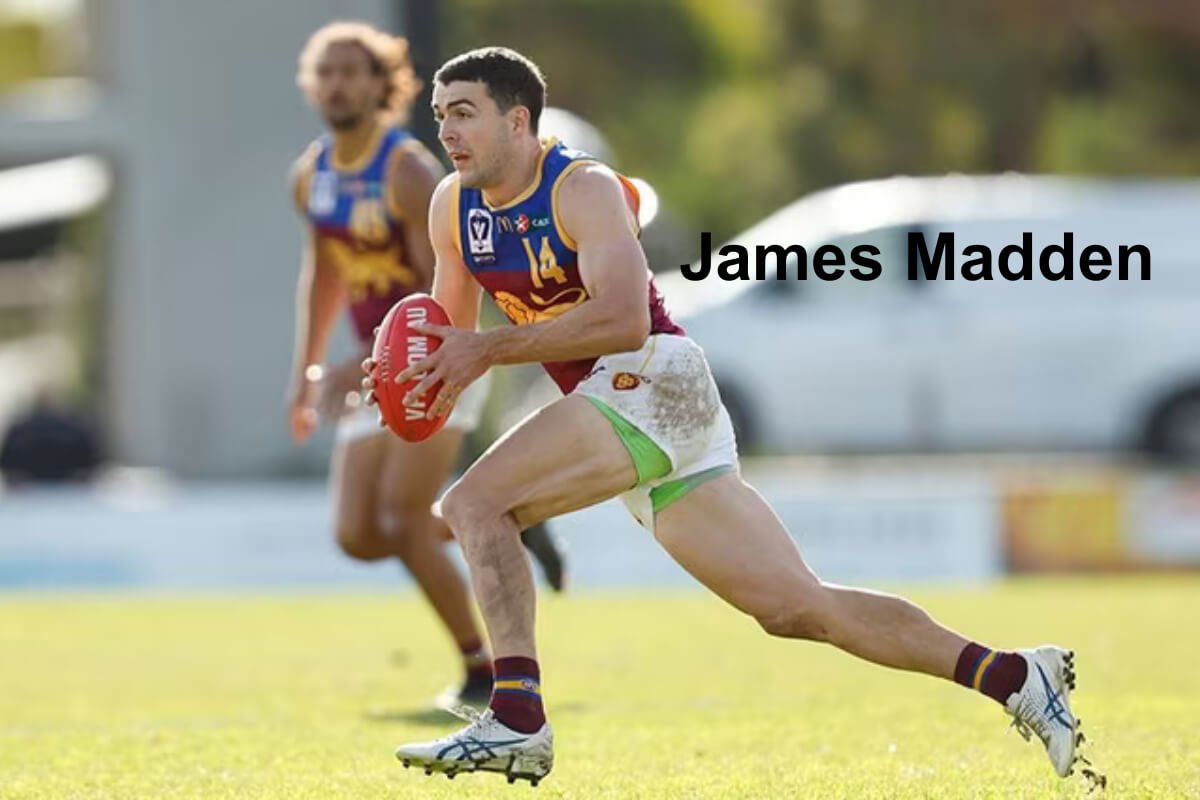
James Madden’s sporting journey began on familiar grass in Ballyboden and led him thousands of kilometres away to a professional code he had never played before. Born in Dublin and raised through the Gaelic football system, he showed pace and defensive instinct long before AFL scouts noticed him. The decision to leave Ireland in his teens and sign with the Brisbane Lions placed him among a select group of Irish footballers willing to test themselves in a demanding foreign environment. Years later, Madden returned home with new skills, fresh conditioning habits and a deeper understanding of how elite sport works. His story is shaped by speed, resilience, learning through setbacks and finally coming back to the place where it all started to represent Dublin again.
Early Life in Ballyboden
James Madden was born on 15 November 1999 and grew up in Ballyboden in south Dublin. His sporting identity formed through Ballyboden St Enda’s, a club with a strong record in both Gaelic football and hurling. The early years of his development were shaped by weekly training sessions, community coaching and constant exposure to competitive youth sport. Public information about his family remains limited, though supporters remember the passing of his father, Noel, during Madden’s playing years. That moment, recalled in community stories where Madden suited up shortly after the funeral, is one of the few private details known publicly. It hints at a family connection rooted in dedication and resilience, although no further confirmed information exists about his siblings, his mother or his schooling.
Rising Through Dublin Underage Football
Madden represented Dublin at minor and under-20 level, where he gained attention for his pace, defensive intensity and clean movement across the pitch. Those at underage level saw an athlete willing to take possession and move forward rather than wait for opponents to engage. His dual playing background in hurling provided timing benefits in aerial contests and line tracking. Gaelic football prepared him for structured systems of defending while hurling gave him sharp reactions and the ability to recover quickly in open space. Dublin selectors viewed him as a runner who could link play and break lines, a profile that would later attract international interest.
Breakthrough at the AFL European Combine
The AFL European Combine in 2017 brought Madden into a new sporting frame. He recorded a 20-metre sprint time of 2.69 seconds, which stood out as one of the fastest combine times among Irish prospects. This sprint record marked him as an elite runner with potential crossover ability suitable for Australian rules football. AFL recruiters look for players whose physical traits provide a foundation that technique can be built upon, and Madden’s speed formed a unique calling card. That single performance opened the door to communication with AFL clubs, video review screenings and discussions about international development pathways.
Signing with the Brisbane Lions
In August 2018, Madden signed a Category B rookie contract with the Brisbane Lions. Moving to Australia required leaving behind familiar systems of Gaelic sport and entering a professional environment where training is a full-time commitment. The AFL structure includes conditioning staff, recovery teams, nutrition planning and intensive video analysis. Madden adjusted to new demands around tackling, kicking technique, marking in traffic and positional spacing. The oval ball requires specific adaptation, and the tactical decisions needed during AFL matches differ from Gaelic football in both timing and shape. Brisbane coaches recognised his commitment to learning and identified speed as his immediate contribution to team structure.
AFL Debut and Development

Madden made his senior debut in 2021 and soon kicked his first AFL goal in a match against Richmond. His initial matches highlighted his ability to pressure forwards, close space and transition play through running lanes. The AFL role he most often filled was half-back flanker, a position requiring energy, concentration and the capacity to carry the ball beyond the defensive arc. Learning rhythm in this role took time, but Madden gained confidence through match repetition, tactical meetings and on-field communication sessions with both coaches and teammates.
Injuries and Limited Opportunities
Injuries shaped the arc of Madden’s AFL career. Shoulder issues and later hamstring concerns disrupted periods of growth and limited the consistency needed to secure a long-term starting position. Brisbane’s defensive list included seasoned players who brought stability to selection decisions, and Madden spent time moving between senior matches and reserve competitions. This cycle is common among Irish recruits in the AFL as they adjust to a sport that demands mental sharpness as much as physical skills. These injuries created frustration, but the professional environment gave Madden exposure to advanced recovery systems and training methods.
Lifestyle in Australia and Professional Habits
Living in Australia meant navigating change in training culture, match preparation and lifestyle. Madden learned from coaches in areas such as repeat sprint training, monitoring muscular loads, strengthening stabilising groups around shoulders, hips and hamstrings, and adopting nutrition routines to support high-intensity running demands. He matured through continuous exposure to tactical breakdown meetings and performance reviews. These experiences built habits that would shape his later approach in Gaelic football and aid long-term injury management.
Return to Ireland and Dublin Senior Football
In October 2024, Madden left Brisbane and returned to Ireland. Dublin manager Dessie Farrell named him in an expanded panel for the 2025 season, introducing him into a competitive group aiming to integrate younger players alongside experienced figures. Madden returned with attributes that Gaelic football rarely sees at county level, specifically AFL-developed conditioning and defensive transition awareness. His pace remains a standout feature and his understanding of line movement offers different possibilities in defensive planning. Early appearances in 2025 saw him make an impact before a hamstring issue forced him to leave the pitch in Ballybofey.
Adaptation to Gaelic Football After AFL Exposure
The return to Gaelic football requires adjustment, but Madden brings tactical knowledge influenced by Australian systems. AFL defenders work on angles of retreat, structured communication between backs, switch kicks and acceleration from contest situations. These tools may help Madden refine defensive shape in Dublin’s half-back line. His insight could affect how Dublin defends against quick forwards, manages transition breaks and designs counterattacks from deep positions. Many supporters anticipate progression as he completes more training sessions and builds match fitness across extended periods.
Influence of Professional Fitness Standards on Dublin Training
One of the under-reported elements of James Madden’s return from Australia is the transfer of professional fitness habits into a traditionally amateur environment. The AFL requires players to commit to strict weekly regimes involving conditioning sessions, sprint testing, recovery blocks, sleep monitoring and nutrition tracking. Madden spent six seasons inside a system where training sessions were planned several weeks ahead and backed by sports science data rather than instinct alone. His exposure to physiotherapists, strength coaches, sprint technicians and tactical analysts means he now returns to Dublin with a deeper understanding of how elite preparation looks day to day. Players around him can benefit from seeing how recovery routines, stretching programs and sprint load management work in practice. Dublin managers value athletes who come home from professional systems because they often lift standards without needing to be told. Madden’s routines can help shape how the squad conditions players for long championship runs and encourage footballers to think more broadly about how they use their bodies across a demanding season.
Comparing Gaelic Football and AFL Defensive Roles Through Madden’s Experience
James Madden’s development in the AFL highlights clear differences between defending in Gaelic football and competing in Australian rules. Gaelic football generally places emphasis on tracking runners, blocking space and delivering hand-passes to move possession away from pressure zones. AFL defending requires aerial positioning, body contact under the high ball, intercept marking and timing the spoil accurately under pack situations. Madden’s time in Brisbane forced him to study movement diagrams, identify forward entry patterns and react to controlled chaos inside the defensive arc. The transition back to Gaelic football gives him an advantage in reading body angles, pushing forwards wide, and anticipating second-phase movement after a failed tackle. AFL defenders operate with constant communication and guidance from coaching instructions coming through earpieces and on-field signals, practices that differ from Gaelic football’s more fluid, instinct-based style. By combining both systems, Madden can strengthen Dublin’s ability to control breaks, create structure during turnovers and direct transitions from deep inside their own half.
Private Life and Limited Public Profile
Media reporting on Madden’s private life is scarce. Publicly available information does not show details about a partner, marriage or children. He has not been linked with controversies, legal cases, lifestyle features or sponsorship promotions. There are no reliable sources discussing business ventures or personal financial status. Madden’s public presence is reserved, and the existing reporting remains centred on training updates, match availability, injury reports and managerial decisions regarding squad selection. His profile reflects a sportsman dedicated to performance rather than personal publicity.
Why His Journey Matters
Madden’s career illustrates the challenges and rewards of moving between sporting cultures. Leaving Ireland for the AFL required bravery, adaptability and acceptance of uncertainty. Returning home brought a chance to apply learned skills in a familiar setting while continuing to push himself physically and mentally. The gap between Gaelic football and AFL appears wide, yet Madden represents the merging of two systems. Dublin’s defensive versatility, recycling movement and stamina profile may improve with a player capable of repeat running built around Australian training foundations.
Looking Ahead to Future Seasons
Madden’s place in the Dublin squad will depend on maintaining fitness, finding match rhythm and adjusting tactics to fit game plans. The next phase of his sporting life is beginning on pitches where his football journey started. County football careers are shaped by internal competition, tactical direction, injuries across a season and the outcome of championship runs. Madden remains young enough to build a long-term presence if health remains stable. The experience gained in Brisbane will continue to influence his approach to preparation, communication and spatial judgement.
Conclusion
James Madden has travelled from Ballyboden pitches to professional grounds in Brisbane and back to Dublin senior football. His path includes bright openings, setbacks through injury, years in a foreign sporting culture and a decision to return to Irish football with tools sharpened and perspective widened. There is still much ahead of him and the coming seasons will show whether the skills gained in the AFL translate into continuous contributions in Gaelic football. What is already certain is that Madden’s story belongs to both Ireland and Australia, shaped by pace, determination and the belief that personal growth cannot happen without challenges.
FAQs
Who is James Madden?
James Madden is an Irish footballer from Ballyboden in Dublin who played with the Brisbane Lions in the AFL before returning to represent Dublin in Gaelic football.
When did James Madden make his AFL debut?
He made his AFL senior debut in 2021 for the Brisbane Lions, appearing in defensive roles and kicking his first goal against Richmond that same season.
What position did Madden play in Australia?
He was usually deployed as a defender or half-back flanker, using speed, recovery runs and line-breaking movement to transition the ball from defence to attack.
Why did James Madden return to Ireland?
He returned in late 2024 after six seasons in Brisbane, deciding to resume playing Gaelic football and accept selection in Dublin’s senior squad for the 2025 season.
What makes Madden’s playing style unique?
His standout trait is pace, supported by conditioning and fitness routines developed in professional AFL systems, which help him manage defensive pressure and counterattacks.
Has James Madden faced injuries in his career?
Yes, shoulder issues and later hamstring problems interrupted his AFL progress and affected early appearances for Dublin during his return to Gaelic football.
Is there public information about Madden’s personal life?
There is very little public information about his private relationships, family details or life away from sport, and he keeps personal matters largely outside media attention.
What are Madden’s goals with Dublin?
His focus will be on staying fit, securing consistent match time and contributing defensive strength and transitional pace to Dublin’s senior football side in upcoming seasons.