

The Matej Radelic cable ties case began on a quiet afternoon in Cable Beach and grew into one of the most widely discussed legal matters involving citizen’s arrest in Western Australia during 2024. What started as trespass by three children aged under ten developed into criminal charges, a single-day trial, courtroom debate, a suspended conviction and national reactions after video surfaced showing children with their wrists bound. The incident prompted questions about the limits of force, policing, emotional distress, history of restraint in Indigenous communities and the responsibilities of property owners in regional towns facing repeated damage.
At the centre was a single decision: a homeowner chose to restrain children using cable ties while waiting for police. The legal outcome hinged not only on what happened but on how long it happened, what was visible in police body-cam footage and whether the force applied remained necessary and reasonable at every stage. The case exposed a tension between frustration over property crime and the legal duty to protect children from undue harm. It was later used as an example in discussions about youth behaviour, responsibility and property protection.
Trespass, Pool Damage and the Decision to Use Cable Ties
On 5 March 2024, three children climbed a fence and entered a backyard at a property in Cable Beach owned by Broome tradesman Matej Radelic. They used the pool and caused damage to tiles and the paved area around it. A neighbour saw what was happening and phoned police at 1.28pm. When Radelic arrived shortly after, he found the children in the pool. Court documents say the children had committed trespass and criminal damage, though due to their age they could not be charged. One child attempted to run away when the property owner arrived. At that point, Radelic chose to restrain the two remaining children using cable ties, binding their wrists together and making them sit under shade near his carport while he contacted authorities.
He later told police he did not want to physically grab or hurt them, and that cable ties were a way to keep them from escaping. He said he was aware that if they left before police arrived, nothing would happen as a result of the trespass. He also claimed he had previously suffered repeated property damage including broken tiles and smashed pool equipment. Radelic said these incidents cost him money to repair and that he had recently spent around six thousand dollars preparing the property for sale. He told police he had been expecting to sign a sales contract that day.
The cable ties themselves became the symbol of the case. They marked the point at which the situation shifted from a straightforward trespass into a matter of legal scrutiny. The length of time for which the children remained bound later formed the key argument in court.
Triple-Zero Call, Recorded Statements and Frustration Over Consequences
At 1.40pm, Radelic called triple-zero and reported what he described as a break-in. The recording was later played in Broome Magistrates Court. He told the operator, “I caught three kids, I’ve got them tied up so I need someone to attend to take the kids away for me.” He referred to them as “little shits” and claimed they were “trashing” his pool. The operator asked whether the children were injured and he said, “Nah, they’re just scared and crying.” The responder replied, “Yeah, no wonder.”
Throughout the four-minute call, he emphasised that he wanted there to be consequences. He repeatedly said that property damage kept happening and he always had to pay to repair it. He said, “Every time this happens, there’s no consequences for anyone, I just pay,” and later asked, “Are you going to take their Centrelink payments to pay for it?” He viewed the situation as part of a wider issue affecting residents in Broome, where youth trespass and property damage had become a growing concern.
This call set the tone for the later courtroom debate. It revealed frustration, anger, sarcasm, financial stress, and a belief that without restraint nothing would result from the incident. It also established the timeline for police response and formed evidence used both by prosecution and defence.
Police Arrival, Body-Cam Footage and the Knife and Rocks Incident
Police arrived at approximately 2.17pm, thirty-seven minutes after the triple-zero call. Their body-worn cameras captured a number of important details. When officers reached the property, only two children remained tied with cable ties. The third child had escaped earlier by breaking free. Body-cam audio recorded Radelic explaining that the incident had escalated further when family members and other adults turned up outside the property fence, shouting at him. He described it as “mob rules” and said things became heated.
During questioning, he told police that the older child who ran away later returned and threatened him with a large knife and rocks. He said he did not know how to handle the situation once people began arriving and demanding that the children be released. An officer on scene said they were trying to keep the situation calm and remarked that Radelic had been “chill as.” That body-cam comment later became part of the defence argument that he did not act violently or erratically, even if his actions crossed legal lines.
Police explained to him that children under ten cannot be dealt with through criminal charges under Western Australian law. One of the officers said, “Given their age, there’s not much going to happen unfortunately.” They then told him they needed to call “their boss” to determine how to proceed. The internal police notes recorded from that day described the matter initially as a “lawful citizen’s arrest,” a detail later raised by defence counsel during trial.
Legal Context and the Test of Reasonable and Necessary Force
The courtroom arguments did not focus on whether trespass and damage happened, as both sides accepted those events took place. They focused instead on the legal standards around citizen’s arrest. Western Australian law permits ordinary citizens to detain someone committing certain offences including trespass and property damage, but force used must be necessary, proportionate and reasonable for the circumstances at all times.
Magistrate Deen Potter applied three core legal tests. First, whether force was necessary to prevent escape. Second, whether force remained proportionate as time progressed. Third, whether the obvious distress of the children made ongoing restraint clearly excessive. The defence argued that the initial decision to restrain was necessary because one child had already fled and police took thirty-seven minutes to attend. They said that if officers had arrived within ten minutes, the matter would have ended without debate. The defence lawyer, Seamus Rafferty, told the court that his client was a victim of repeated property crime, adding, “This case is not about optics, not about emotion, race or vigilantism.” He admitted that cable-tying “was not a good look,” but argued that under the law his actions amounted to a lawful citizen’s arrest.
The prosecution argued that force “catapulted it into the unreasonable,” as Sergeant Mícheál Gregg phrased it. They said that once the children were seated in the shade and compliant, tying their wrists with cable ties and keeping them restrained for half an hour was unnecessary and had a “dehumanising effect.” Gregg said, “The circumstances simply weren’t there to justify any use of force,” pointing to repeated parts of the emergency call and body-cam footage where distress was audible and visible.
Magistrate’s Findings, Historical Context and Sentence
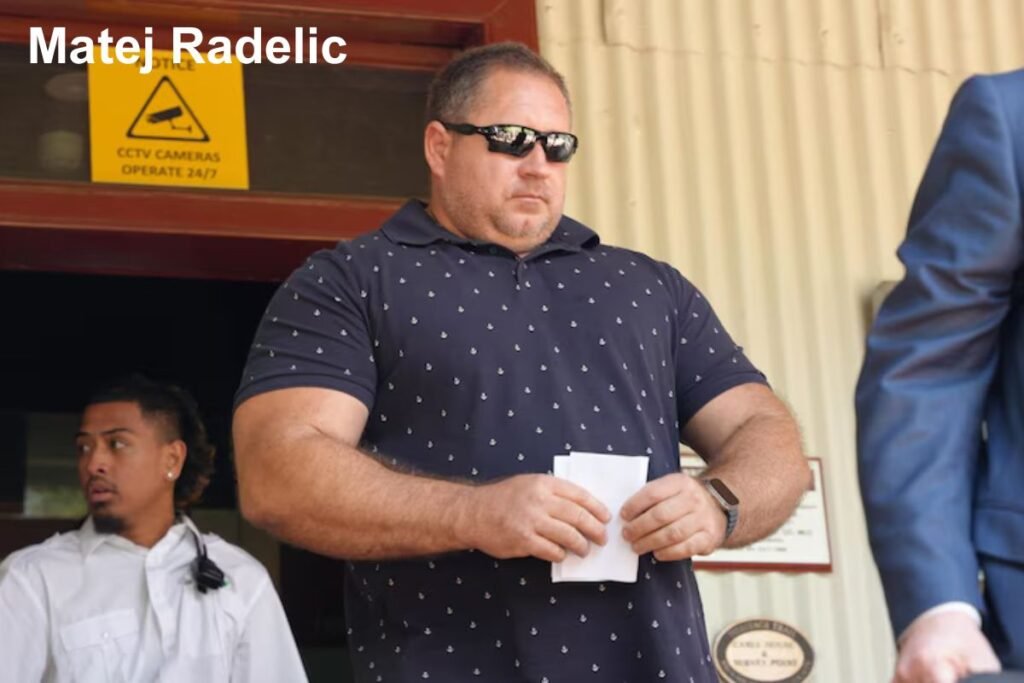
On 4 October 2024, Magistrate Potter delivered his verdict in Broome Magistrates Court. He found Radelic guilty of two counts of aggravated common assault and acquitted him on the third. The acquitted count related to the child who remained restrained for a shorter period and managed to escape. He said it was inescapable that restraint had begun lawfully but at some point during the thirty-seven minutes of waiting, force became unreasonable. He noted that Radelic spoke on the phone saying the children were “scared and crying,” which should have indicated to him that ongoing restraint had become unnecessary.
Magistrate Potter also made a notable comment on the historical context. He said the images of small Aboriginal children bound with cable ties had a “destabilising effect” in the community because such images “were seen in the historical context.” These remarks carried weight because they acknowledged the past treatment of Indigenous children in Australia, making the visual element of the case significant in its own right beyond questions of physical harm.
When sentencing, the magistrate imposed a suspended fine of two thousand dollars and issued a spent conviction. The spent conviction meant Radelic would not have to disclose the conviction for most future employment or background checks. Potter said, “This wasn’t born out of any sense of vigilantism,” acknowledging that frustration from repeated property break-ins contributed to his behaviour. He did not claim the three children involved were responsible for past incidents.
Age of Criminal Responsibility, Youth Trespass and Community Impact
A defining aspect of the matter was the question of age. Under Western Australian law, children under ten have no criminal responsibility. This meant each child involved, despite trespass and property damage, could not face charges. The police told him clearly that “there’s not much going to happen” and this legal reality became the emotional backdrop for his frustration. The lack of consequence for under-ten offending raises wider issues for regional communities trying to protect property, especially in areas where youth activity around pools and vacant houses is a known concern.
The case did not provide a solution to these challenges, but it highlighted the gap between community expectations and legal settings. It showed why repeated youth trespass leads to intense feelings among local residents. Support services, supervision, community organisations and youth programs may be needed to address the behavioural cycle that leads to property entry without immediate consequence. Matters like this one often become flash points that reveal deeper, ongoing social issues rather than single, isolated events.
Citizen’s Arrest Law in Western Australia and Legal Boundaries
Citizen’s arrest law in Western Australia became a major focus of debate following the Matej Radelic cable ties case. It highlighted how ordinary residents may lawfully detain someone engaged in trespass or property damage, but that the use of restraint must always remain necessary and proportionate to the threat. The confusion around what an ordinary person can legally do in real time without immediate access to police guidance was central to court arguments. Many members of the public were unaware of how force must be evaluated repeatedly during any detention rather than assumed lawful once restraint begins. The case demonstrated that even when a citizen’s arrest starts lawfully, length of restraint and visible emotional harm may turn a permitted action into an unlawful one. This case has since been referenced in legal discussions about improving community awareness of arrest powers, particularly in regional towns where police travel times may be longer.
Lessons for Property Owners and Community Expectations
The incident raised broader considerations for property owners dealing with repeated trespass and damage by young children. While the court ruling made it clear that tying children with cable ties was unacceptable once they were compliant, it did not solve the underlying issue of youth behaviour. Residents in regional communities often express concern that there are few consequences for under-ten offending, especially when damage and break-ins result in financial loss. The Matej Radelic cable ties case showed that public expectations may not align with legal boundaries, particularly in emergency situations where anger and frustration are high. It encouraged discussions about needing improved communication between police, neighbourhoods and social services to prevent property damage and support young people at risk of reoffending. The long-term lesson suggested that community support systems and clearer police advice may be necessary to prevent similar confrontations in the future.
Timeline – Matej Radelic Cable Ties Case
- 5 March 2024:
Three Aboriginal children, aged six to eight, enter Matej Radelic’s property in Cable Beach. They swim in his backyard pool and cause damage to the surrounding tiles and paving. - 1.28pm (same day):
A neighbour calls the police to report children in the pool without permission. - 1.40pm (same day):
Matej Radelic arrives at the property, restrains two of the children using cable ties, and makes a triple-zero call reporting a “break-in” and “three kids tied up.” - 2.17pm (same day):
Police arrive approximately thirty-seven minutes after the call. One child has already escaped. Officers record body-cam footage and begin questioning Radelic. - March 2024:
Initial media attention begins after photos and short video clips showing children with cable-tied wrists appear on social media. - Late March 2024:
Matej Radelic makes his first appearance in the Broome Magistrates Court and is formally charged with three counts of aggravated common assault. - April 2024:
Radelic pleads not guilty to all charges, arguing he was performing a lawful citizen’s arrest due to repeated property damage. - September 2024:
The case proceeds to a single-day trial in Broome. Evidence includes body-cam footage, the triple-zero call recording and a two-page statement of agreed facts. - 4 October 2024:
Magistrate Deen Potter delivers the verdict. Radelic is found guilty of two counts of aggravated common assault and acquitted on one charge relating to the child who broke free sooner. - Sentencing (same day):
Radelic receives a fine of $2,000, suspended for twelve months, and a spent conviction due to mitigating factors, including prior property damage and lack of intent to physically harm the children.
Conclusion
The Matej Radelic cable ties case demonstrates how common events can escalate into legal decisions with broader community consequences. The judgement weighed frustration against legal duty and emotional distress against force. It clarified that a citizen’s arrest has strict boundaries and must stop being applied once the person is compliant and no longer a danger. The incident has become a reference point for discussions about youth behaviour, trespass, property damage, history of racial sensitivity in Australia and safe limits for private responses to crime. It illustrated that while citizens want consequences, restraint involving cable ties on young children is likely to be seen as unreasonable force in Western Australia. Although the legal matter concluded, the issues it raised remain subjects of debate in regional communities and among those concerned with policing, youth engagement and property protection.
FAQs
Why did Matej Radelic use cable ties to restrain the children?
He said he chose cable ties because one child had already tried to run away and he wanted to prevent further escape while waiting for police. He told officers that physical force would have been more harmful, so he used restraints to keep the children seated until police arrived.
What did the triple-zero call reveal about the incident?
The triple-zero recording captured Radelic saying he had “three kids tied up” and that they were “scared and crying.” He also expressed frustration over repeated property damage and said he wanted consequences for trespass, since he believed nothing ever happened when children damaged property in the past.
Were the children charged with any offence?
No. The children were all under the age of ten, which is below the age of criminal responsibility in Western Australia. This meant they could not be charged even though trespass and damage occurred.
What did the prosecution argue in court?
Prosecutors said that while a citizen’s arrest may have started lawfully, the restraint continued for thirty-seven minutes and became unreasonable. They described the use of cable ties on distressed young children as “dehumanising” and said Radelic had other options available.
How did the defence explain the use of force?
The defence argued that Radelic was the victim of repeated break-ins and had experienced property damage several times before. They said police took too long to arrive and that using cable ties was a practical way to prevent escape without physically grabbing the children.
What was the result of the trial?
He was found guilty of two counts of aggravated common assault and acquitted on one charge. The acquittal related to the child who had been restrained for a shorter time and was able to break free before police arrived.
What sentence did the magistrate impose?
Matej Radelic received a two thousand dollar fine, suspended for twelve months, and a spent conviction. This meant he did not have to pay the fine unless he reoffended within a year and the conviction would not appear in most employment checks.
Why did the magistrate mention “historical context” in sentencing?
Magistrate Deen Potter said the images of small Aboriginal children restrained with cable ties could have a destabilising effect because they were “seen in the historical context.” This referred to Australia’s past mistreatment of Indigenous children and played a role in assessing community impact.