
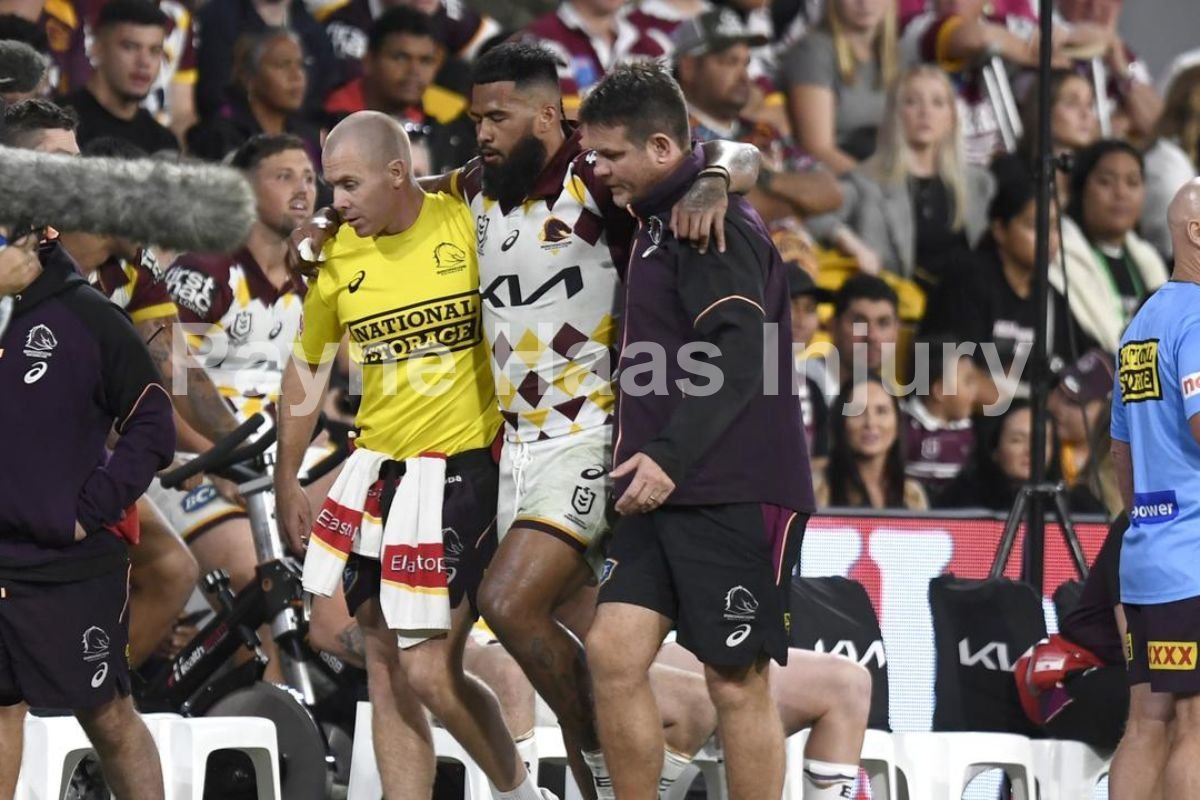
The final stretch of the NRL season has been dominated by two major player storylines that highlight very different approaches to injury management across the competition. Brisbane Broncos forward Payne Haas is continuing to play through physical issues as the club openly manages his training workload and game preparation. Meanwhile, the Canterbury-Bankstown Bulldogs are dealing with a medical situation that has placed fullback Connor Tracey in danger of missing the remainder of the year. Together, these developments have created one of the most closely watched injury narratives of the season as the finals draw near.
Brisbane’s Approach to Payne Haas and the Decision to Keep Him on the Park
One of the most significant factors shaping Brisbane’s campaign has been the physical condition of Payne Haas, who remains central to the club’s on-field approach. During the second half of the season the Broncos confirmed that Haas has been dealing with a persistent lower back complaint that initially emerged during the State of Origin series. The issue affected his training load and occasionally resulted in discomfort during matches, but Brisbane elected to continue playing him while introducing measures designed to reduce fatigue, soreness and recurrences.
The club’s head of football, Troy Thomson, explained that Brisbane believe the best course of action involves controlled movement rather than extended rest. According to Thomson, simply sitting a forward out for several weeks does not solve the underlying problem, particularly when the player must maintain strength and flexibility in the supporting muscles around the spine. Thomson said that if Haas reached a point where he could not physically take the field, then the decision would be simple, but while he was still capable of training and playing it was essential to keep him active and conditioned. The medical team focused on workload management, ensuring Haas had enough volume and intensity across the week to remain sharp while reducing unnecessary strain in contact sessions.
Haas has also experienced minor ankle issues during the course of the season. After Brisbane’s surprising loss to Parramatta, he was seen visibly limping in the closing stages, which raised questions about whether additional scans might be required. The club confirmed that this particular ankle incident did not require imaging and was considered minor, although it attracted attention due to the timing and Haas’ importance to Brisbane’s forward rotation. Training staff made adjustments in the days following the knock, but he was back on the paddock at the beginning of the week.
This approach reflects the philosophy adopted by Brisbane under Thomson and Kevin Walters. The Broncos are determined to keep Haas involved because they believe the benefits of regular competition outweigh the risks of inactivity. Brisbane consider Haas a unique athlete who can continue to contribute at a high level even when not entirely comfortable, and teammates regularly praise his ability to play at intensity despite obvious discomfort. Billy Walters described him as one of the most remarkable players in the NRL, noting that even when he appears to be operating at half capacity he remains dominant in ball-carrying and defensive pressure.
The Finals Match That Intensified the Debate
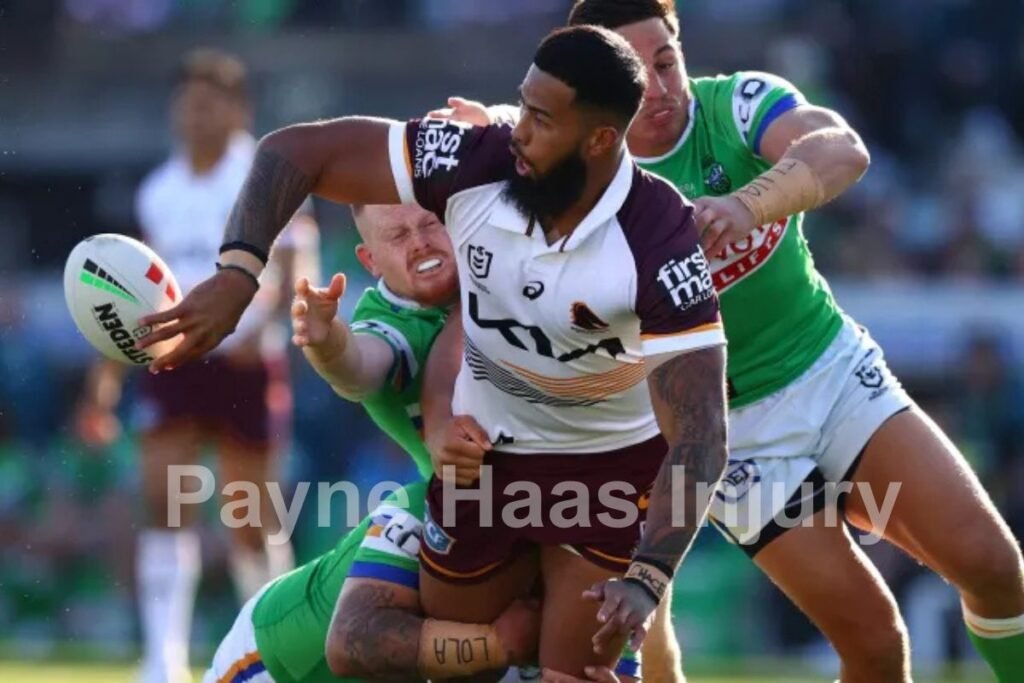
Haas’ fitness came under serious scrutiny during the qualifying final against Canberra when he twisted awkwardly in a tackle by Raiders hooker Tom Starling. Cameras captured Haas hobbling in back play, putting very little weight on his right leg. Broadcast commentators quickly raised alarm, describing the moment as pivotal for Brisbane’s season. Some questioned whether the tackle involved a dangerous hip-drop motion, but match officials reviewed the incident and cleared Starling.
Kevin Walters remained calm immediately after the match, assuring media that the ankle suffered a twist rather than a major structural problem, and that Haas might require pain management injections to finish the game but was still expected to continue providing impact minutes in the pack. Later medical reviews showed no serious damage to ligaments or bones, which allowed Brisbane to proceed with their original plan of controlled management rather than removal from the selection list.
This incident, however, reignited concerns about the cumulative effect of back and ankle problems on a forward consistently asked to produce high defensive involvement and second-phase carries. Brisbane continued to insist that resting Haas for long periods would not serve his recovery and that maintaining mobility remained essential.
Wider Injury Pressure Inside the Broncos Squad
Brisbane are not dealing with Haas alone, and club medical reports released during the finals highlighted the extent of their health challenges. Billy Walters suffered anterior cruciate ligament damage, resulting in a season stoppage and a longer rehabilitation period. Brendan Piakura required scans for a facial injury following a collision. Xavier Willison returned to availability after undergoing surgery for a fractured forearm sustained in Round 22. Although the focus remained firmly on Haas, these additional injury issues created further pressure on Brisbane’s depth and made it even more important that their star forward remained available during the finals.
Why Brisbane Believe Movement Helps Recovery
The idea that movement is good for recovery runs contrary to public assumptions about sports injuries, where rest is often seen as essential. Thomson explained that inactive periods can leave muscles supporting the lower back and pelvic structures weaker, which in turn increases the risk of further muscle strain once the player returns. Brisbane believe that controlled loading keeps the stabilising muscles active, improving blood flow, reducing stiffness and increasing range of motion. It also allows players to maintain cardiovascular fitness and muscular endurance throughout the season.
Haas is known to perform modified training sessions, which sometimes include stretching sessions, adapted gym plans or limited contact drills early in the week. By gradually increasing the load as match day approaches, the club believes they can reduce inflammation and ensure he reaches optimal strength by kick-off.
This approach has provided consistent results throughout the season. There were concerns during the Origin period that Haas would not be able to finish the representative schedule, yet he continued to line up for club matches and provide large minutes in the middle third. Brisbane show confidence in computer-based performance monitoring and daily player feedback rather than traditional assumptions about forced rest.
The Bulldogs Face a Very Different Scenario With Connor Tracey
While Brisbane continue to navigate Haas’ pain management, the Bulldogs find themselves in a more serious position with fullback Connor Tracey, who has become a key attacking weapon for Canterbury. After playing every minute of the Bulldogs’ convincing 42-4 victory over Manly, Tracey experienced severe abdominal discomfort after the match, which prompted a trip to hospital. Medical tests revealed an issue with his inferior epigastric artery, an unusual condition for an NRL player.
Initially there were fears that Tracey might require abdominal surgery, which would have ruled him out indefinitely. Later assessments delivered more encouraging news, confirming that surgery would not be necessary. However, doctors recommended complete rest for three weeks before the fullback could resume even light training. This shutdown includes avoiding contact training, core activation work, weight lifting and aerobic conditioning, all of which represent standard weekly activities for an elite rugby league player.
Phil Gould outlined the condition on television, saying that Tracey had managed an abdominal strain in previous weeks before the artery issue developed. Canterbury now face the challenge of rebuilding their attack without him. Tracey has been a standout performer recently and his combination with the Bulldogs’ halves has improved their transitional play and return sets. Without Tracey on the field Canterbury lose speed, stability and ball-handling variety at the back.
The Bulldogs have six games remaining in the regular season and are pushing to secure a finals position. Gould admitted that hopes of Tracey returning before the end of the regular season remain uncertain. With an enforced period of rest and a delicate recovery process, there is no guarantee he will take the field again this year, and the Bulldogs must develop alternate structures in his absence.
The Medical Challenge of Vascular Injuries in Rugby League
In Tracey’s case the medical decision is straightforward because the injury involves a vascular component rather than skeletal or muscular structure. Contact or overexertion could increase the risk of internal bleeding or further arterial damage, which leaves no room for modified training or pain-management strategies. The risk profile is much higher, which forces the Bulldogs to accept the medical advice immediately rather than adopting Brisbane’s approach of progressive loading and conditioning.
The shutdown not only affects Tracey’s availability, but also his conditioning, movement and match readiness after a lengthy absence. Returning directly into finals football presents a different challenge than returning gradually through reduced minutes or controlled training exposure. Canterbury must rethink their attack, defensive structure and backline support patterns without one of their most effective performers.
What the Next Month Means for the Two Clubs
Brisbane remain optimistic yet alert as they balance the need to field their best forward with the responsibility to manage his condition. Their belief in movement as a recovery tool is constructed around sports science and experience managing player workload at representative and international level. The Broncos know Haas is a central figure in their bid to go deep into finals football and will continue to assess him daily to ensure he retains strength and stability.
The Bulldogs are facing an unpredictable return timetable for Tracey. Although the club hopes the fullback will recover in time to feature in finals matches, they are preparing as though he may not. The Bulldogs must rely on squad depth and tactical adjustments over the coming weeks. Their situation demonstrates how one injury that cannot be managed through training or controlled exposure can significantly alter a club’s direction late in the season.
Medical Risks, Pain Management Strategies and Injection Use
One of the more delicate areas surrounding Haas’ situation involves pain management on match day. NRL players have long relied on injections to reduce discomfort before or during games, particularly when dealing with joint irritation, soft tissue problems or swelling around heavily loaded contact zones. Brisbane’s medical approach acknowledges that injections are only one part of a broader recovery system rather than a solution on their own. They are often used to manage specific pain spikes and allow players to perform basic movements without distraction, but they do not remove the need for strength conditioning, stretching and controlled loading. Haas has been mentioned as a possible candidate for occasional injections to assist him through critical fixtures, and the club’s medical team has made clear that these decisions are guided by monitoring results and medical judgment, not desperation. In contrast to Canterbury’s situation with Tracey, the Broncos view occasional pain reduction as acceptable because the underlying issue does not carry the same risk for permanent damage. This difference in risk tolerance is central to both clubs’ injury decisions.
Tactical Adjustments and On-Field Impact for Both Clubs
As injuries develop, coaching staff must think beyond medical timelines and prepare tactical adjustments that prevent predictable weaknesses. Brisbane have improved their staggered defensive spacing around the ruck to ease pressure on Haas when he is fatigued or restricted in lateral movement. This helps cover his workload while maintaining aggressive forward momentum. They also use planned interchange timings designed to coincide with opposition intensity swings, particularly late in halves. Canterbury face a different form of adjustment. Without Tracey available, the Bulldogs must re-shape their back-line structure, particularly during kick returns and transition phases. Tracey’s acceleration out of the back field has been central to their ability to gain early metres and shift attacking shape before defensive lines are established. Without him, Canterbury may rely more heavily on distributing role players and second-man receivers to maintain fluidity across the middle. These tactical shifts place new demands on depth players to fill the gap with confidence and consistency.
The Role of High-Performance Staff and Player Communication
A major element in Brisbane’s handling of Payne Haas is the continuous dialogue between high-performance staff, medical professionals and the player. Across the season Haas has been asked to provide detailed feedback regarding soreness levels and movement restrictions, which allows training loads to be adjusted daily rather than relying on a fixed weekly pattern. Modern NRL preparation hinges on information gathering from athletes about how their bodies respond to both contact and conditioning activities. Trainers regularly track the stability of Haas’ spine and how his ankle reacts after games, using this data to design training plans that keep him mobile without pushing him to a breaking point. Rather than allowing injury management to become reactive, Brisbane have created a proactive monitoring approach. This helps ensure that matches do not place Haas in positions where fatigue or stiffness will create further problems. The medical team see him as a long-term asset, and preserving that body through difficult periods has become a matter of planning rather than short-term decision-making.
Player Mindset, Team Morale and Finals Performance
Beyond the physical implications, these injury situations also affect team behaviour, dressing-room confidence and finals readiness. When a forward of Haas’ stature continues to play through discomfort, it sends a message to younger teammates about commitment and resilience. Brisbane feeds off the energy he provides in yardage sets and ruck control. At Canterbury, Tracey’s absence forces players to adapt psychologically as much as tactically. The shift in structure means the club must rely on alternative combinations, knowing that they cannot assume their primary fullback is available. Coaches often group players together for leadership chats and positional sessions to maintain belief and continuity when a key figure is sidelined. In finals football, belief is as important as execution. The way both clubs handle these injury narratives over the coming weeks will influence not only plays on the field, but the confidence with which each side takes on major opposition in the biggest stage of the year.
Season Outlook and Final Thoughts
These two situations highlight the reality of NRL player management in the modern game. Not every injury is the same and not every club is dealing with standard strains or contact knocks. Brisbane are prepared to play Payne Haas while watching his back and ankle closely because they believe continuous conditioning is essential for his health and performance. Canterbury must remove Connor Tracey from training entirely because his condition demands rest and medical caution above all else.
The contrasting approaches show the complexity of preparing athletes for high-intensity sport at the end of a long campaign. Different medical issues require different solutions, and while some clubs can rely on movement, flexibility and recovery protocols to maintain availability, others must accept shutdowns, rest periods and uncertain return windows.
As the finals approach, Brisbane will hope that Haas’ resilience and intelligent loading allow him to continue influencing matches in the middle third. Canterbury will watch Tracey’s recovery with cautious optimism while developing alternative attacking options to keep their season alive.
Taken together, these two injury scenarios have produced some of the most significant and closely watched stories of the NRL season, shaping public debate and influencing predictions about how the competition will unfold in the crucial weeks to come.
FAQs
What injury did Payne Haas sustain?
Payne Haas has been managing a lower-back complaint throughout the season and also picked up a minor ankle knock in a recent match. The back issue requires workload monitoring while the ankle twist did not result in serious structural damage.
Did Payne Haas’s brother get in a car accident?
Yes. Payne Haas’s younger brother Zeda Isaac Haas died in a car crash in 2009 when Payne was a child. The tragedy had a significant impact on the Haas family and is often discussed in stories about his upbringing and character.
How long is Ryan Papenhuyzen out for?
Ryan Papenhuyzen suffered another major leg injury during the 2024 season. Recovery timelines vary depending on specialist advice, but he has previously faced lengthy rehabilitation periods of several months following lower-leg fractures.
What ethnicity is Payne Haas?
Payne Haas is of mixed heritage, with Filipino and Samoan family roots. He has spoken about the importance of his cultural background, family values and the influence of both sides of his heritage on his life and rugby league career.
How long are NBA players out with a torn Achilles?
A torn Achilles is one of the most serious injuries in professional basketball. Players are usually sidelined for between 9 and 12 months, although full strength and explosive movement can take even longer to return.
Has anyone been seriously injured on Jackass?
Yes. Cast members of Jackass have suffered numerous serious injuries over the years, including broken bones, concussions, burns, ligament tears and deep cuts. The show is known for high-risk stunts and slapstick harm.
How many bones has Jackass broken?
The Jackass crew have collectively broken dozens of bones over multiple movies and TV seasons. Some cast members, such as Johnny Knoxville and Steve-O, are known to have suffered repeated fractures from stunts gone wrong.
What is the most painful injury in basketball?
A ruptured Achilles tendon is widely considered one of the most painful and debilitating injuries in basketball. Other extremely painful issues include patellar tendon tears, dislocated kneecaps and high-grade ankle ligament ruptures.