
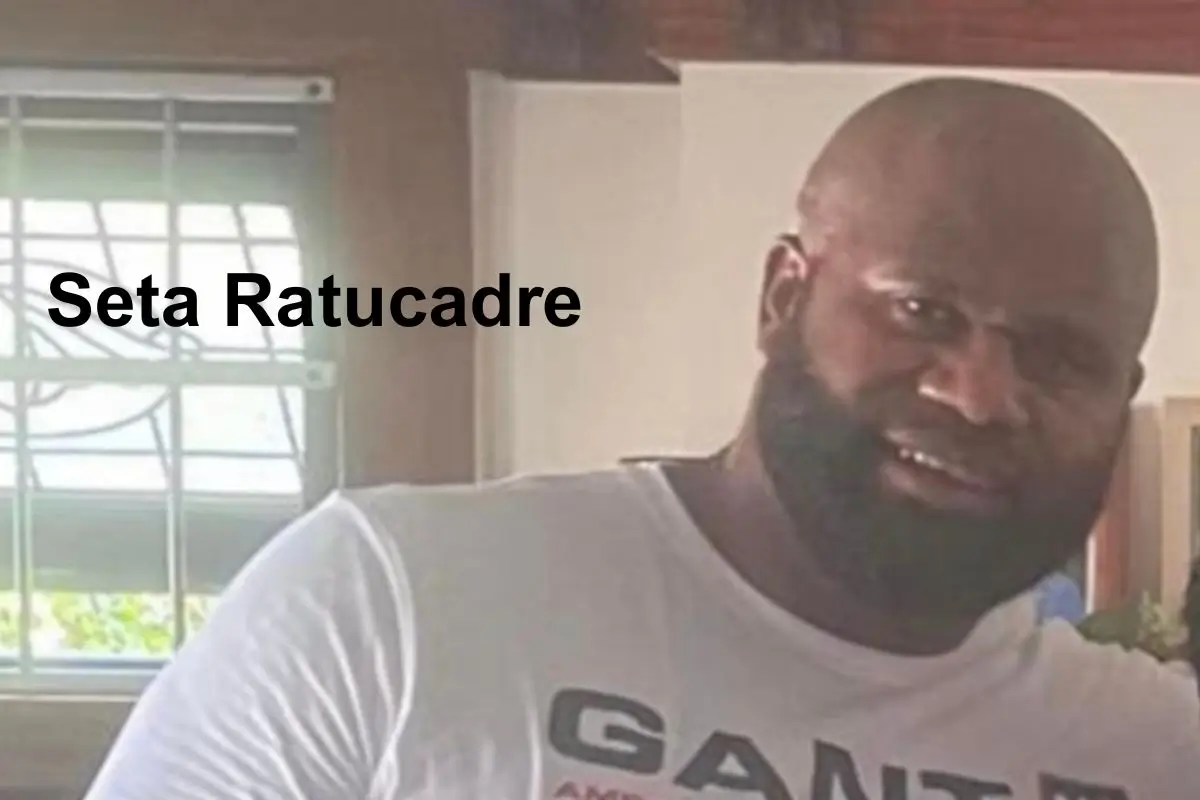
Domestic violence is often kept secret and behind closed doors, but in this case a victim in Western Sydney wanted the country to see the reality she lived through. “Courageous Sydney DV victim wants her story told,” read a Nine News headline on 6:54pm September 30, 2024. In that broadcast by Tiffiny Genders, Chief Court Reporter, and later in multiple news reports, disturbing CCTV footage emerged showing a violent assault inside a McDonald’s restaurant at Minchinbury. It became one of the most confronting and important domestic violence cases in recent Australian legal history.
The footage of what happened to her is distressing, but it’s also the brutal reality of a national crisis that has led a Sydney judge to go to great lengths to protect the woman for the next 14 years. That repeated sentence from the Nine News article became the defining line of media coverage because it captured not only the violence, but also the official response that followed.
A Public Attack in the Early Hours
In the early hours of January 15, 2023, a woman met her former partner outside McDonald’s at Minchinbury on the Great Western Highway. She believed the location was public and therefore safer. She had already obtained an Apprehended Violence Order. For victims of domestic violence, visible areas with CCTV and witnesses often feel safer than private spaces. But that night became a devastating example of how such trust can be broken.
Hours earlier, according to court documents, the woman received a phone call in which her ex-partner threatened to slit her throat. Police allege that this was not an impulsive statement, but the beginning of a premeditated attack. The threat was made using a carriage service, which later became one of the charges.
CCTV Footage Captures “A Fight for Life”
The confrontation that night was caught in its entirety on CCTV. It begins with the woman entering the McDonald’s and trying to walk away from her attacker. He is carrying a 20-centimetre knife. Customers are eating meals. Staff are preparing orders. Three teenage girls are seated nearby. Suddenly, the violence begins.
A shocking video obtained by multiple news outlets, including the Daily Mail and Nine News, shows the moment “a knife-wielding man chased his ex-girlfriend into a McDonald’s where he viciously punched her, dragged her by the hair and stole her phone and keys while horrified customers watched on.” One headline read: Shocking footage emerges of a man repeatedly punching his ex-girlfriend, chasing her with a knife and dragging her across the floor of a McDonald’s in front of horrified customers.
He punches her repeatedly near the counter, forcing her backwards. She tries to kick him away. “He chased, punched, dragged and cut the victim,” another news reporter wrote. She then falls to the floor. He drags her along the tiles by her hair. The woman screams for a place to hide, fearing he’ll be back. She grabs at the blade and sustains wounds to her hands, slicing into her fingers and palms as she tries to stop him. The CCTV also shows her phone and keys falling to the floor.
In what Nine News described as “a final despicable act,” the attacker rips off her jumper and steals her belongings before fleeing. The woman is left scrambling behind counters, trying to find anywhere to hide.
Young diners remain frozen in shock, their eyes fixed on the violence unfolding in front of them. One girl covers her mouth. Another pushes herself back from the table, terrified to move. Their fear is visible on grainy footage played later in court.
The vision was “disturbing,” “horrifying,” and “difficult to watch,” according to multiple reporters. It is rare for domestic violence to be caught on camera with this clarity, and even rarer for the victim to agree for it to be released publicly. The woman said she wanted people to see it, because in her words, too many people believe domestic violence is “private” or “hidden.” She wanted it recorded, broadcast and believed.
A Ten-Minute Knife Crime Spree
After the McDonald’s attack, the violence did not stop. Court documents unveiled four fresh allegations of knife crime during the same 10-minute period in the first hour of the morning. An NCA NewsWire article by Adelaide Lang on January 24, 2023, at 4:38pm described his “knife-wielding crime spree” in detail.
According to police, Ratucadre robbed a person of their mobile phone, purse, car keys and even their car while brandishing a 15-centimetre blade. He then allegedly assaulted the owner of a red Mitsubishi Lancer in order to take the vehicle and drive it without permission. He is also accused of driving the red sedan with a person inside while knowing he was disqualified from holding a licence. Police claim the raft of crimes occurred at McDonald’s in Minchinbury. He had been charged with disqualified driving previously on December 20 in Panania.
When officers arrested him at his Riverstone home, he had already spent a week behind bars on remand. Police eventually located him the day after the crime spree began.
Medical Treatment and Injuries
The woman sustained multiple injuries. Court records confirm that she suffered head, neck, arm and leg injuries, including a scalp laceration, and that some of her hair was physically pulled out during the attack. Her hand injuries were severe because she grabbed the blade. These are called defensive wounds, commonly seen when someone is trying to prevent stabbing. Digital reports describe the cuts as requiring treatment in hospital and likely affecting the use of her hands long term.
Investigating the Threats, Assault and Robbery
Once the police received emergency calls from McDonald’s staff, they opened a criminal investigation. They collected CCTV footage, eyewitness statements and phone records. They retrieved medical documentation showing the pattern of wounds. They examined the AVO that had been active at the time of the offence.
Police initially charged the 36-year-old with using a carriage service to threaten to kill, stalking/intimidation intended to cause fear of physical harm, wounding a person intending to cause grievous bodily harm (domestic violence), and contravene prohibition/restriction in an AVO (domestic violence). Then, on Tuesday, they hit him with the fresh charges of robbery armed with an offensive weapon, aggravated take/drive car with person in it, aggravated assault with intent to take/drive a car and two charges of driving while disqualified.
He did not appear in Blacktown Local Court on the Tuesday following his arrest. The court heard he would not apply for bail. He was scheduled to return to court on March 23.
Plea and Sentencing
Eventually, the 38-year-old pleaded guilty. Published reports on Daily Mail on September 30, 2024 at 09:36 EST, updated October 2, 2024 at 08:53 EST confirmed this. During sentencing, the judge was shown the McDonald’s CCTV video frame by frame. Reporters said the judge was “so mortified by this crime” that they took the extraordinary step of protecting the woman even after Ratucadre gets out of prison.
He was sentenced to a minimum of four and a half years jail. Although other outlets mentioned a total sentence of around six years with parole eligibility factored in, Nine News consistently lists the minimum as four and a half years. The court also issued a fourteen-year Apprehended Domestic Violence Order to be enforced after his release. The court rarely imposes orders of this length.
Psychiatric Evaluation and Rehabilitation Analysis
During sentencing, a psychiatric evaluation was presented in court. It documented a history of substance use beginning in adolescence, including cannabis, heroin, cocaine, ice and alcohol. The court was told he developed these habits after the death of his father. The evaluation also identified diagnosis of anxiety and depression. However, the psychologist noted that the offender demonstrated a “disturbing lack of insight,” “victim blaming,” and “extremely guarded prospects of rehabilitation.”
This meant the court could not be confident that he would change behaviour. Judges in such cases weigh whether the offender is likely to repeat violent actions. The evaluation suggested risk remained high.
Domestic Violence Under Public Examination
The significance of this case extends beyond one night’s violence. Public prosecutors and journalists repeatedly referred to the CCTV as “distressing, brutal reality,” reinforcing that domestic violence remains a national crisis in Australia.
It raised major questions about systems designed to protect victims. Commentators asked why the existing AVO was not enough to stop the attack. Advocates pointed out that victims can follow all legal directions, gather evidence and seek orders and still be attacked in public places.
Police sources discussed an increase in knife crime across Western Sydney, including public assaults in shops, restaurants and streets. Reports connected this case to a wider trend of people brandishing knives during domestic and random disputes.
Life After the Attack
For the woman, recovery continues. She lives with fear of public places, fear of footsteps behind her, and fear of returning to the same restaurant. She may think twice before sitting near open entrances or walking alone. The fourteen-year DV protection order was created to reassure her that the justice system still stands between her and any future harm.
The case has had emotional consequences for those who witnessed the attack. Teenagers sitting near the assault remembered frozen fear. Staff members recalled running to phones and calling police. Workers later said they needed support to process the experience.
What This Case Means for Australia
The Minchinbury McDonald’s attack changed the framing of domestic violence reporting in Australia. Journalists no longer relied on abstract language. They had video. It showed violence in a public space, under bright lights, in front of witnesses, confirming that domestic violence does not only happen in bedrooms.
Questions remain about whether AVOs require stronger powers, whether high-risk domestic violence offenders require closer monitoring, and whether police can intervene earlier when someone violates protective orders. If someone threatens to “slit your throat,” many advocates argue that police must have authority to arrest immediately.
This case underscores the importance of training for staff in public places to respond to domestic violence emergencies, equipping them with guidance on who to call and how to protect witnesses.
Conclusion
The case of Seta Ratucadre is a story that began with a threat and ended with a sentencing outcome shaped by CCTV evidence. The footage was disturbing, compelling and necessary. It showed what domestic violence looks like when it erupts in public: sudden, frightening and impossible to ignore. It forced the justice system to take extraordinary measures including a fourteen-year AVO, a minimum four and a half year jail sentence and consideration of substance abuse, mental health, prior court orders and risk of reoffending.
The footage of what happened to her is distressing, but it’s also the brutal reality of a national crisis that has led a Sydney judge to go to great lengths to protect the woman for the next fourteen years. The woman’s decision to let her story be told publicly is a powerful reminder that victims deserve to be believed and protected.
Domestic violence is not hidden in this case. It is exposed in full, recorded frame by frame, presented in court and shared with the Australian public. This case reveals the gaps in existing systems and highlights the urgent need to improve protections for vulnerable people before violence happens, rather than after the fact.
FAQs
Who is Seta Ratucadre?
Seta Ratucadre is a man from Western Sydney who pleaded guilty to multiple offences including domestic violence, wounding with intent to cause grievous bodily harm, using a carriage service to threaten to kill, armed robbery and aggravated vehicle offences. His violent attack on his former partner at a McDonald’s restaurant in Minchinbury was captured on CCTV and widely reported after footage was released in court.
What happened at the Minchinbury McDonald’s?
In the early hours of 15 January 2023, Ratucadre chased his ex-partner into the Minchinbury McDonald’s with a knife, punched her, dragged her by the hair and caused severe injuries while customers watched. CCTV showed the woman trying to kick him away, grabbing at the blade and screaming for help. He ripped off her jumper, stole her phone and keys and fled the scene.
How long was he sentenced to jail?
Ratucadre was sentenced to a minimum of four and a half years in prison for the domestic violence attack and related offences, with a longer full sentence dependent on parole eligibility. He must serve at least the minimum term before applying for release.
Why was the CCTV footage released publicly?
The victim agreed for the court to release the CCTV footage because she wanted her experience to be shown and understood. She believed that too many domestic violence incidents remain hidden and wanted to expose the reality of intimate partner violence in public places.
What additional crimes took place on the same night?
Police later discovered that the attack at McDonald’s was not the only offence. Within roughly ten minutes, Ratucadre allegedly robbed a person with a knife, stole a red Mitsubishi Lancer and drove while disqualified. These incidents occurred in the first hour of the morning following the assault.
What legal protection was granted to the victim?
A Sydney judge imposed a fourteen–year apprehended domestic violence order to protect the victim after Ratucadre is released from prison. This is considered an unusually long protection period and indicates ongoing concern for the woman’s safety.
Where did the court proceedings take place?
The charges were heard in Blacktown Local Court. Ratucadre did not appear in court on one occasion after being remanded in custody. He later entered a guilty plea and sentencing proceeded after the CCTV footage and investigation materials were presented.
Why is this case considered important in discussions about domestic violence in Australia?
The case highlighted failures in existing protection systems, the limitations of AVOs and the ease with which threats can escalate into violence. The CCTV video revealed domestic violence in a public space and sparked debate about protective orders, police intervention, knife crime and the need for stronger domestic violence responses nationwide.