
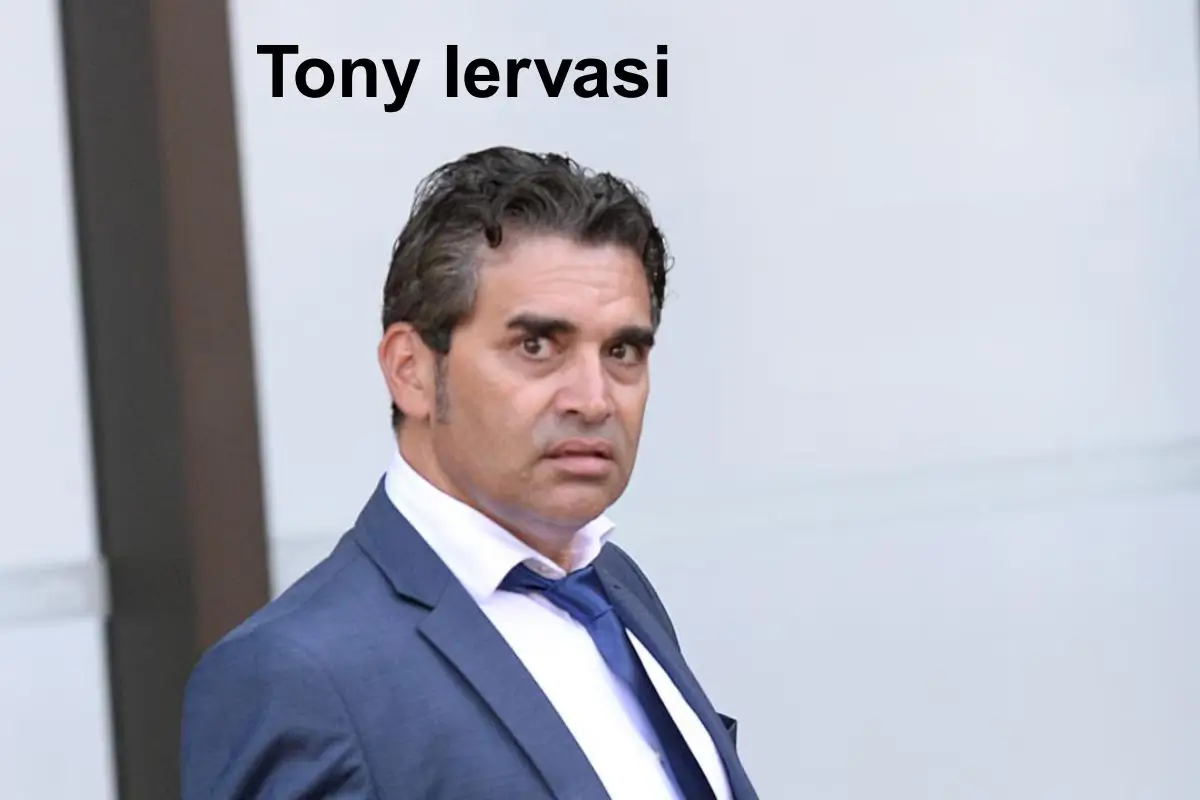
The collapse of the Courtenay House investment network and the conviction of its director, Tony Iervasi, has become one of the most significant financial crime cases in Australia. What began as an operation marketed as a sophisticated foreign exchange and futures trading enterprise ultimately unfolded into a long-running Ponzi scheme that devastated the lives of hundreds of Australians. For nearly seven years, investors believed they were participating in a legitimate trading program that offered consistent monthly returns. Behind the polished image, however, was a system built on deception, fabricated performance figures and unlicensed financial activity. The full extent of the misconduct became clear only after ASIC intervened, the Supreme Court stepped in with emergency orders and liquidators uncovered the reality behind the companies’ operations. The sentencing of Tony Iervasi in 2024 marked the conclusion of a long investigative process and publicly exposed the depth of harm caused by the scheme.
The rise of Courtenay House and its appeal to investors
Courtenay House and Courtenay House Capital Trading Group operated from Bondi Junction, New South Wales, under the directorship of Tony Iervasi. The businesses presented themselves as specialised trading entities capable of navigating complex forex and futures markets. Through regular investor updates, well-crafted reports and confident explanations of market behaviour, they created the impression of a refined and disciplined trading model. Many Australians, including retirees, workers, families and small business owners, were drawn to the promise of reliable monthly returns. The stability and professionalism projected by the companies reassured investors that their funds were being managed by experienced financial professionals.
The companies operated between 13 December 2010 and 21 April 2017, during which they attracted around 585 investors and raised approximately $180 million. Investors felt secure because monthly payments appeared steady. The businesses provided smooth communication, updates that seemed aligned with global economic events and explanations that gave the illusion of an active trading system. For many households, Courtenay House became part of their long-term financial planning, used to support retirement, education savings and major life goals.
The concealed reality and operation as a Ponzi scheme

The genuine nature of the business was revealed only after ASIC and court-appointed liquidators examined the accounts. Despite promises of sophisticated market trading, only around three per cent of all investor funds were actually traded. The rest of the money was directed towards paying returns to earlier investors, funding expenses and generating the illusion of a successful investment program. This arrangement matched the textbook structure of a Ponzi scheme. When new deposits slowed and withdrawal requests increased, the structure weakened, leading to its inevitable collapse.
Liquidators later confirmed that Courtenay House had been operating as a Ponzi scheme since at least 2010. The business relied entirely on a constant flow of new investor funds to pay existing investors. Promotional material referenced trading opportunities linked to major international events, creating the impression of a dynamic strategy. However, the trading activity was minimal, and the business model depended on continual recruitment rather than genuine investment expertise. Investors were misled through sustained deception, false representations and reassurances that masked the true financial position of the companies.
ASIC intervention and shutdown in 2017
As concerns escalated, ASIC sought emergency intervention. On 1 May 2017, the Supreme Court of NSW, by consent, issued interim orders preventing Courtenay House, Courtenay House Capital Trading Group and Tony Iervasi from carrying on a financial services business. These orders also restricted their ability to deal with assets. ASIC sought these measures to preserve funds that might still be available for investors and to ensure that the companies did not accept new investor money while the investigation proceeded.
On 16 May 2017, liquidators were formally appointed. Their investigation revealed the full extent of the misconduct, including the minimal level of actual trading and the large proportion of investor funds diverted into the Ponzi mechanism. The net investor loss was determined to be around $54 million. Although liquidators worked extensively to recover assets, the maximum distribution achieved was around 28 cents in the dollar. The liquidation process remains ongoing, reflecting the complexity of tracing assets and reviewing historical transactions.
ASIC later emphasised the importance of recognising the warning signs of Ponzi schemes, urging Australians to educate themselves through resources available on its Moneysmart platform. The agency also noted that its media releases are point-in-time statements and should be read within their date context.
The human impact on investors and families
The collapse of Courtenay House created profound hardship for the 585 investors affected. Many had invested retirement savings or money intended for long-term financial security. When the scheme was exposed, they faced unexpected financial devastation. The emotional consequences were severe. Stress, anxiety and feelings of betrayal were common as investors grappled with the reality of their losses.
Justice Deborah Sweeney acknowledged the human damage during sentencing, stating that the harm extended beyond lost savings. She described how the collapse resulted in breakdowns of marriages and family relationships, emotional and physical health struggles and the need for some individuals to delay retirement or re-enter the workforce. The judge noted that investors lost both life savings and financial stability, and that the consequences of the misconduct would continue to affect them for many years.
Criminal prosecution and guilty plea
Following extensive investigations, the matter was referred by ASIC to the Office of the Director of Public Prosecutions (Cth), which undertook the criminal prosecution. On 8 November 2022, Tony Iervasi pleaded guilty to four offences of engaging in dishonest conduct in relation to a financial service under section 1041G of the Corporations Act 2001 (Cth). He also pleaded guilty to carrying on an unlicensed financial services business under section 911A of the Act. In addition to these charges, he admitted guilt in relation to two further section 1041G offences, which were taken into account on sentence.
The charges reflected systematic dishonesty over six and a half years, during which the companies portrayed themselves as legitimate investment operations while engaging in unlicensed and fraudulent conduct. The plea led to a sentencing discount, but the gravity of the offences required significant penalties.
Sentencing of Tony Iervasi in 2024
On 2 September 2024, the Supreme Court of NSW sentenced Iervasi to 11 years’ imprisonment, with a non-parole period of seven years. Justice Sweeney delivered detailed remarks describing Iervasi’s actions as dishonest on an egregious scale. She noted that he had engineered “the veneer of a successful wealth-creating business … which sought to reassure and persuade victims to invest.” She also highlighted the total amount of funds deposited, the number of victims and the $12 million in funds used for Iervasi’s personal benefit.
The sentencing marked one of the most significant penalties imposed for an Australian investment fraud case. ASIC Deputy Chair Sarah Court welcomed the outcome, stating that the sentence demonstrated ASIC’s commitment to protecting the public from deliberate financial fraud.
Related convictions arising from the Courtenay House network
Two others connected with promoting Courtenay House also faced prosecution. Former contractor Athan Papoulias was sentenced on 8 May 2023 to two years under an intensive correction order, with 120 hours of community service. His involvement related to participation in the unlicensed financial services business, although he was not found to have been aware of the Ponzi structure.
Former promoter David Sipina faced more serious charges. He pleaded guilty to aiding and abetting the operation of an unlicensed financial services business under section 11.2 of the Criminal Code and section 911A of the Corporations Act, and to dealing with at least $1 million that he believed to be proceeds of crime, contrary to section 400.3(1) of the Criminal Code. Sipina had recruited and managed 215 investors between June 2015 and April 2017 and earned around $3.9 million in commissions. On 23 December 2024, he received a three-year sentence to be served under an intensive correction order. ASIC later stated that his sentencing served as a strong deterrent for others operating outside the law.
The lasting legacy of the Courtenay House collapse
The Courtenay House scandal has become a key reference point in discussions surrounding financial regulation, investor protection and the risks associated with unlicensed investment schemes. It highlights the importance of verifying licensing, understanding realistic investment returns and recognising the red flags associated with Ponzi arrangements. For many of the victims, the effects of the collapse continue to shape their financial and emotional lives. While partial recoveries have been made, the losses suffered and the trust broken cannot be fully repaired.
Conclusion
The story of the Courtenay House collapse is a reminder of how easily trust can be manipulated when financial operations appear polished, consistent and well-managed. Tony Iervasi’s actions created a powerful illusion that persuaded hundreds of Australians to invest in a scheme that was never legitimate. The eventual exposure of the operation, the intervention of ASIC and the detailed work of liquidators revealed the depth of the deception and the substantial harm inflicted on ordinary people. The sentencing of Iervasi in 2024 brought justice, but the emotional and financial scars remain for many victims. As Australia continues to strengthen its financial regulatory environment, cases like this underline the need for vigilance, transparency and ongoing education to protect investors from similar schemes in the future.