
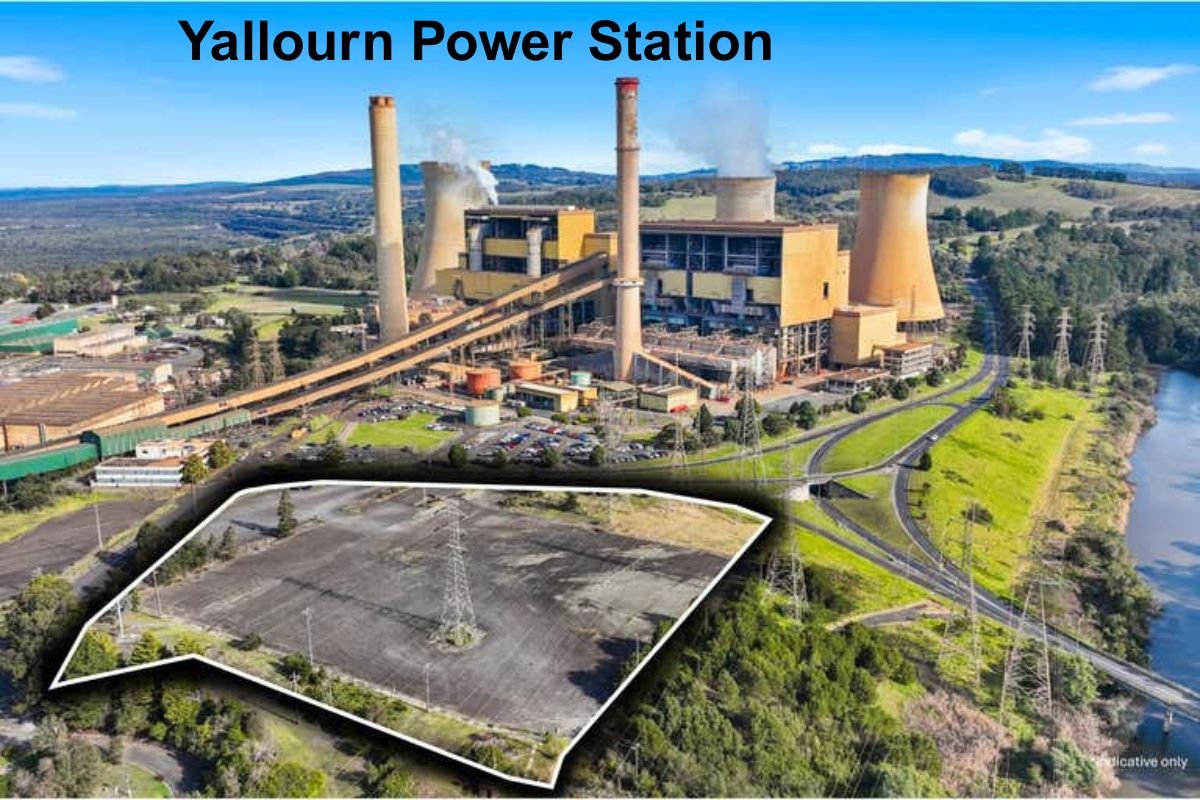
Yallourn Power Station has been at the heart of Victoria’s energy story for more than a century, powering homes, industries and communities across the state while shaping the identity of the Latrobe Valley. Set on the traditional lands of the Braiakaulung people of the Gunaikurnai nation, the station has operated continuously for decades, supplying reliable electricity around the clock and supporting generations of workers and families. As one of Australia’s longest-running coal-fired facilities, Yallourn stands as both a symbol of the state’s industrial past and a focal point of its transition toward a new energy future. With its 2028 closure approaching, the story of Yallourn captures the challenges, achievements and deep community connections that define Victoria’s evolving energy landscape.
A landmark that powered Victoria around the clock
Yallourn Power Station has been one of Victoria’s most influential energy assets for more than a century, shaping the industrial and social character of the Latrobe Valley and supplying the electricity that fuelled the state’s growth. Situated on the traditional lands of the Braiakaulung people of the Gunaikurnai nation, Yallourn has produced power every hour of every day, becoming a symbol of reliability and a central pillar of regional identity. Its story stretches from the establishment of the first Yallourn station and the purpose-built company town in 1921 through to the modern facility operating today, all while supporting thousands of workers and families across generations. As Victoria prepares for the next era of energy, Yallourn stands at the intersection of history, community, engineering and transition.
The origins of Yallourn and the rise of a power community
The foundations of Yallourn Power Station were laid in 1921 when the State Electricity Commission of Victoria developed the original power complex along with the township designed exclusively for workers and their families. The town became a flourishing community, complete with homes, schools and social venues, tied closely to the rhythm of the electricity industry. Over the decades, as energy demand increased and mining expanded, the original township was gradually removed during the 1970s and 1980s to make way for the enlargement of the open-cut mine. This transformation remains one of the region’s defining chapters, reflecting both the growth of Victoria’s energy system and the sacrifices involved in sustaining it.
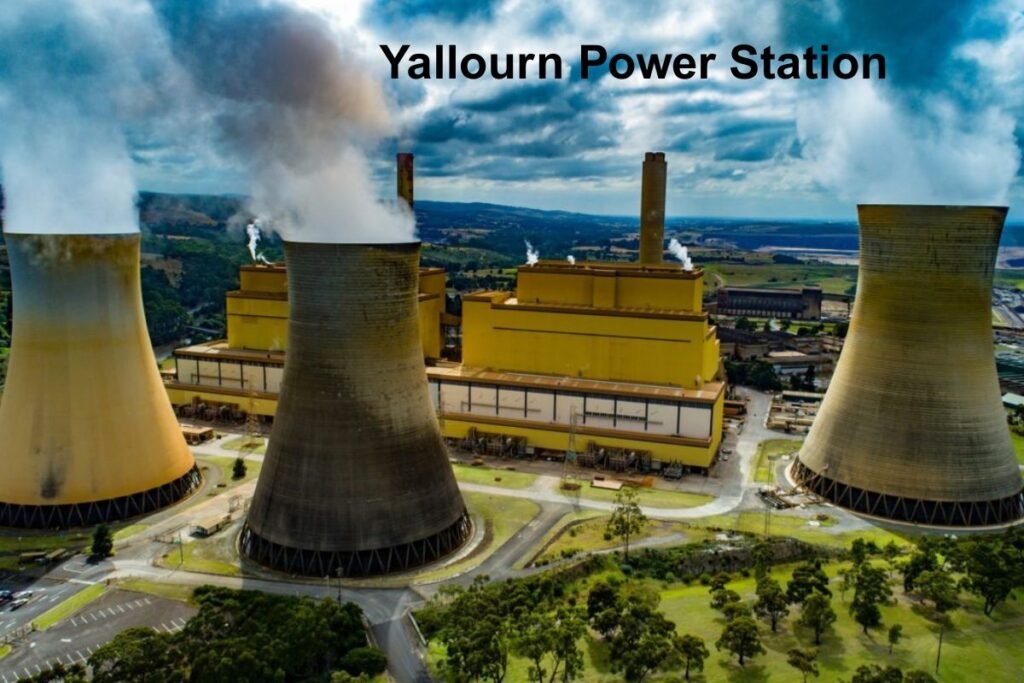
The contemporary station, Yallourn W, entered service in 1974 and continued its commissioning through to 1982. It introduced concrete cooling towers that were the first of their kind in Australia, marking a new era of engineering advancement. Yallourn also became the first Victorian Government-owned power station to be privatised during the 1990s, signalling broader structural changes in the state’s electricity sector.
How Yallourn Power Station produces electricity
Yallourn Power Station operates alongside Australia’s second-largest open-cut brown coal mine, enabling coal to travel directly from the pit to the boilers. Approximately eighteen million tonnes of brown coal are extracted each year to generate the superheated steam needed to operate four turbines. Two turbines are rated at 350 megawatts and two at 375 megawatts, delivering a combined output of around 1,480 megawatts each hour. This level of generation is sufficient to power about two million homes and has cemented Yallourn’s role as one of the state’s most reliable sources of electricity.
The station produces around 10,500 gigawatt hours of power annually, supplying roughly twenty-two per cent of Victoria’s electricity and around eight per cent of the National Electricity Market. Its round-the-clock operation has long provided the stability required to manage extreme temperatures, fluctuating demand and periods when renewable generation dips. Yallourn’s capacity to maintain consistent baseload generation made it a foundation of Victoria’s power system for decades.
Environmental pressures and the challenges of ageing infrastructure
While Yallourn has been fundamental to Victoria’s electricity supply, its reliance on brown coal has drawn increasing environmental scrutiny. Brown coal is among the most emissions-intensive fuels, and Yallourn has been identified as one of Australia’s highest-emitting power stations. As climate expectations have evolved and renewable energy has expanded, the environmental impact of facilities like Yallourn has become a focal point of public debate.
Environmental challenges have been compounded by the site’s susceptibility to water management issues and the pressures of ageing infrastructure. In 2012, the Morwell River Diversion failed, allowing floodwaters to enter the mine and causing severe disruption to coal supply. The event required extensive remediation and highlighted the vulnerability of open-cut mines to extreme weather. Heavy rainfall again entered the mine in 2021, forcing three units offline and raising concerns about operational reliability during changing climate conditions.
Mechanical disruptions have also played a role in Yallourn’s recent history. In 2025, a critical turbine failure on Unit 2 resulted in a prolonged outage that required specialist components to be imported from Japan. This outage, along with others across ageing coal stations, contributed to broader concerns about the reliability of older baseload generators. Victoria’s Auditor-General later warned that delays in renewable projects and transmission upgrades could leave the state at risk of electricity shortfalls once Yallourn retires.
Why Yallourn is closing and what it means for Victoria
In March 2021, EnergyAustralia announced that Yallourn Power Station would close in mid-2028, four years ahead of its original retirement schedule. The decision reflected increasing maintenance demands, stronger renewable competition, emissions reduction commitments and broader shifts in the economics of electricity generation. Although many in the Latrobe Valley expected the station to close eventually, the revised timeline arrived sooner than most anticipated.
The closure follows the shutdown of Hazelwood Power Station in 2017, a loss that removed thousands of jobs from the region and reduced Latrobe City Council’s annual budget by around two million dollars. Yallourn’s retirement is expected to have a similar, if not greater, economic impact due to the number of workers employed directly and indirectly. The station’s operations support several hundred full-time jobs and an estimated three to four indirect jobs for every direct role. Local businesses, trades, contractors, retailers and professional service providers all rely on the economic activity generated by Yallourn’s workforce.
Community impact and the need for government support
Latrobe City Council has expressed serious concern about the impending closure and the pressures it places on local residents. Council leaders note that the transition affects more than employment statistics. It influences the mental health, financial stability and future planning of families who have long depended on the power industry. Schools, community groups, sports clubs and local services rely on stable population levels, and widespread job loss risks destabilising the region’s social fabric.
Mayor Sharon Gibson has urged state and federal governments to work collaboratively with the Council to ensure a fair and supported transition. She has called for investment in new industries, additional government services, health infrastructure, manufacturing capacity and retraining programs that can provide long-term employment pathways. The Council’s Strength-Led Transition strategy outlines key projects that require funding to stimulate the local economy. These projects include industrial redevelopment, transport upgrades, health service expansions, agricultural innovation and enhanced training programs for workers transitioning out of energy-sector roles.
Mayor Gibson has also pointed to the Latrobe Valley’s deep technical expertise, describing it as a region rich with industrial skill and innovation capability. She argues that this specialised workforce should not be lost but instead leveraged to attract new industries and modern manufacturing projects. The community has already benefited from the Latrobe Valley Sports and Community Initiative, which brought new facilities to the region, but Council leaders emphasise that much more support is needed to maintain economic resilience.
EnergyAustralia’s transition investment and the future energy landscape
As part of the transition plan, EnergyAustralia has committed to building a 350-megawatt, four-hour battery in the Latrobe Valley, expected to be operational by 2026. This battery, often referred to as the Wooreen Battery or Latrobe Valley Battery, will help strengthen grid stability as coal-fired generation winds down. It will store excess renewable energy and dispatch it when needed, supporting Victoria’s move toward a low-emissions electricity network. Although the project is significant for the state’s energy future, it cannot replace the scale of employment nor the economic output associated with Yallourn Power Station. A broader long-term strategy remains essential to ensure the region does not experience the economic shocks seen after Hazelwood’s closure.
The future of the Yallourn site itself is also under consideration. Rehabilitation work will be a long-term process involving mine wall stabilisation, water management, environmental monitoring and planning for possible pit-lake development. The land may eventually support renewable energy projects, industrial redevelopment or environmental restoration, depending on feasibility studies and community priorities. Rehabilitation is expected to span many years and will play a crucial role in determining the site’s long-term future.
Yallourn’s final years and the legacy it leaves behind
As Yallourn Power Station continues to operate throughout its remaining years, it maintains its role as a stabilising force in Victoria’s grid. Workers remain dedicated to keeping the plant safe and reliable, carrying forward a tradition of technical excellence and resilience. Yet the community also prepares for the moment when the station’s turbines fall silent for the last time, marking the end of an era that shaped both the Latrobe Valley and the state.
Conclusion
Yallourn Power Station is far more than a facility that generates electricity. It represents a century of industrial achievement, community strength and the complex relationship between energy production and regional identity. Its closure in 2028 will mark a significant milestone in Victoria’s transition toward a cleaner energy future, but it also brings challenges that require coordinated planning, strong investment and continued support for workers and families. With careful management, the Latrobe Valley can enter a new phase defined by innovation and opportunity while honouring the long legacy of the station that powered Victoria for generations.
FAQs
Why is Yallourn closing?
Yallourn is closing due to rising maintenance costs, increasing reliability challenges, stronger competition from renewable energy and EnergyAustralia’s commitments to reduce emissions. The market has shifted toward cheaper, cleaner energy sources, making the long-term operation of an ageing brown-coal station no longer viable. Its closure in 2028 aligns with Victoria’s broader transition toward a low-emissions electricity system.
How does the Yallourn Power Station work?
Yallourn operates by burning brown coal mined from the adjacent open-cut pit. The coal heats water in large boilers to create superheated steam, which drives four turbine generators. These turbines produce around 1,480 megawatts of electricity per hour, supplying power to roughly two million homes across Victoria and contributing to the National Electricity Market.
What will replace the Yallourn Power Station?
EnergyAustralia has committed to building a 350-megawatt, four-hour grid battery in the Latrobe Valley to support system reliability as Yallourn retires. This battery will store renewable energy and dispatch it when needed. Additional renewable projects, transmission upgrades and storage developments planned across Victoria will also contribute to replacing Yallourn’s baseload generation over time.
Who owns the Yallourn Power Station?
Yallourn Power Station is owned and operated by EnergyAustralia, a major Australian energy retailer and generator. EnergyAustralia is a subsidiary of CLP Group, a Hong Kong-listed energy company with operations across the Asia-Pacific region.
Is Yallourn Power Station nuclear?
No. Yallourn Power Station is not nuclear. It is a brown-coal-fired thermal power station that uses steam-driven turbines to generate electricity. Australia has no operating nuclear power plants.
Does China own the Australian power grid?
No, China does not own the Australian power grid. Australia’s electricity network is owned by a mix of public and private companies, including state governments, Australian investors and international firms. While some foreign companies hold stakes in specific assets, the national grid is not owned by China.
How old is the Yallourn Power Station?
The current Yallourn W station began operating in 1974, making it more than 50 years old. The broader Yallourn energy precinct dates back to 1921, when the original station and the company town were built.
Will Australia’s coal power stations all close in 2038?
No. While some forecasts and policy discussions suggest most coal stations may close before the late 2030s due to market forces and climate targets, there is no single mandated closure year for the entire fleet. Each station has its own scheduled retirement date, with some expected to close well before 2038 based on economics, maintenance costs and energy market changes.