
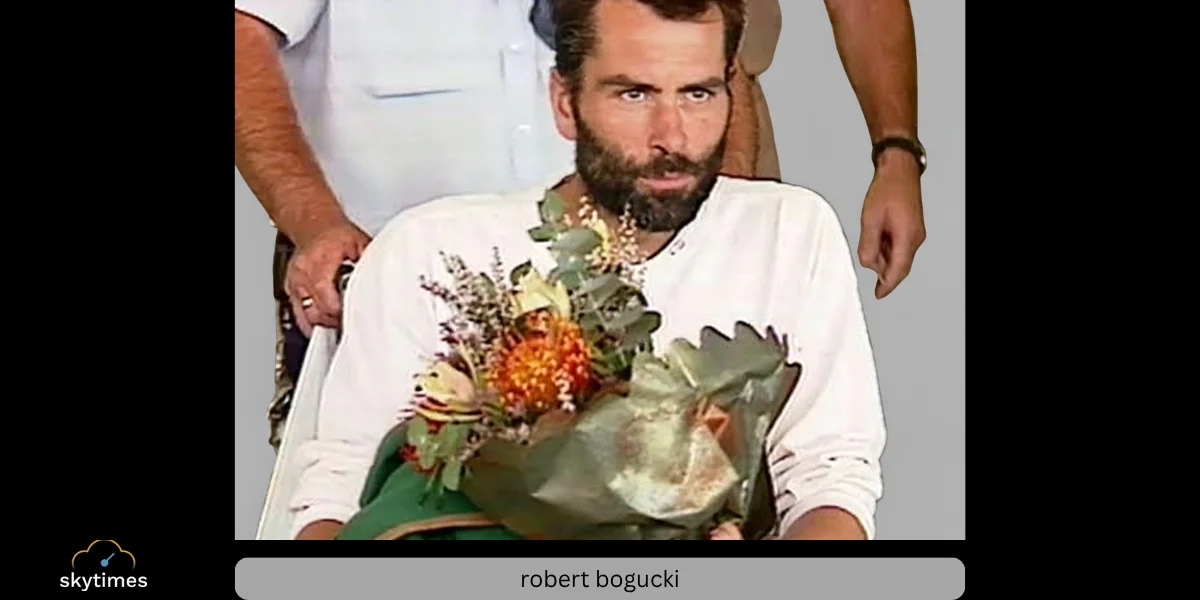
In the annals of Australian outback survival, few tales possess the harrowing intensity or the subsequent media notoriety of the Robert Bogucki case. In the winter of 1999, the disappearance of a 33-year-old American firefighter in Western Australia’s Great Sandy Desert gripped the nation, sparking an unprecedented search operation and raising uncomfortable questions about the ethics of media reporting.
Robert Bogucki: A Spiritual Quest into the Unknown
Robert Bogucki, an Alaskan firefighter, arrived in Australia in 1999 with a desire to escape the perceived constraints of modern life. Driven by a desire for solitude and a spiritual “itch” to test his own limits, Bogucki began his journey at the Sandfire Roadhouse, roughly 300 kilometres south of Broome.
On July 11, 1999, he set off on his bicycle with the intention of crossing the Great Sandy Desert to Fitzroy Crossing. Bogucki carried minimal supplies, intentionally choosing to rely on his own resilience. However, the desert, one of the most hostile environments on Earth, proved far more unforgiving than he anticipated. When tourists discovered his bicycle and belongings abandoned near the highway, the alarm was raised, and a massive search operation commenced.
Robert Bogucki: The Search and the Ordeal
The search for Bogucki lasted 28 days and involved police, local Indigenous trackers, and eventually, a private rescue team hired by his parents, Ray and Betty Bogucki, who refused to accept that their son had perished.
While authorities officially called off the police search after 12 days—a controversial decision at the time—the private search continued. Bogucki’s survival for 43 days remains a testament to human endurance. During his time in the desert:
- He survived for nearly six weeks without a consistent food source.
- He endured 12 days without a reliable water supply, eventually resorting to digging for muddy water, straining it, and consuming native berries, flowers, and plants.
- He traveled approximately 400 kilometres from his starting point, wandering through the Edgar Ranges in a state of confusion and disorientation.
Robert Bogucki: Media Controversy and the “Rescue”
On August 23, 1999, the search ended when a Channel Nine news helicopter spotted Bogucki. While the rescue was celebrated as a “miracle,” the conduct of the news crew drew significant criticism from the public and fellow media organizations.
Critics alleged that the crew prioritized securing an exclusive interview and dramatic footage over Bogucki’s immediate medical needs. Reports emerged that he was fed a banana in the helicopter—which caused him to become ill—and was filmed retching after being briefly set back down on the ground, creating footage that was later presented as having been recorded at the moment of discovery. The incident remains a cautionary tale in Australian media history regarding the ethics of “chasing the story” in emergency situations.
Robert Bogucki: Legacy and Reflection
The Robert Bogucki story serves as more than just a remarkable feat of physical endurance; it is a complex narrative about the relationship between individuals and the environments they seek to conquer. For Bogucki, the experience was a personal journey that he later described as satisfying a deep, internal need for isolation, though he acknowledged the irony of being pulled back into the modern world by the very media machine he sought to escape.
Key Takeaways from the Bogucki Case
- The Power of Resilience: Bogucki’s ability to find sustenance in a barren landscape remains a subject of intrigue for survival experts.
- Media Ethics: The case remains a standard example in Australian journalism schools of the dangers of prioritizing sensationalism over the welfare of those involved in breaking news.
- The Unforgiving Outback: The ordeal underscored the extreme danger of underestimating the Australian desert, leading to ongoing discussions about safety protocols for travelers.
Current Life (2026)
As of 2026, Robert Bogucki continues to live a private life, largely away from the intense media spotlight that followed him for years after his rescue. He has occasionally engaged in interviews to reflect on his experience, including participating in in-depth podcasts and documentaries that revisit the search and the extraordinary circumstances of his survival. He remains a figure of fascination, representing the thin line between a planned spiritual journey and a perilous life-or-death struggle.
Conclusion
Robert Bogucki’s 43 days in the Great Sandy Desert remain etched in the Australian cultural consciousness. It was a story of a man who ventured into the wild to lose himself, only to be found in the most spectacular fashion imaginable. While his survival was undeniably a miracle, the case continues to offer profound lessons on the limits of human endurance and the ethical responsibilities of those who tell the stories of survivors.
The man who disappeared on purpose
This video provides an in-depth retrospective from ABC News on the 1999 disappearance and the subsequent search for Robert Bogucki in the Australian outback.