
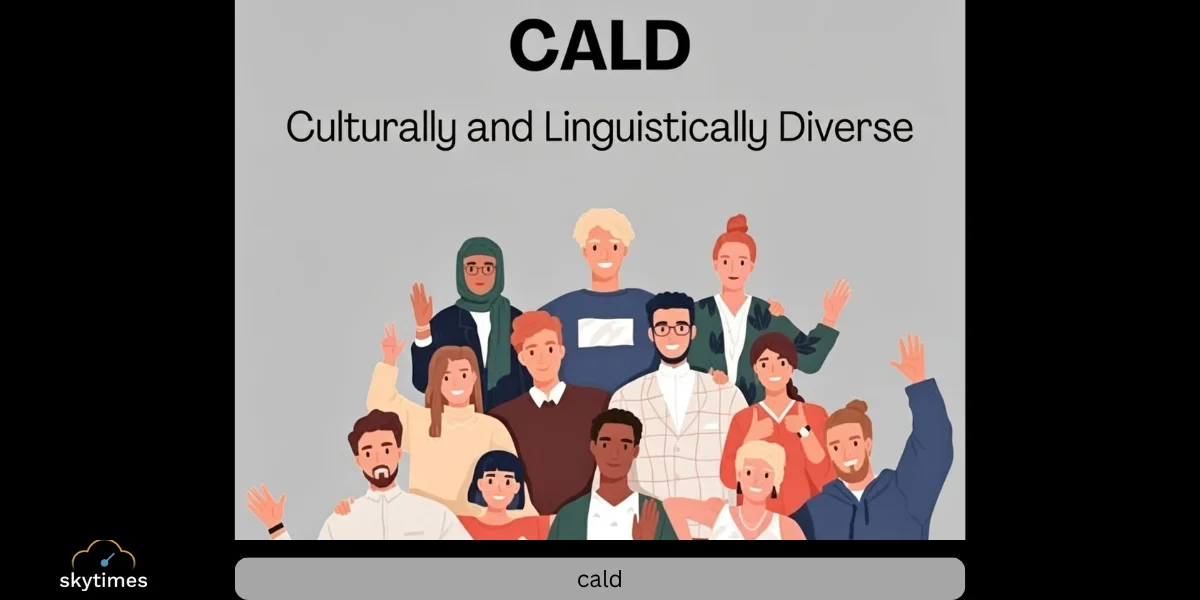
Australia is renowned for its cultural diversity, welcoming people from across the globe who bring a rich tapestry of languages, traditions, and experiences. The acronym CALD, standing for Culturally and Linguistically Diverse, has become a key term in Australian public discourse, particularly within government, health, education, and community services. This article offers a comprehensive, authoritative exploration of what CALD means, its origins, current use, statistical significance, criticisms, and practical implications for policy and service delivery.
What Does CALD Mean?
At its core, CALD refers to individuals and communities whose cultural background, language, ethnicity, or ancestry differ from the dominant Anglo-Australian, English-speaking majority.
Typically Included
- People born overseas in non-English-speaking countries.
- Individuals who speak a language other than English at home.
- First- and second-generation migrants and their families.
- Refugees, humanitarian entrants, and international students.
Importantly, does not usually include Aboriginal and Torres Strait Islander peoples, who have distinct recognition, nor does it generally apply to migrants from primarily English-speaking countries such as the UK, USA, New Zealand, or Canada.
The Origin
The term CALD was introduced by the Australian Bureau of Statistics in 1999, replacing the older and widely criticised term NESB (Non-English Speaking Background).
- NESB was seen as too narrow and negatively framed.
- CALD was intended to be a more inclusive and descriptive term reflecting Australia’s multicultural society.
- It quickly became standard terminology in policy-making, service provision, and research.
The Significance in Australian Society
Australia’s demographic landscape is profoundly shaped by migration and multiculturalism:
- Nearly half of all Australians were either born overseas or have at least one parent born overseas.
- More than 300 languages are spoken in Australian homes.
- CALD communities represent a significant and growing proportion of the population, particularly in major cities like Sydney and Melbourne.
This diversity enriches Australia’s cultural fabric but also presents unique challenges and opportunities in service delivery and social inclusion.
Practical Uses
CALD is widely used by governments, healthcare providers, educational institutions, and community organisations to:
- Plan and tailor services that meet the needs of diverse populations.
- Provide translated materials and interpreter services.
- Address barriers in healthcare access, education outcomes, employment, and emergency responses.
- Promote cultural awareness and sensitivity among service providers.
For example, hospitals use CALD data to improve communication with patients who have limited English proficiency, while schools develop programmes to support children from CALD backgrounds.
Criticisms and Limitations
Despite its widespread adoption, CALD is not without controversy. Experts and community members have raised several concerns:
Broadness and Vagueness
- CALD lumps together vastly different groups, from highly educated European migrants to refugees fleeing conflict.
- This can obscure specific challenges faced by subgroups, limiting targeted policy responses.
Lack of Racial and Social Context
- The term does not explicitly acknowledge race, racism, or systemic discrimination.
- Many argue that it overlooks the lived experiences of racially marginalised communities.
Preference for Alternative Terms
- Some prefer terms like “culturally and racially marginalised” (CARM) or simply identify by specific ethnic or linguistic backgrounds (e.g., Vietnamese-Australian, Arabic-speaking).
- This specificity can promote better representation and understanding.
Practical Examples: Navigating in Real Settings
- Health Sector: Providing culturally appropriate care by recognising traditional health beliefs among CALD groups improves patient outcomes.
- Education: Employing bilingual aides and culturally relevant curricula supports CALD students’ engagement and success.
- Employment: Tailoring job training and workplace diversity programmes helps overcome barriers faced by CALD jobseekers.
- Emergency Services: Multilingual emergency alerts and community liaison officers improve safety during crises.
Expert Tips for Working with CALD Communities
- Avoid Assumptions: Each individual’s experience and needs are unique despite shared cultural backgrounds.
- Engage Community Leaders: Collaborate with trusted figures to build rapport and trust.
- Invest in Interpreter Services: Ensure language is not a barrier to access.
- Cultural Competency Training: Equip staff with skills to understand and respect diverse cultural practices.
- Collect Detailed Data: Go beyond broad CALD categories to understand specific community profiles.
Common Mistakes and How to Avoid Them
- Overgeneralising Groups: Treating all CALD individuals as having the same needs.
- Ignoring Intersectionality: Overlooking factors like age, gender, and socioeconomic status within populations.
- Tokenistic Inclusion: Superficial engagement without genuine consultation or empowerment.
- Insufficient Resources: Underfunding programmes aimed at CALD communities.
- Lack of Continuous Evaluation: Failing to adapt services based on feedback and changing demographics.
Avoiding these errors fosters more effective, respectful engagement.
Future Outlook: Evolving Understanding and Inclusion
- There is growing momentum towards more nuanced and intersectional approaches to cultural diversity.
- Technology and data analytics enable more precise identification of needs within diverse communities.
- Policy frameworks are increasingly incorporating anti-racism strategies alongside cultural inclusivity.
- Community voices demand greater representation and self-identification, influencing terminology and service design.
As Australia’s demographic profile continues to evolve, so too must the language and approaches used to support its diverse population.
Conclusion
CALD remains an essential yet evolving concept in Australian society, serving as a practical tool to recognise and support cultural and linguistic diversity. While it has helped shape policies and services that respond to the needs of migrants, refugees, and multicultural communities, its limitations highlight the necessity for more precise, inclusive, and socially aware language.
For policymakers, educators, healthcare providers, and community leaders, understanding CALD—and its complexities—is crucial in fostering a society that truly values and meets the needs of all its members. By embracing nuance, promoting cultural competency, and listening to diverse voices, Australia can continue to build a vibrant, inclusive future.
The story of CALD is not just about diversity in numbers but about recognising and respecting the rich human experiences that define Australia’s multicultural identity.