
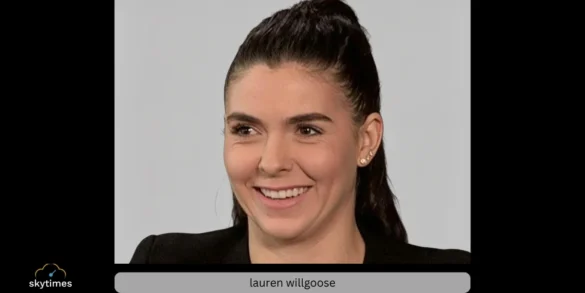
In thirty years of covering court cases where a single night of poor judgment ends another person’s life, few have carried the particular weight of this one. Lauren Willgoose was a practicing Adelaide lawyer, someone whose career depended on understanding the consequences of the law, when she got behind the wheel after drinking heavily and struck and killed a well-regarded local doctor. Her case became a stark, closely watched example of how quickly a comfortable professional life can collapse under the weight of a single decision.
This is not a story about personal resilience in the way it might first appear. It is a story about accountability, grief, and a legal process that continued to unfold well into 2026.
Lauren Willgoose Background
Lauren Jean Willgoose was a working lawyer based in Adelaide, South Australia, at the time of the incident that would come to define her public profile. On the night of June 30, 2021, she had been drinking at the Goodwood Park Hotel, consuming a substantial amount of wine, before driving to her home in Cumberland Park.
A few key facts frame the lead-up to the incident: Willgoose’s blood alcohol concentration was later found to be well above the legal limit, with reports placing it at 0.17 grams per 100 milliliters of blood.
- She continued drinking after returning home, a detail that became relevant to later assessments of her state at the time of the collision.
- The victim, Anthony Walsh, a respected clinical neuropsychologist known to friends as Tony, had spent the evening out to dinner with his wife and friends before the crash occurred.
Lauren Willgoose Key Events
At around 10 PM on June 30, 2021, Willgoose’s vehicle struck Anthony Walsh as he was crossing Goodwood Road in inner-city Adelaide. He died as a result of his injuries. Willgoose left the scene of the crash rather than remaining to assist or report the incident.
Expert tip for readers trying to understand cases involving leaving the scene: Courts generally treat fleeing the scene of a fatal collision as a significant aggravating factor, separate from the driving offence itself, because it removes any possibility of the driver providing assistance or accurate information to emergency services in the critical moments after a crash.
Willgoose was arrested the following morning. She pleaded not guilty to charges of aggravated causing death by dangerous driving and leaving the scene of an accident, arguing that poor visibility and environmental conditions on the night played a significant role, and that Mr Walsh bore substantial responsibility for his own death by crossing the road when he did.
Common mistake in cases like this one: assuming that a not-guilty plea reflects a lack of remorse. In many cases, including this one, a contested trial centers on legal questions such as the degree of fault or the classification of an offense, rather than on a denial that the underlying tragic event occurred.
Trial and Conviction
After a lengthy period of judicial deliberation, Judge Nicolas Alexandrides of the Adelaide District Court found Willgoose guilty on both counts in late 2024. The court rejected her arguments about visibility and shared responsibility, finding that the area was reasonably well lit and that any earlier rain would not have significantly impaired a driver’s ability to see a pedestrian on the road.
Willgoose was reported to have appeared visibly shaken as the verdict was delivered. She was initially granted continued bail to spend the following Christmas with her young son, ahead of sentencing submissions scheduled for early the following year.
Sentencing and Appeal
Willgoose was ultimately sentenced to a term of imprisonment, with the court accepting she had also lost her legal career as a consequence of her conviction, a factor referred to in court as a form of extra-curial punishment.
Willgoose subsequently appealed both her conviction and her sentence to South Australia’s Court of Appeal. The outcome, delivered in 2026, was mixed:
- Her appeal against conviction was dismissed, with the Court of Appeal finding the trial judge’s assessment of the evidence, including road conditions and lighting, was well supported.
- Her appeal against sentence succeeded, with the court finding her original prison term was manifestly excessive.
- She was resentenced to six years’ imprisonment, with a non-parole period of four years, backdated to March 2025.
The Court of Appeal noted that Willgoose’s personal circumstances, particularly her role as primary carer for a young son conceived shortly after her arrest, called for a moderated sentence, alongside her lack of prior convictions and reasonable prospects of rehabilitation.
Public Response
The case drew significant public attention throughout its multi-year court process, both for the prominence of the victim within Adelaide’s medical community and for broader public frustration around drink-driving cases more generally.
Anthony Walsh’s widow, Christine, remained a consistent presence throughout the legal proceedings, speaking publicly after both the original verdict and the subsequent appeal. She expressed relief at the original guilty finding, describing it as a sense that justice had been served, while later expressing support for the Court of Appeal’s decision to reduce the sentence, even as she said she could not understand why an appeal against conviction had been pursued at all given the strength of the evidence.
Common mistake in public commentary on reduced sentences: assuming a reduced sentence reflects the court minimizing the crime’s seriousness. In this case, the reduction applied specifically to the length of imprisonment based on personal mitigating factors. At the same time, the underlying convictions for causing death by dangerous driving and leaving the scene were fully upheld on appeal.
Current Status in 2026
As of mid-2026, Willgoose remains in custody serving her resentenced term, with a non-parole period extending to 2029. Her name no longer appears on South Australia’s register of practicing lawyers, confirming the effective end of her legal career as a consequence of her convictions.
Conclusion
Lauren Willgoose’s case stands as a sobering reminder of how quickly a single night’s decisions can end one life and permanently alter another. Her legal battle, spanning conviction, sentencing, and appeal, brought a measure of resolution for Anthony Walsh’s family, even as questions about proportionate punishment continued to be tested through the courts. For a case that began with an ordinary evening out and ended in tragedy, the years of legal proceedings that followed underscore just how seriously the justice system continues to treat the consequences of drink-driving.