
Australia’s vast outback has long been a place of adventure, opportunity, and isolation. Every year, thousands of prospectors and explorers travel into remote regions hoping to uncover gold or simply enjoy the rugged beauty of the landscape. Yet the same wilderness that attracts adventurers can also become the setting for enduring mysteries.
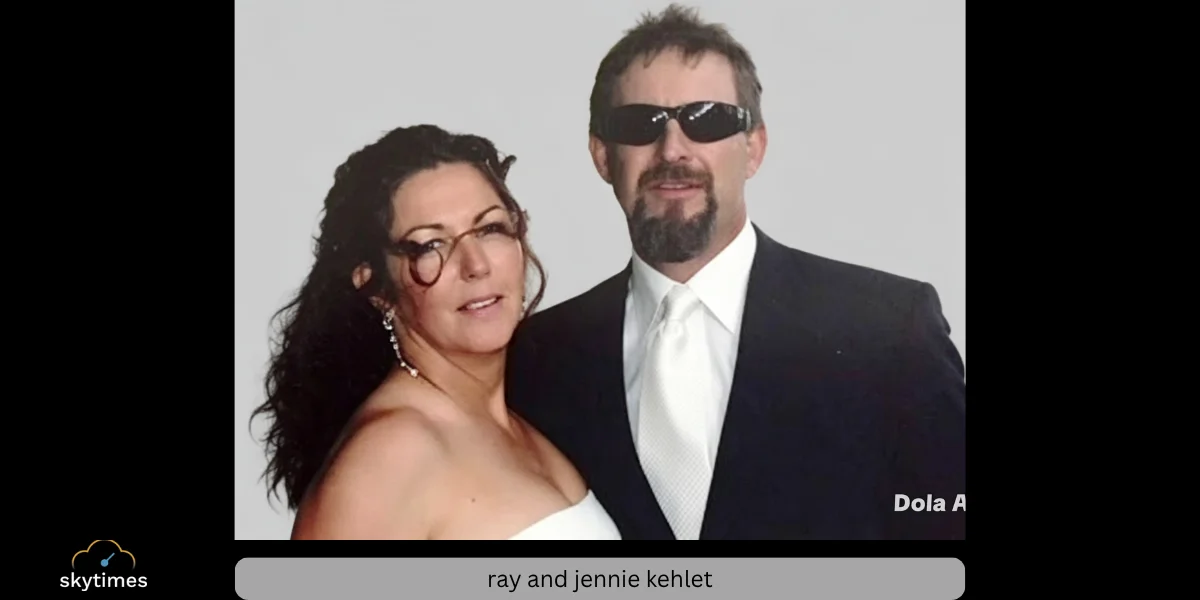
Few modern Australian cases illustrate this more poignantly than the disappearance of Ray and Jennie Kehlet, a married couple from Beverley, Western Australia, who vanished during a gold prospecting trip near Sandstone in March 2015. What began as a routine expedition soon developed into one of the state’s most perplexing cold cases.
Despite extensive investigations, multiple searches, and years of police inquiries, the mystery remains unresolved. Ray’s death was officially ruled a homicide, Jennie has never been found, and investigators continue searching for the answers that have eluded them for more than a decade.
Who Were Ray and Jennie Kehlet?
Ray Kehlet, aged 47, and his wife, Jennie Kehlet, aged 49, lived in the Wheatbelt town of Beverley, Western Australia.
The couple shared a passion for prospecting, a popular hobby in parts of Western Australia where recreational gold hunting attracts both locals and visitors. They were experienced enough to undertake trips into remote areas and frequently travelled with their dog, Ella.
In March 2015, they set off on what should have been another ordinary prospecting expedition near Sandstone, a small town in the Mid West region known for its historic goldfields.
No one imagined it would be their final journey together.
Ray and Jennie Kehlet: The Prospecting Trip
Ray and Jennie travelled to a remote gold prospecting area near Sandstone in early March 2015.
The couple were last confirmed to have been seen on 11 March 2015.
As with many prospecting expeditions, they planned to spend time camping in isolated bushland while searching for gold deposits. Remote prospecting requires careful planning because mobile phone coverage is often limited, distances are vast, and assistance may be many hours away.
When the couple failed to return or make contact, concern gradually began to grow.
Ray and Jennie Kehlet: Ella the Dog Raises the Alarm
One of the most remarkable aspects of the case involved the couple’s loyal dog, Ella.
Some time after Ray and Jennie disappeared, Ella wandered alone into Sandstone.
Residents noticed that the dog was:
- Hungry
- Dehydrated
- Alone
- Without her owners
Ella’s unexpected arrival immediately suggested that something had gone seriously wrong.
The discovery prompted authorities to launch an extensive search of the surrounding area.
Without Ella returning to town, the disappearance may not have been discovered as quickly.
Ray and Jennie Kehlet: One of Western Australia’s Largest Searches
Police, emergency services, volunteers, and specialist search teams undertook one of the largest missing-person operations in Western Australian history.
Search efforts included:
- Ground search teams
- Four-wheel-drive units
- Helicopters
- Air support
- Specialist investigators
- Extensive examination of abandoned mine sites
The region posed enormous challenges.
The Sandstone goldfields contain countless abandoned mine shafts, rugged terrain, thick vegetation, and extreme weather conditions. These hazards complicated every aspect of the search operation.
Despite weeks of intensive efforts, investigators initially found very few clues.
Ray and Jennie Kehlet: Discovery of Ray Kehlet
Approximately three weeks after the search began, investigators made a significant breakthrough.
Ray Kehlet’s body was discovered at the bottom of an abandoned mine shaft.
The discovery answered one question while creating many more.
Initially, investigators considered several possibilities, including an accidental fall into the shaft. However, further forensic examination led authorities to conclude that the circumstances surrounding his death were inconsistent with a simple accident.
A coroner later ruled that Ray had died as the result of homicide.
This finding fundamentally changed the investigation from a missing-person inquiry into a suspected murder investigation.
The Mystery of Jennie Kehlet
Unlike Ray, Jennie Kehlet has never been found.
Despite repeated searches over many years, investigators have not located her remains.
The absence of Jennie’s body has complicated every aspect of the investigation.
Without additional forensic evidence, determining precisely what happened during the couple’s final days has proven extraordinarily difficult.
After reviewing the available evidence, a coroner ultimately concluded that Jennie was also deceased, even though her remains have never been recovered.
Her disappearance continues to be one of the most troubling aspects of the case.
The Investigation
Over the years, Western Australia Police have continued investigating the disappearance and suspected murder.
Investigative efforts have included:
- Multiple searches of the Sandstone region
- Forensic analysis
- Interviews with witnesses
- Examination of prospecting activity in the area
- Review of information provided by members of the public
Authorities have also revisited the investigation several times as new information has emerged.
In 2025, police conducted another significant search in the hope that advances in investigative techniques or fresh intelligence might uncover new evidence.
Despite these continued efforts, no one has been charged in connection with the case.
Theories Surrounding the Case
Because many questions remain unanswered, several theories have been discussed over the years.
Foul Play
Given that Ray’s death was officially ruled a homicide, many investigators believe the couple encountered another individual or individuals in the remote goldfields.
This remains the leading investigative direction because homicide indicates intentional criminal conduct rather than misadventure.
Accident
Early in the investigation, some observers wondered whether Ray had accidentally fallen into an abandoned mine shaft.
However, the coroner’s homicide finding significantly reduced the likelihood that an accident alone explains the case.
Becoming Lost
Western Australia’s outback is notoriously unforgiving.
Extreme temperatures, limited water sources, and difficult terrain have contributed to numerous tragedies over the years.
While becoming lost remains a possibility in many remote-area disappearances, it does not fully account for the official finding that Ray’s death resulted from homicide.
Importantly, investigators have never publicly confirmed a definitive sequence of events, and many details remain unknown.
Why the Case Continues to Capture Attention
The Kehlet investigation continues to fascinate Australians for several reasons.
First, the disappearance occurred in a remote yet popular prospecting region visited by many recreational gold hunters.
Second, the combination of a confirmed homicide and an unresolved disappearance is exceptionally unusual.
Finally, the absence of arrests despite years of investigation has left many questions unanswered.
The case has also received extensive media coverage and has been examined in depth by the Casefile true crime podcast in Episode 294, introducing the mystery to a wider audience both within Australia and internationally.
Lessons from the Kehlet Case
Although the mystery remains unsolved, the case highlights several important considerations for anyone travelling into remote regions.
1. Preparation Is Essential
Remote travel requires careful planning, including communication devices, emergency supplies, and informing others of travel plans.
2. Never Underestimate the Outback
Australia’s remote environments are beautiful but can become dangerous quickly due to isolation and harsh conditions.
3. Early Reporting Matters
Prompt reporting of missing persons can significantly improve search efforts, particularly in isolated areas.
4. Cold Cases Can Still Progress
Advances in forensic science, renewed investigations, and fresh witness information continue to solve cases many years after the original events.
Looking Ahead
Although more than a decade has passed since Ray and Jennie Kehlet disappeared, the investigation remains active.
Police continue to encourage anyone with relevant information to come forward, and renewed searches demonstrate that authorities have not abandoned the case.
As investigative technology improves and historical evidence is periodically reassessed, there remains hope that new information could eventually provide long-awaited answers for the Kehlet family.
Conclusion
The disappearance of Ray and Jennie Kehlet remains one of Western Australia’s most enduring unsolved mysteries. What began as a routine gold prospecting trip ended with Ray’s body discovered in an abandoned mine shaft, Jennie vanishing without trace, and a homicide investigation that continues to challenge investigators years later.
Despite one of the largest search operations in the state’s history, multiple renewed investigations, and ongoing public interest, the full truth about what happened in the remote Sandstone goldfields has yet to emerge.
Until those responsible—if any—are identified and Jennie’s whereabouts are discovered, the Kehlet case will remain a haunting reminder of how some mysteries endure despite determined investigative efforts. For their family and loved ones, the search is not only for answers but also for the measure of closure that justice and truth can provide.