
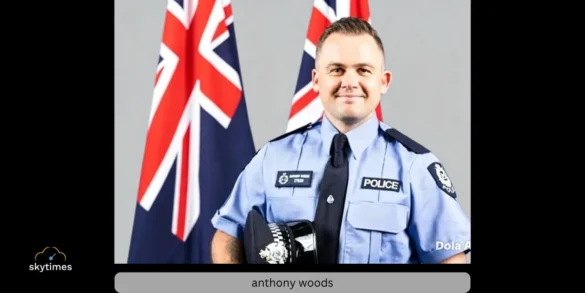
When people talk about policing, they often focus on policy, headlines, or politics. It is easy to forget that behind every uniform is a person with a family, a mortgage, and quiet hopes for the future. Constable Anthony Woods was one of those people – a 28‑year‑old Western Australian police officer, husband, and son who went to work for a routine night shift in June 2023 and never came home.
His death after a traffic stop in Perth’s eastern suburbs stunned his colleagues and the wider community, and it now stands as a stark reminder of how quickly risk can turn fatal in frontline policing.
Who Was Anthony Woods?
Anthony Woods was born around 1995 and lived in Perth, Western Australia. Those who knew him describe a man who was:
- Dedicated to service – proud to wear the WA Police uniform.
- Family‑oriented – deeply committed to his wife, Emily, and close relatives.
- Quietly professional – the kind of officer who simply got on with the job.
He joined the Western Australia Police Force in 2019. By June 2023, he had just completed his probation, stepping into the next phase of his career as a fully‑fledged constable.
Like many young officers, Woods did not see himself as a hero. He was doing a job he believed in, serving the community where he lived. That ordinariness is part of what makes his story so powerful – because what happened to him could have happened on any given shift to any officer performing a routine stop.
The Night of June 8, 2023: A Routine Stop Turns Deadly
The Traffic Stop in Ascot
On the night of June 8, 20233, Woods and his colleagues were working in Ascot, an eastern suburb of Perth near the airport. They initiated a traffic stop on a Holden Cruze.
Key details:
- The car had false number plates.
- It had been identified as stolen.
- The stop itself was standard policing: approach the vehicle, identify the occupants, and take control of the situation.
Behind the wheel was 23‑year‑old Reagan Ainsley Chown, who was on bail for drug offenses at the time.
The Moments That Changed Everything
As Constable Woods approached the vehicle, events spiraled in seconds.
According to the evidence later heard in court:
- The driver reversed the vehicle while Woods was clear of its path.
- Woods became trapped and dragged underneath the car.
- The reversing and movement of the Cruze caused catastrophic injuries.
Colleagues and emergency responders moved quickly, but the damage was profound. Woods was rushed to hospital with severe trauma; despite intensive care, the prognosis was grim.
Turning Off Life Support
After three days in hospital, with no realistic prospect of recovery, doctors and family made the devastating decision to turn off life support on June 11, 2023.
Anthony Woods died at just 28 years old.
The loss was deeply felt across the WA Police Force and the wider community. Images of his young widow, Emily, and of officers forming guards of honor brought home the human cost of a split‑second act behind the wheel of a stolen car.
The Offender: Reagan Ainsley Chown
At the center of the criminal case that followed was Reagan Ainsley Chown, the driver of the Holden Cruze.
Key facts:
- Age at the time: 23.
- Status: On bail for drug offenses when the fatal incident occurred.
- Behaviour: Attempted to flee a lawful stop in a stolen vehicle with false plates.
From a policing and community‑safety perspective, Chown’s profile is depressingly familiar:
- A young man with existing criminal matters,
- Driving a stolen car,
- Choosing to evade police rather than accept arrest.
What turned this from another dangerous but sadly routine evasion into a tragedy was the way he used the vehicle – in reverse, with an officer near the car – leading to Woods’ fatal injuries.
Murder Charge Downgraded to Manslaughter
Initial Charge: Murder
In the emotional aftermath of Woods’ death, Chown was initially charged with murder. That charge reflected the gravity with which investigators and prosecutors viewed his conduct.
However, as the case moved towards trial, legal strategy and the realities of proving intent came into play.
Downgrade to Manslaughter (May 2025)
In May 2025, before the trial commenced, the prosecution downgraded the charge from murder to manslaughter.
This decision typically reflects an assessment that:
- Proving the specific intent to kill or cause grievous bodily harm – required for murder – may be challenging.
- The evidence more clearly supports a finding that the accused’s dangerous, unlawful actions caused death, which aligns with manslaughter.
Legally, this did not minimize the seriousness of the outcome. Manslaughter still recognizes that Chown’s actions caused the death of a police officer; it simply narrows the focus to reckless or dangerous behavior rather than deliberate killing.
The Trial and the Defense Argument
At trial, Chown’s legal team advanced a specific explanation for his conduct.
The “Involuntary Acceleration” Claim
Chown claimed that he:
- Involuntarily accelerated the car after being tasered by police.
- Suggested that the electrical shock or his reaction to it led to a loss of voluntary control, causing the vehicle to move.
From a lay perspective, this argument essentially said: “I didn’t mean to do it; the taser made me move.”
Jury’s Rejection of the Defense
The jury rejected this claim.
By returning a guilty verdict for manslaughter in May 2025, they accepted that:
- Chown’s conduct in reversing and moving the vehicle with an officer in harm’s way was unlawful and dangerous.
- He bore criminal responsibility for Woods’ death, regardless of his explanation about taser effects.
In effect, the jury found that this was not an unavoidable accident triggered by police use of force, but the foreseeable consequence of Chown’s own choices.
Sentencing: Accountability for a Police Death
In July 2025, Chown was sentenced.
The Sentence
The court imposed:
- 15.5 years’ imprisonment.
- Parole eligibility after 13.5 years.
In sentencing, judges consider a mix of factors:
- The sanctity of human life, especially that of a serving police officer performing lawful duties.
- The need for general deterrence – sending a message that using vehicles against police will attract long sentences.
- Chown’s age, criminal history, remorse (or lack of it), and the circumstances of the incident.
For Woods’ family and colleagues, no sentence could truly be “enough”. For the justice system, however, the term reflected a clear view that Chown’s conduct warranted a lengthy period behind bars.
No Appeal
As of July 2026:
- The case is finalized.
- No appeals had been lodged against conviction or sentence.
This gives a measure of legal closure, even as emotional and institutional wounds remain.
Honoring Anthony Woods: Funeral and Legacy
Full Police Funeral
Constable Woods was honored with a full police funeral – a solemn tradition that recognises:
- His service and sacrifice.
- The reality that he died in the line of duty.
Guards of honor, police motorcycles, ceremonial units, and the presence of senior officers and government figures all signalled that Woods’ death was not just a private tragedy but a loss shared by the entire state.
Ongoing Commemoration
The WA Police Force continues to mark his service through:
- Memorial services and rroll-of-honorreferences.
- Internal reminders during training about the risks officers face at what appear to be “routine” stops.
His name has now joined the honor boards and plaques that every police station carries – quiet, daily reminders that some colleagues have paid the ultimate price.
Lessons from the Case: Policing, Risk, and Community Responsibility
The death of Constable Woods and the prosecution of Reagan Chown offer several hard‑learned lessons.
1. There Is No Such Thing as a “Routine” Traffic Stop
For officers:
- Every vehicle stop carries unknown variables: stolen cars, wanted offenders, drugs, weapons, or sheer panic from a driver.
- Training emphasizes positioning, communication, and backup – but risk can never be eliminated.
For the public, this underlines why commands at a stop – “stay in the car”, “turn off the engine”, “show your hands” – are not overreactions. They are life‑preserving protocols.
2. The Car as a Weapon
Too often, offenders:
- Treat vehicles as tools to escape at any cost.
- Underestimate the criminal consequences of using a car in a way that endangers lives.
This case reinforces a simple reality:
- A car used deliberately or recklessly against a person becomes a weapon, and the law will respond accordingly.
3. Bail, Risk, and Public Safety
Chown was on bail for drug offences when he reversed over Woods.
This raises ongoing questions for policymakers:
- How should courts weigh the risk of reoffending or escalation when granting bail?
- What patterns in an accused’s history should flag the need for higher supervision or tighter conditions?
There are no easy answers, but each tragic case adds weight to deliberations on bail law and enforcement.
4. Supporting Police Families
Woods left behind a widow, Emily, and an extended family whose lives will never be the same.
Practical supports that matter include:
- Long‑term financial and counselling support.
- Inclusion in police community events so families do not feel forgotten once media attention fades.
- Ongoing recognition that grief does not end when court processes do.
Future Outlook: A Legacy Beyond the Courtroom
While the legal chapter has closed for now, Anthony Woods’ story will continue to influence WA policing and community discussion.
Potential long‑term impacts include:
- Training adjustments in how officers approach stolen vehicles and high‑risk stops.
- Renewed efforts at public education about the consequences of fleeing police.
- Continued inclusion of Woods’ story in recruit courses as a real example of line‑of‑duty risk.
On a human level, his legacy lives on in:
- The memories held by colleagues who patrolled with him.
- The love his wife and family carry.
- The quiet nods officers share at events when his name is read among the fallen.
Conclusion: Remembering the Person Behind the Badge
Constable Anthony Woods was not simply a name on a charge sheet or a headline about a “police death”. He was a 28‑year‑old husband and young officer who went to work on June 8, 2023 and never came home because one man chose to turn a stolen car into a weapon rather than stop.
The justice system has spoken: Reagan Ainsley Chown will spend more than a decade behind bars for manslaughter. Yet the deeper meaning of Woods’ life and death lies beyond any sentence. It lies in the reminder that every time an officer walks up to a car window on a dark street, they are taking a risk on behalf of the rest of us.
Honoring Anthony Woods means more than remembering the tragedy. It means recognizing the quiet courage of everyday policing – and recommitting, as a community, to choices that do not put those lives in needless danger.