
Introduction
For ten years, an aging man on a bicycle outwitted police across regional South Australia. Masked, armed, and chillingly methodical, the “Bicycle Bandit” walked into small-town banks, pointed a military-style rifle at staff, and disappeared on two wheels with bags of cash.
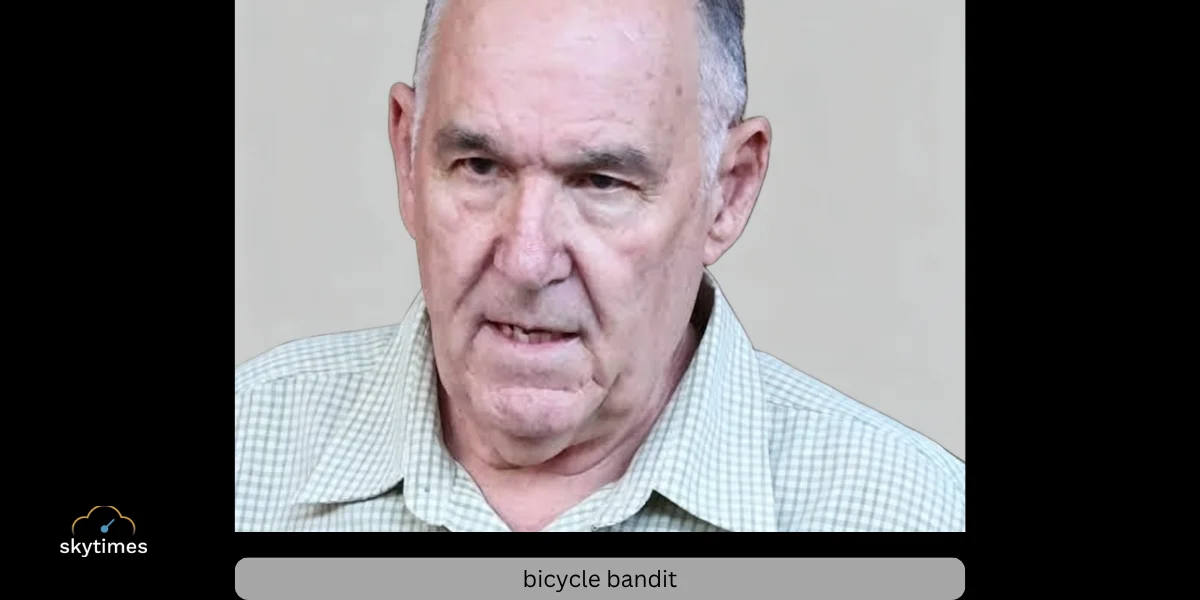
For a long time, he was a ghost. Then, nearly a decade after his last known robbery, a DNA breakthrough unmasked him as Kym Allen Parsons – a former police officer and firefighter, quietly living out his later years.
This article unpacks Parsons’ double life, the investigation that finally caught him, the unusual timing of his guilty plea, and the confronting way his story ended just days after sentencing.
Who Was the Bicycle Bandit?
A Respectable Face With a Hidden Life
The man behind the mask was Kym Allen Parsons, born around 1951 and aged 73 at the time of his death on 26 June 2024.
Key background details:
- Name: Kym Allen Parsons
- Alias: The Bicycle Bandit
- Born: c. 1951
- Died: June 26, 2024 (aged 73)
- Location: South Australia, Australia
- Past roles: Former police officer and former firefighter
On paper, Parsons looked like someone firmly on the side of law and public safety. That history only deepened the sense of betrayal and public interest when it emerged that he had been behind a string of armed robberies stretching across a full decade.
The Crime Spree: 2004–2014
Pattern of Armed Robberies
Between 2004 and 2014, Parsons carried out:
- 10 armed robberies
- 1 attempted robbery
- Across multiple regional South Australian towns
His method was distinctive enough to earn him a memorable nickname and to sow lasting fear in the communities he targeted.
Modus Operandi
Parsons’ approach displayed planning, discipline, and a ruthless willingness to intimidate.
Typical features of his robberies included:
- Mask and disguise: He entered banks with his face covered, concealing his identity from cameras and witnesses.
- Weapon: He carried a Chinese SKK assault rifle, a confronting military-style firearm designed to shock and control.
- Target selection: Small-town and regional banks, where security measures and rapid police response times are often more limited.
- Escape: He fled on a bicycle, often using back streets and local knowledge of the area.
That last element defined his public persona and the media shorthand: The Bicycle Bandit.
Financial Impact
Over the course of his spree, Parsons stole approximately $359,000 AU.
While the dollar figure is significant, the broader impact went beyond money:
- Bank staff were traumatised and, in some cases, likely carried the psychological scars for years.
- Small communities experienced heightened fear and suspicion.
- Police resources were repeatedly diverted to a case that refused to yield a clear suspect.
Operation Coy: A Long, Cold Hunt
The Investigation
The hunt for the Bicycle Bandit was formally codenamed Operation Coy. For years, investigators collected:
- CCTV footage
- Witness statements
- Forensic samples
- Intelligence from previous robberies across the state
Despite this, the offender remained unidentified. The case gradually shifted from active investigation to cold case status, effectively waiting for new technology, fresh evidence, or a mistake by the offender.
DNA Breakthrough
That turning point arrived in 2023, when a DNA breakthrough finally linked Parsons to the long-unsolved robberies.
DNA-based cold case resolutions are increasingly common as forensic science improves. In practice, it means that:
- Old exhibits – clothing, fibers, discarded items, traces left at scenes – are rre-analyzed usingmore sensitive methods.
- A sample that once yielded no match can suddenly provide a powerful link when re-tested years later.
For Operation Coy, that scientific advance transformed a decade-old ghost into a named suspect.
Arrest and Rapid Court Progress
Arrest at O’Sullivan BeachOn Octoberr 13,20233, police arrested Kym Allen Parsons at O’Sullivan Beach, a coastal suburb of Adelaide. For officers who had worked the case for years, it was the moment when a faceless offender finally became a real person.
By then, however, time had not stood still for Parsons either.
Terminal Illness and Guilty Plea
By June 2024, when his case was progressing through the courts, Parsons was terminally ill with stage‑4 cancer.
On 17 June 2024, he pleaded guilty to the string of robberies and attempted robbery.
From a legal perspective, this plea:
- Confirmed his responsibility without forcingtraumatizedd witnesses to relive events at trial.
- Acknowledged the police work and forensic science that had caught up with him.
- Allowed the court to move swiftly to sentencing.
Sentencing: Symbolism in the Shadow of Death
The Sentence
On 24 June 2024, the court handed down a sentence of:
- 35 years’ imprisonment
- With a 28‑year non‑parole period
In practical terms, given Parsons’ terminal condition and advanced age, this was a symbolic sentence. He was never expected to survive long enough even to approach the non-parole period.
But symbolism matters. The length of the sentence sent clear messages:
- The gravity of the offences – repeated, armed, and terrorising over a decade – warranted a very substantial term.
- Deterrence remained vital: would-be offenders needed to see that such conduct attracts the harshest penalties, even when detected years later.
- The court would not allow illness or age to eclipse the seriousness of the crimes.
Death by Voluntary Assisted Dying
Just two days after sentencing, on 26 June 2024, Parsons died by voluntary assisted dying.
South Australia, like some other Australian jurisdictions, has legislation allowing voluntary assisted dying (VAD) for eligible terminally ill patients under strict conditions. Parsons qualified through his advanced cancer diagnosis.
This created an unusual juxtaposition:
- On one hand, the system imposed a long, firm sentence for his crimes.
- On the other, the same legal framework permitted him a measure of control over his death.
From a criminal justice perspective, this raised complex questions about punishment, mercy, and the limits of incarceration for the terminally ill.
Case Closed: Status as of July 2026
By July 2026, the Bicycle Bandit case is:
- Legally closed – the offender is convicted and deceased.
- Not subject to further criminal proceedings – no outstanding co‑accused or related prosecutions.
- Regarded as one of the most high‑profile South Australian robbery series resolved via cold case DNA work.
In the broader landscape of Australian crime history, Parsons now stands as the most prominent “Bicycle Bandit” figure – especially within the pattern of regional, long‑running bank‑robbery investigations.
What This Case Teaches Us
1. The Power of Forensic Persistence
Operation Coy underlines why police rarely declare serious cases “over” simply because years pass.
Key takeaways:
- Evidence preserved today can be the basis for tomorrow’s breakthrough.
- Investment in forensic capability pays off, even decades later.
- Offenders who assume time will protect them are increasingly mistaken.
2. The Psychology of the “Ordinary” Offender
One of the most unsettling aspects of the Parsons case is how ordinary he appeared in daily life:
- An older man with a history in policing and firefighting.
- Not a stereotypical young, impulsive criminal.
- Able to move through communities without drawing suspicion.
For professionals who study crime, this reinforces an uncomfortable truth: serious offenders are often embedded in normal life, with families, jobs, and seemingly respectable histories.
3. Common Misconceptions in High-Profile Robbery Cases
Some of the most frequent misunderstandings include:
- “If there are no injuries, it’s not that serious.”
Armed robberies, even without physical harm, cause deep psychological trauma and undermine community trust. - “Regional areas are soft targets forever.”
Parsons exploited regional vulnerabilities, but his eventual detection shows that rural crime is neither ignored nor forgotten. - “Old offenders pose less risk.”
Age does not prevent serious offending; in this case, the offender was already older during much of the spree.
Practical Lessons and Expert Tips
While few readers will ever encounter a serial bank robber, the Bicycle Bandit case still offers broader, practical insights.
For Financial Institutions and Small Businesses
- Invest in layered security: Cameras, alarms, staff training, and secure layouts all matter. Don’t rely on a single measure.
- Prioritize staff trauma support: After any violent incident, early psychological support is crucial for long‑term recovery.
- Work closely with police: Share patterns, suspicious behaviour, and historical footage; small details accumulate into valuable intelligence.
For Communities
- Report what feels “off,” even if it seems minor. A strange pattern of cycling near closing time, repeated sightings of a masked individual, or unusual behavior around cash‑handling sites can be useful data points.
- Support local victims: Bank employees and witnesses often continue living in the same towns; community empathy and patience matter.
For Policymakers and Justice Professionals
- Keep cold case funding steady: Long-term investment in forensic science and specialist units like Operation Coy leads to real results.
- Balance symbolism and practicality in sentencing: Parsons’ case demonstrates how courts can acknowledge gravity, even where punishment will, in reality, be short‑lived.
- Clarify the intersection of VAD and criminal justice: High‑profile cases involving voluntary assisted dying after sentencing raise ethical and public-confidence questions that merit clear policy thinking.
Future Outlook: How Cases Like This Shape Policing
Looking forward, the Bicycle Bandit case will likely influence:
- Training: Case studies drawn from Parsons’ offenses can be used in police training on pattern recognition, offender profiling, and cold-case management.
- Technology investment: The DNA breakthrough will be cited when justifying upgrades to forensic labs and evidence storage systems.
- Public expectations: Communities now better understand that “unsolved” doesn’t always mean “unsolvable” – patience and persistence can still deliver justice years later.
For offenders, the lesson is blunt: time and disguise are no longer reliable shields. For victims and communities, there is some comfort in knowing that, even if justice is delayed, it is not necessarily denied.
Conclusion
The story of the Bicycle Bandit, Kym Allen Parsons, is a study in contrasts. A former police officer and firefighter who spent a decade terrorizing regional banks; a masked gunman who escaped on a bicycle; an old man finally unmasked by science; a terminally ill offender sentenced to a long term he would never serve; and a man who chose voluntary assisted dying just two days after hearing his fate in court.
His case underscores three enduring truths about modern crime and justice:
- Forensic persistence changes outcomes, even years later.
- Respectable façades can conceal serious offending, reminding us that risk assessment must be evidence‑based, not stereotype‑driven.
- Justice is about more than imprisonment alone – it is also about recognition, acknowledgement of harm, and clear messages to the community.
The Bicycle Bandit is no longer at large, and the case is now closed. But the lessons drawn from his decade-long spree and belated capture will continue to shape how South Australia – and beyond – thinks about cold cases, violent robbery, and the enduring reach of the law.