
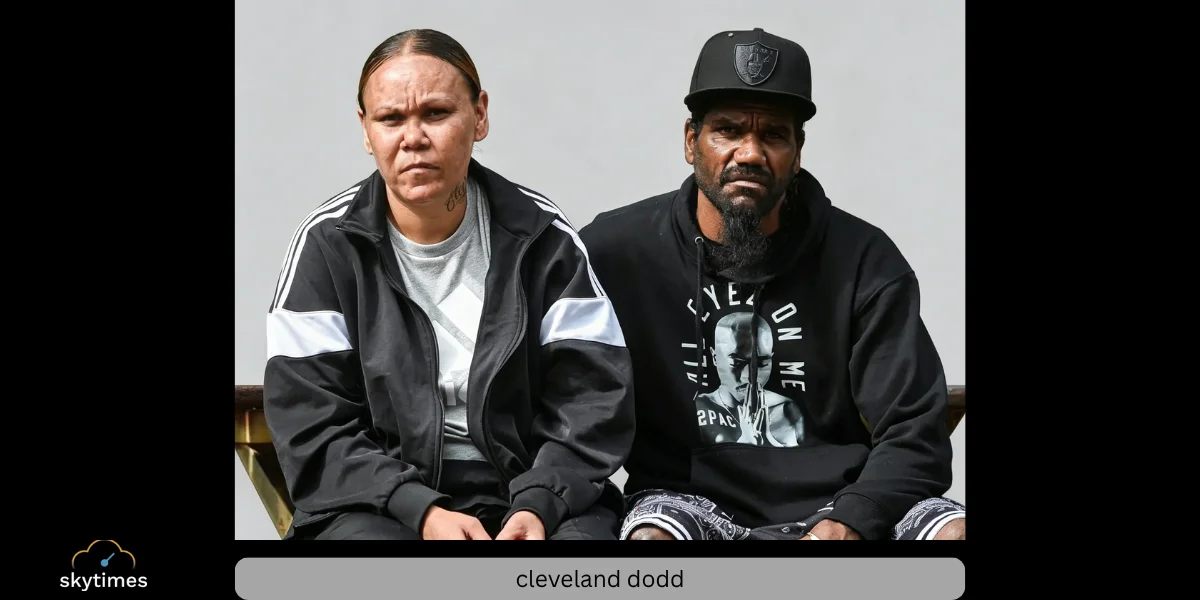
In thirty years of writing about justice systems and the institutions meant to protect vulnerable people, few cases have carried the weight of Cleveland Dodd’s story. He was sixteen years old, a Yamatji boy from Western Australia, and the first child to die in custody in the state’s history. His death did not just leave a grieving family behind. It exposed conditions that a coroner would later describe as inhumane, and sparked a reform movement that continues into 2026.
This is not a comfortable story to tell, but it is an important one. Understanding what happened to Cleveland Dodd means understanding a system that, by the coroner’s own findings, failed him in almost every way possible.
Please note: this article discusses self-harm and a death in custody. If you or someone you know is struggling, support is available, and details on where to find it are included at the end of this article.
Background and Circumstances
Cleveland Dodd began his final period in detention at Unit 18 in July 2023. Unit 18 was a youth wing established within the grounds of Casuarina Prison, a maximum-security adult facility south of Perth, originally intended as a temporary measure to manage overcrowding at Western Australia’s main youth detention centre.
A few key facts help frame his circumstances:
- Cleveland spent 87 days at Unit 18 before the incident that led to his death.
- During that time, he spent the vast majority of his days locked in his cell for well over twenty-two hours at a stretch, a condition that meets the international definition of solitary confinement.
- The coroner later found that Unit 18 was chronically understaffed and had been for years, creating unsafe conditions for both detainees and staff.
In the days before his death, Cleveland was reportedly enduring significant psychological distress. According to findings from the coronial inquest, his repeated requests for basic needs, including water, along with warning signs of self-harm, were not adequately responded to by custodial staff.
The Incident and Aftermath
In the early hours of October 12, 2023, Cleveland self-harmed in his cell at Unit 18. He was resuscitated and taken to hospital, where scans revealed a severe brain injury. He remained on life support for a week before he died on October 19, 20233.
The coronial inquest that followed was described by the presiding coroner as one of the saddest cases he had ever presided over. His findings were unambiguous:
- Institutional failure, not individual blame. The coroner was clear that staff on shift at the time were not personally responsible for Cleveland’s death. The failures were systemic.
- Fifteen adverse findings against the Department of Justice, covering issues including inadequate staffing levels, failure to remove Cleveland from a cell with an obvious ligature point, and failure to place him on an at-risk monitoring system in the hours before the incident.
- Nineteen formal recommendations, including the urgent closure of Unit 18 and stronger limits on the use of isolation for children in detention.
Expert tip for readers trying to understand coronial findings: An inquest is not a criminal trial and does not assign guilt in the way a court case does. Its purpose is to establish the facts of a death and recommend changes to prevent similar tragedies, which is precisely why the Cleveland Dodd findings carry such weight in policy discussions.
Public Response and Protests:
Cleveland’s death, and the findings that followed roughly two years later, triggered a strong public reaction. His mother, Nadene Dodd, spoke publicly about her son’s final weeks, describing conditions of institutional neglect and expressing devastation that his repeated pleas for help went unanswered.
Common mistake in coverage of custody deaths: Treating these cases as isolated incidents rather than symptoms of a wider pattern. Cleveland’s death was one of approximately eighteen child deaths in custody recorded nationally, and advocacy groups have consistently stressed that his case cannot be understood in isolation from that broader trend.
Human rights organizations, including the Australian Human Rights Commission, publicly renewed calls for the closure of Unit 18 and a nationwide legislative ban on solitary confinement for children following the release of the coroner’s findings. Advocacy groups also highlighted a deeper pattern of over-representation, noting that Aboriginal and Torres Strait Islander children make up a vastly disproportionate share of those held in youth detention in Western Australia relative to their share of the general population.
Calls for Reform
The recommendations arising from Cleveland’s case go well beyond a single facility. Key reform demands that have emerged include:
- Immediate closure of Unit 18, described by the coroner as unfit for purpose despite safety improvements made since Cleveland’s death.
- A legislative ban on solitary confinement for children, matching international human rights standards that define anything over twenty-two hours a day in isolation as solitary confinement.
- Investment in early intervention and diversion programs, aimed at reducing the number of children entering detention in the first place rather than simply reforming conditions once they are inside.
- A special inquiry into how Unit 18 was established, examining the decision-making that led to housing children within an adult maximum-security prison.
In my experience following custodial reform movements over the decades, recommendations of this scale rarely translate into immediate action, andCleveland’ss case has proven no exception so far.
Current Developments in 2026
As of early 2026, Unit 18 remains open. The Western Australian government has set a target date later in 2026 to complete a replacement facility. However, advocates have described budget allocations toward that goal as insufficient given the scale of the problem.
Public pressure has continued to build. In March 2026, more than 1,200 people, including former government ministers, a former state premier, and a former president of the Children’s Court, signed an open letter delivered to WA Parliament calling for the immediate closure of Unit 18 and full implementation of the coroner’s recommendations.
Data presented to state parliament has also renewed scrutiny of conditions inside the facility, with assault figures at Unit 18 remaining disproportionately high relative to the small number of children held there. Legal advocates continue to argue that the underlying approach to youth justice needs a fundamental shift, from a corrections-based model toward one grounded in community support and social investment.
Conclusion
Cleveland Dodd’s death was preventable, and the coroner’s own findings make that painfully clear. His case has become a defining moment in Australia’s conversation about youth justice, Indigenous over-representation in detention, and the treatment of children in state care. Whether that conversation translates into lasting reform remains an open question heading into 2026. Still, Cleveland’s name, and his family’s determination to see change made, ensure that the pressure for accountability has not gone away.