
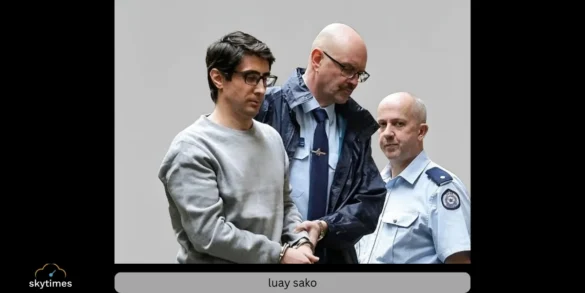
In thirty years of covering criminal cases across this country, few have exposed the gap between a legal protection order and real safety as starkly as this one. Luay Sako’s name is now permanently linked to the murder of Celeste Manno, a twenty-three-year-old Melbourne woman who did everything the system asked of her and was killed regardless. Understanding this case means understanding not just what Sako did, but what it revealed about how Australia responds to stalking.
This is a difficult story, but a necessary one. Celeste’s case became the catalyst for a major review of Victoria’s stalking laws, and her family’s advocacy continues to shape legislation years after her death.
Background
Celeste Manno was a twenty-three-year-old woman living in Mernda, in Melbourne’s north-east. She had studied criminology and psychology and was preparing to begin honors study in psychology, with ambitions to build a career in the field.
Key background details include:
- Celeste and Luay Sako had briefly worked together, during which time he became fixated on her.
- After Celeste rejected his romantic advances, Sako began repeatedly contacting and harassing her, a pattern that escalated over more than a year.
- Celeste took the situation seriously and sought legal protection, obtaining a court-imposed intervention order against him.
- Sako breached that order and was arrested, but was later released, and the harassment resumed after a period of apparent silence.
The Stalking and the Murder
On the night before her death, Celeste posted a photograph of her boyfriend to social media for the first time. According to prosecutors, this became what the sentencing judge described as the final trigger for Sako’s jealousy and obsession.
In the early hours of November 16, 2020, Sako broke intoCeleste’ss bedroom while she slept, using a hammer to smash through her window before stabbing her more than twenty times. He then handed himself in to authorities. Celeste’s mother, Aggie Di Mauro, was the one who found her daughter.
A forensic psychiatrist later told the court that Sako had experienced homicidal thoughts in the weeks before the murder, and that he had used Celeste’s social media posts to locate her family home and researched its floor plan in advance.
Expert tip for readers trying to understand cases like this one: An intervention order is a legal instrument, not a physical barrier. Its effectiveness depends entirely on consistent enforcement, monitoring, and rapid police response to breaches, none of which reliably occurred in this case.
The Court Case and Sentencing
Luay Sako pleaded guilty to Celeste’s murder. During sentencing submissions, prosecutors argued that the case represented some of the worst kind of offending, describing a premeditated attack on a woman asleep in her own bed in the early hours of the morning.
In February 2024, Supreme Court Justice Jane Dixon sentenced Sako to thirty-six years in prison, with a non-parole period of thirty years. In her remarks, the judge described the killing as utterly cowardly and said it had been carried out with chilling efficiency. She noted that Sako had been diagnosed with a severe personality disorder, major depressive disorder, and body dysmorphic disorder, conditions that impaired his functioning but did not remove his understanding of what he was doing.
Common mistake in how the public interprets long prison sentences: Assuming a thirty-six-year sentence means a perpetrator will serve the full term. In this case, Sako became eligible for parole after thirty years, a distinction that became central to the public outcry that followed sentencing.
Celeste’s mother expressed profound frustration with the outcome, telling reporters outside court that the justice system had extended mercy to her daughter’s killer that he had never shown Celeste himself.
Public Response and the Push for Reform
Celeste’s death, and the years-long legal process that followed, triggered sustained public advocacy for stronger stalking protections in Victoria. Her mother, Aggie Di Mauro, became a prominent campaigner, meeting repeatedly with the state’s Attorney-General and speaking publicly about the need for systemic change.
Key developments in this advocacy include:
- The Victorian Law Reform Commission inquiry into stalking, launched partly in response to Celeste’s death, which delivered a final report in 2022 containing 45 recommendations to improve how the justice system responds to stalking.
- Public campaigning for what advocates termed Celeste’s Law, pushing for tougher penalties for intervention order breaches and better risk assessment tools for police.
- Ongoing parliamentary pressure, with multiple members of the Victorian Parliament repeatedly questioning the government’s slow progress in formally responding to the Commission’s recommendations.
Following Sako’s sentencing, protesters marched from Victorian Parliament to the Supreme Court calling for mandatory life sentences in cases of premeditated murder, with a petition on the issue gathering thousands of signatures.
Current Developments in 2026
The years of advocacy following Celeste’s death have translated into concrete legislative change. In February 2026, the Justice Legislation Amendment (Family Violence, Stalking and Other Matters) Act received Royal Assent in Victoria. Among its key reforms, the legislation explicitly recognizes stalking as a form of family violence, introduces a default two-year family violence intervention order to reduce repeated court appearances, and updates the legal definition of stalking to reflect better how the behavior actually manifests as a pattern of conduct rather than isolated incidents.
Some legislators have argued the reforms remain only a partial response to the Commission’s 45 recommendations, and advocacy for further change continues. The Commission explicitly credited Celeste’s case as a driving force behind the broader review of Victoria’s approach to stalking, a legacy her family has continued to push toward full implementation.
Conclusion
The murder of Celeste Manno stands as one of the clearest examples in recent Australian history of a justice system that recognized a threat but failed to act decisively enough to prevent tragedy. Luay Sako’s sentencing brought a measure of legal accountability, but it was Celeste’s family, particularly her mother’s tireless advocacy, that turned personal grief into lasting legislative change. As Victoria continues to implement stalking law reforms through 2026, Celeste Manno’s name remains attached to a wider fight for the protections that, tragically, arrived too late for her.