
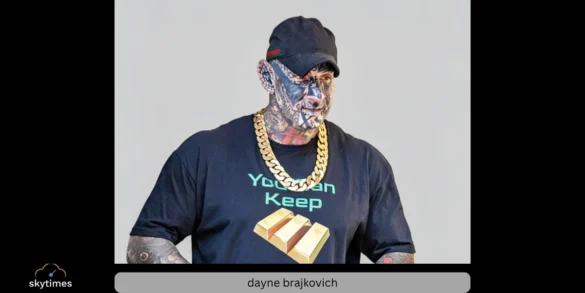
In thirty years of covering the shifting alliances and legal battles of Australia’s outlaw motorcycle gang scene, few figures have generated as much sustained media attention in Western Australia as Dayne Brajkovich. He is instantly recognizable, heavily tattooed, and has spent years at the centre of a very public tug-of-war between bikie culture and some of the toughest anti-gang laws in the country.
This is not a story about a fitness journey or a training philosophy. It is the story of a man whose public profile has been shaped almost entirely by his standing within Perth’s gangland, and by the courts that have repeatedly tried to constrain it.
Background
Dayne Brajkovich built his reputation over many years as a senior figure within the Hells Angels in Perth, rising to the position of sergeant-at-arms, a senior enforcement role within the club’s hierarchy. His extensive facial tattoos have made him one of the most visually recognizable figures in Western Australia’s bikie scene, and he is frequently photographed outside courthouses by local media.
A few facts help frame his public standing:
- He is widely reported as Perth’s most tattooed bikie, a distinction that has made him a recurring subject of local news coverage.
- In more recent years, he has transitioned away from the Hells Angels and become associated with the rival Mongols gang, reflecting the broader pattern of shifting allegiances within the state’s outlaw motorcycle gang networks.
- His name has been linked to several high-profile incidents within Perth’s gangland over the past decade, including a public brawl in November 2020 at a Scarborough bar involving former Rebels boss Nick Martin, who was fatally shot at the Perth Motorplex only weeks later.
Legal Troubles and the Insignia Law Battles
Brajkovich’s most consistent source of media coverage in recent years has been his repeated clashes with Western Australia’s anti-consorting and anti-insignia legislation, among the strictest laws of their kind in the country.
Key elements of this ongoing legal conflict include:
- Anti-insignia charges. WA law prohibits the public display of recognized outlaw motorcycle gang insignia, a category that has been interpreted to include tattoos, patches, and even certain clothing items associated with gang identity.
- Repeated court appearances. Brajkovich has faced multiple charges under this legislation, including incidents involving clothing items such as a belt that police alleged breached insignia rules.
- A pattern of public defiance. He has drawn significant media attention for provocative gestures toward police and the courts, including wearing anti-police clothing outside court and publicly rejecting the state’s crackdown on gang-affiliated individuals.
Expert tip for readers trying to understand these cases: Charges under anti-insignia laws are often minor on their face, such as clothing or accessory infringements, but they form part of a broader legal strategy aimed at limiting the operational visibility and recruitment power of outlaw gangs, rather than targeting specific violent offences.
His legal team has publicly pushed back against this approach, arguing that police are using minor infractions to apply sustained pressure and drain public resources rather than pursuing more serious criminal investigations.
Common mistake in following bikie-related court coverage: Assuming that frequent charges automatically reflect escalating serious criminality. In Brajkovich’s case, many of the charges relate specifically to breaches of insignia and consorting laws rather than violent offenses, which is an important distinction when assessing the nature of his ongoing legal issues.
Public Profile and Media Presence
Brajkovich’s visibility extends beyond the courtroom. He has become something of a recurring character in Western Australian bikie coverage, with his court appearances routinely covered by local media outlets and his image widely circulated online.
His public interactions with police and media have included:
- Publicly confrontational gestures toward waiting cameras and reporters outside court.
- Statements from his legal representatives criticising the financial and resource cost of ongoing prosecutions tied to minor infringements.
- A consistent presence in broader reporting on Perth’s bikie gang landscape, often referenced alongside other prominent figures in the same scene.
In my experience covering figures who occupy this kind of public space, the attention itself can become self-reinforcing. Media coverage of provocative courtroom behavior tends to generate further coverage, creating a cycle that keeps such figures prominently in the public eye regardless of the seriousness of the underlying charges.
Current Developments in 2026
As of late 2025 and into 2026, Brajkovich has continued to face court dates connected to insignia and related charges, with hearings and trial dates being set for a growing list of matters. Legal commentators have increasingly discussed his case as a potential test of how far Western Australia’s anti-insignia legislation can reasonably be applied, given the volume of minor charges being brought against a small number of well-known figures.
The broader legal and policy debate around these laws remains unresolved. Supporters of the legislation argue that consistent enforcement, even over seemingly minor breaches, disrupts the visual and cultural signalling that gangs rely on for recruitment and intimidation. Critics, including defense lawyers involved in these cases, argue that the strategy risks becoming a costly and largely symbolic exercise that diverts police resources from more serious organized-crime investigations.
Conclusion
Dayne Brajkovich’s public profile has been built not on competition results or training content, but on his long-standing position within Western Australia’s outlaw motorcycle gang scene and his repeated, highly visible clashes with the state’s anti-bikie laws. Whether the courts and legislators eventually recalibrate the application of these insignia laws remains to be seen. Still, for now, Brajkovich remains one of the most consistently covered figures in Perth’s ongoing gangland story.