
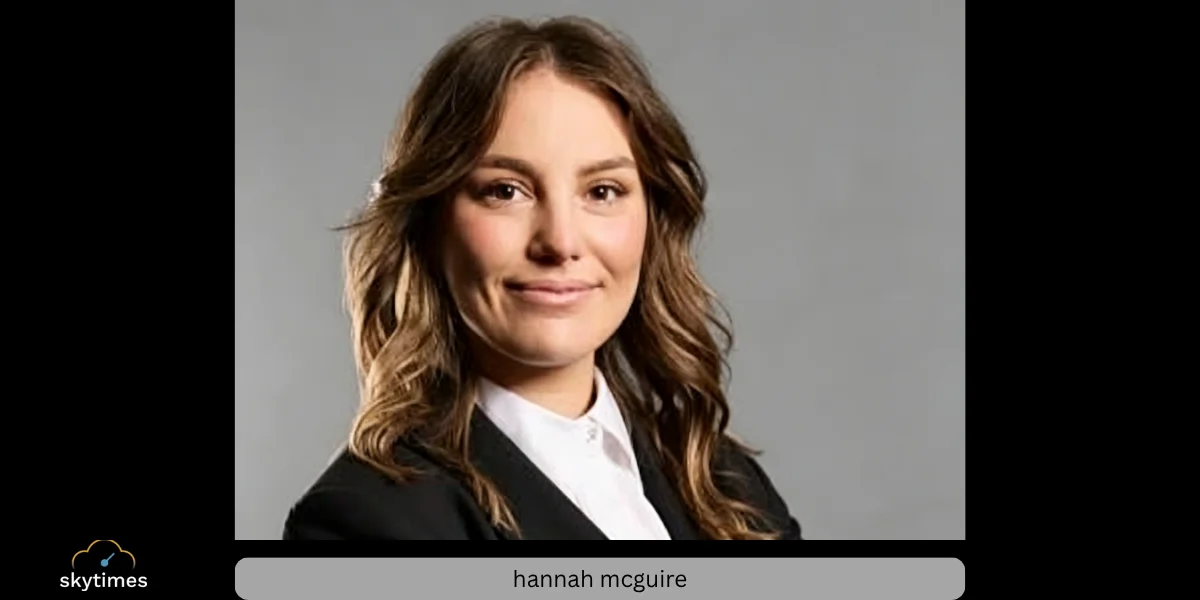
In thirty years of covering stories that force a country to confront uncomfortable truths, few periods have hit as hard as the early months of 2024 in Ballarat, Victoria. Within a matter of weeks, this regional community lost three women to violence. One of them was Hannah McGuire, a twenty-three-year-old woman killed by her former partner. Her case, alongside those of Samantha Murphy and Rebecca Young, became a turning point in Australia’s national conversation about violence against women.
This is not an easy story to tell, but it matters. Hannah’s death, and the way her community and her family responded to it, has left a lasting mark on how Victoria approaches the prevention of gendered violence.
Background
Hannah McGuire lived in Sebastopol, a suburb of Ballarat, in a home she owned together with her former partner, Lachlan Young. Those who knew her described her as a warm, talented, and thoughtful young woman who put the people around her first.
A few background details are important to understanding what happened:
- In the months before her death, Hannah had been subjected to abusive, intimidating, and controlling behavior from Young.
- She took out intervention orders against him and made complaints to police, taking the kind of protective steps the system encourages victims to pursue.
- Despite this, Young refused to accept that the relationship had ended, a pattern that would ultimately prove fatal.
Key Events
On 5 April 2024, Young murdered Hannah McGuire inside the home they had owned together. Court proceedings later established that the two had argued, after which Young followed her into the bathroom, pushed her to the ground, and strangled her.
In the aftermath, YYoung’sactions revealed a chilling attempt to conceal what he had done:
- He placed Hannah’s body in the footwell of her own vehicle and drove it to remote bushland near Scarsdale, roughly fifteen minutes from Sebastopol, where he set the car alight.
- Using Hannah’s phone, he sent messages to her mother, Debbie, falsely suggesting that Hannah was planning to take her own life.
- He then transferred money from Hannah’s bank account, including funds sent to her mother and to himself, in an apparent attempt to further obscure what had occurred.
Expert tip for readers trying to understand cases involving intervention orders: An intervention order is a legal boundary, not a physical one. Its protective value depends heavily on consistent police follow-up and rapid response to breaches, and Hannah’s case, like several others reported around the same period, highlighted just how easily that protective boundary can fail when a perpetrator is determined to ignore it.
Young was charged with murder shortly after Hannah’s body was discovered. It was not until eight days into his trial that he finally admitted to killing her.
Public Response
Hannah’s death did not occur in isolation. She was the third woman killed in and around Ballarat within a period of roughly two months, following the deaths of Samantha Murphy and Rebecca Young. The cumulative impact on the community was profound.
Common mistake in public discussion of cases like this one: Treating each case as an isolated tragedy rather than part of a broader pattern. Advocates and researchers have consistently pointed out that Ballarat’s experience in early 2024 reflected wider national trends in family violence rates, not an unusual or isolated cluster of events specific to one town.
The community’s response was immediate and significant:
- A rally titled “Enough is Enough” drew more than a thousand people through Ballarat’s streets, with speeches from the families of all three women.
- The event helped catalyze a broader national conversation, with further rallies held in cities including Canberra, where political leaders addressed crowds calling for urgent reform.
- Victorian and federal ministers publicly acknowledged that violence against women had reached what several described as epidemic levels, prompting renewed government commitments to funding and reform.
Court Proceedings and Sentencing
Young’s trial proceeded through the Victorian court system over the following months. After initially contesting the charges, he ultimately confessed partway through the trial to murdering Hannah McGuire.
In sentencing, the judge made clear findings about the nature of the crime:
- The murder followed months of abusive and controlling behaviour that Hannah had actively tried to escape through legal means.
- The court found that while Young may not have specifically intended to kill Hannah when he strangled her, he had intended to cause her really serious injury. This distinction did not significantly reduce his overall culpability.
- The judge described Young’s post-crime conduct, including his attempts to conceal the body and mislead Hannah’s mother, as utterly disrespectful to Hannah’s memory.
Young was sentenced to 28 years in prison, with eligibility for parole after 22 years and four months. Hannah’s parents, Debbie and Glenn McGuire, were present in court for the sentencing, describing the outcome as an important step in their family’s long journey toward healing.
Current Developments in 2026
Hannah’s case, alongside those of Samantha Murphy and Rebecca Young, has continued to shape policy and community action in Ballarat well beyond 2024. The Victorian Government responded to the community’s calls for action with funding for a multi-year, community-wide prevention initiative aimed at addressing the underlying drivers of gendered violence.
Even so, the underlying problem has not disappeared. Local rallies have continued into 2026, driven by ongoing high rates of family violence recorded in the Ballarat area, with organizers and advocates continuing to call for stronger preventative systems, faster responses to reports of abuse, and greater accountability for perpetrators.
Conclusion
Hannah McGuire’s death was a devastating loss for her family and her community. Still, it also became part of a broader national reckoning with how Australia responds to violence against women. Her case, sitting alongside those of Samantha Murphy and Rebecca Young, exposed both the limitations of existing protections and the strength of a community determined to demand better ones. As advocacy and reform efforts continue through 2026, Hannah’s memory remains part of the ongoing push for a future where such protections actually hold.