
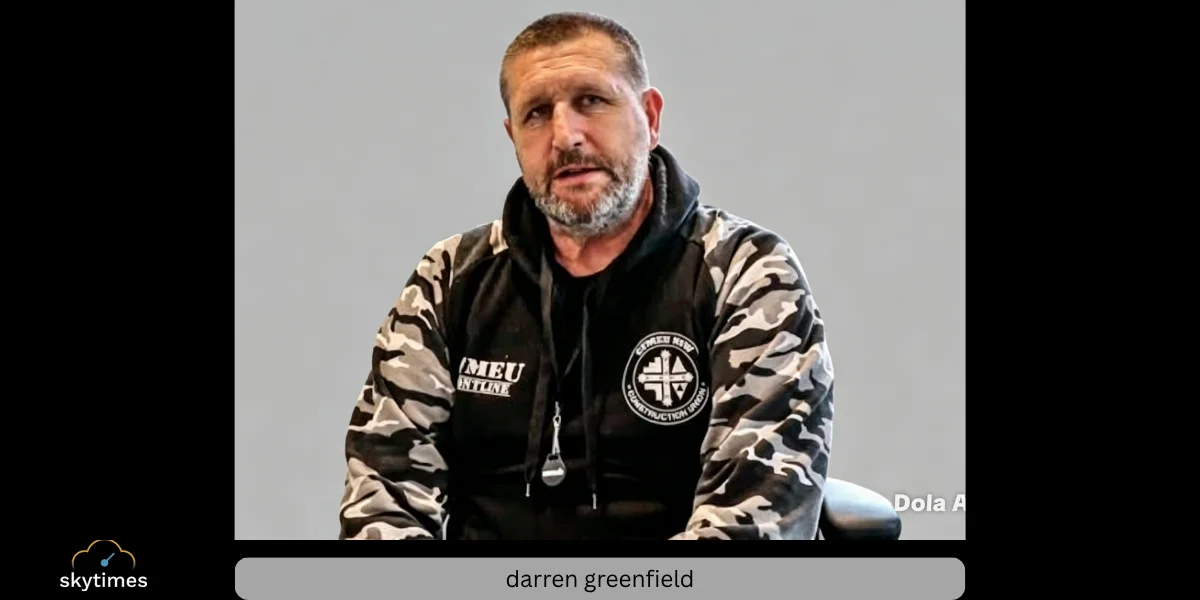
Corruption within influential institutions inevitably attracts public attention, particularly when it involves individuals entrusted with protecting workers’ interests. The case of Darren Greenfield, a former senior official of the Construction, Forestry, Maritime, Mining and Energy Union (CFMEU) in New South Wales, became one of Australia’s most closely watched union corruption prosecutions. Beyond the criminal charges themselves, the case intensified debate about governance, transparency, and accountability within one of the country’s most powerful trade unions.
In late 2025, Darren Greenfield and his son, Michael Greenfield, were sentenced to prison after admitting their involvement in a bribery scheme linked to construction projects across Sydney. The prosecution formed part of a broader crackdown on alleged corruption within sections of the CFMEU and the construction industry.
This article examines who Darren Greenfield is, the allegations against him, the court proceedings, the sentencing outcome, and the wider implications of the case.
Who Is Darren Greenfield?
Darren Greenfield served as a senior official within the New South Wales branch of the Construction, Forestry, Maritime, Mining and Energy Union (CFMEU), one of Australia’s largest and most influential trade unions representing workers in the construction, mining, forestry, maritime, and energy sectors.
During the period relevant to the offences, Greenfield held the position of NSW Secretary, placing him in a significant leadership role with substantial influence over industrial relations and construction site operations.
Union officials occupy positions of trust. They are expected to advocate for workers, uphold workplace standards, and make decisions free from improper influence. For that reason, allegations of corruption involving senior officials attract heightened public scrutiny and legal attention.
Darren Greenfield: The Bribery Allegations
According to court proceedings, Darren Greenfield accepted $20,000 in cash bribes from the owner of a building company between 2018 and 2020.
The payments were reportedly made in four separate instalments.
Prosecutors alleged that, in exchange for these payments, the construction company received favourable treatment from the union on building sites throughout Sydney. Such treatment allegedly provided commercial advantages that undermined the integrity of fair industrial practices.
The allegations centred on the misuse of a trusted public-facing position rather than isolated personal misconduct. Prosecutors argued that the arrangement compromised confidence in the impartial operation of the union.
Michael Greenfield’s Involvement
The case also involved Darren Greenfield’s son, Michael Greenfield, who had previously served as an assistant secretary within the NSW branch of the CFMEU.
His prosecution highlighted concerns about governance and oversight within the organisation during the relevant period.
Although father and son faced separate legal consequences, both became central figures in one of the most significant corruption cases involving senior union officials in recent years.
Darren Greenfield: The Court Proceedings
The prosecution formed part of a wider investigation into corruption within the construction industry and allegations involving senior union representatives.
Rather than contest the allegations at trial, Darren Greenfield entered a guilty plea to the relevant corruption offences.
A guilty plea is often considered by Australian courts during sentencing because it demonstrates acceptance of responsibility, avoids a lengthy trial, and may spare witnesses from giving evidence. However, it does not diminish the seriousness of the underlying conduct.
During sentencing, the court examined:
- The amount of money involved.
- The period over which the offending occurred.
- Greenfield’s senior leadership position.
- The breach of public and organisational trust.
- His decision to plead guilty.
These factors collectively influenced the final sentence.
Sentencing Outcome
In November 2025, the court sentenced Darren Greenfield to a maximum prison term of 30 months.
Under the sentencing order, he became eligible for release on parole after serving approximately 10 months, subject to the applicable legal requirements and parole decisions.
Michael Greenfield received a sentence of 18 months’ imprisonment for his role in the offending.
Although the prison terms were shorter than those imposed in many violent criminal matters, they reflected the court’s view that corruption offences committed by individuals in positions of authority warrant meaningful punishment.
Why the Case Matters
The Greenfield case attracted significant public attention because it extended beyond individual wrongdoing.
Trade unions play an important role in Australia’s industrial relations system. Workers rely on union representatives to negotiate workplace conditions, advocate for safety, and represent members fairly.
When corruption occurs within leadership positions, several important issues arise:
- Public confidence in institutions may be damaged.
- Honest union officials may face increased scrutiny.
- Employers and workers alike may question decision-making processes.
- Regulators may introduce stronger oversight measures.
For these reasons, corruption cases involving senior officials often have consequences that reach well beyond the individuals convicted.
The Broader Crackdown on Union Corruption
The prosecution of Darren Greenfield formed part of a broader effort by Australian authorities to investigate allegations of corruption within sections of the construction industry and union leadership.
Over recent years, regulators and law enforcement agencies have devoted increased resources to examining claims involving:
- Bribery
- Secret commissions
- Improper financial benefits
- Abuse of official positions
- Organised criminal influence
- Workplace intimidation
These investigations aim to strengthen public confidence by ensuring that both employers and union representatives remain accountable under the law.
Lessons for Organisations
The Greenfield case illustrates several governance principles relevant to unions, businesses, and other organisations.
1. Leadership Requires Accountability
Senior officials exercise considerable influence. Ethical leadership requires transparency, impartiality, and adherence to organisational rules and legal obligations.
2. Small Payments Can Have Significant Consequences
Although the total amount involved—$20,000—was modest compared with many corporate corruption cases, the legal consequences were substantial because the payments were linked to official duties.
3. Internal Controls Matter
Strong governance systems help reduce opportunities for misconduct.
Examples include:
- Independent audits
- Financial transparency
- Mandatory disclosure of conflicts of interest
- Regular ethics training
- Effective whistleblower protections
4. Public Trust Is Difficult to Rebuild
Institutional reputations can take years to establish but may be damaged quickly by misconduct involving senior leaders.
Restoring confidence often requires extensive reform, stronger oversight, and demonstrable commitment to ethical practices.
Common Misunderstandings About Corruption Cases
Public discussion of corruption cases sometimes gives rise to misconceptions.
Myth: Corruption only involves large sums of money.
Reality: The seriousness of corruption often depends more on the abuse of authority than the amount involved.
Myth: A guilty plea means the offence was minor.
Reality: Many serious criminal cases conclude with guilty pleas. Courts still impose penalties that reflect the gravity of the conduct.
Myth: Corruption affects only those directly involved.
Reality: Corruption can undermine confidence in institutions, distort fair competition, and negatively affect employees, businesses, and the broader community.
Understanding these distinctions helps place cases such as Greenfield’s within their proper legal and public context.
Looking Ahead
The Darren Greenfield case is likely to remain an important reference point in discussions about governance within Australia’s construction industry and trade union movement.
In the years ahead, observers expect continued emphasis on:
- Enhanced compliance programs.
- Stronger anti-corruption measures.
- Increased regulatory oversight.
- Improved organisational transparency.
- Reinforced ethical standards for senior officials.
Whether within unions, corporations, government agencies, or not-for-profit organisations, public expectations regarding accountability continue to rise.
Conclusion
The conviction and imprisonment of Darren Greenfield marked a significant chapter in Australia’s ongoing efforts to combat corruption within influential institutions. As the former NSW Secretary of the CFMEU, Greenfield occupied a position that carried considerable responsibility. His admission to accepting cash bribes in exchange for favourable treatment on construction sites represented a serious breach of that trust.
Together with the conviction of his son, Michael Greenfield, the case underscored the importance of integrity, transparency, and accountability in leadership. While the legal proceedings have concluded, their broader implications continue to shape conversations about governance, ethical conduct, and regulatory oversight across Australia’s construction and industrial relations sectors.
Ultimately, the Greenfield case serves as a reminder that public confidence depends not only on strong institutions but also on the honesty and responsibility of the individuals entrusted to lead them.