
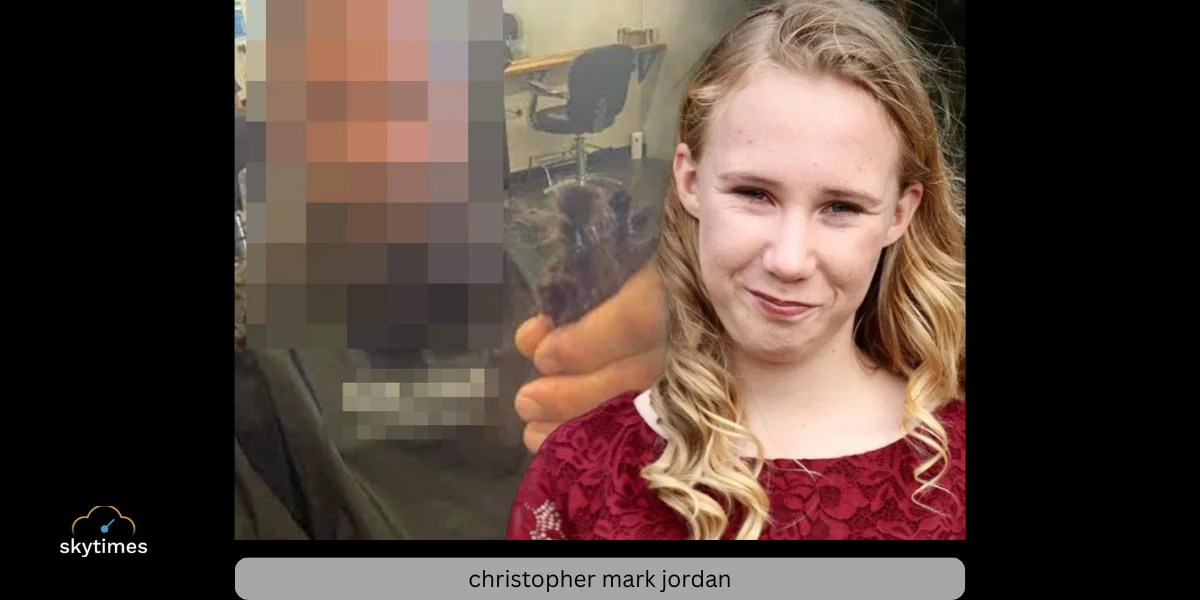
The case of Christopher Mark Jordan has become one of the most closely watched criminal matters in Tasmania in recent years. It sits at the difficult intersection of law, community grief, and the slow mechanics of the justice system. While public attention focuses on the name and the charges, it is essential to remember that, as of mid‑2026, Jordan remains an accused man awaiting trial, not a convicted offender.
This article brings together what is publicly known about Christopher Mark Jordan’s case, the alleged murder of 14‑year‑old Shyanne‑Lee Tatnell, and the current status of the court proceedings. It does so with a careful eye to both factual clarity and the fundamental principle of presumption of innocence.
Who Is Christopher Mark Jordan?
- Full Name: Christopher Mark Jordan
- Born: Around 1987 (approximately 39 years old in 2026)
- Residence: Scottsdale, in North‑East Tasmania, Australia
- Current Status: Remanded in custody, awaiting trial at the Supreme Court of Tasmania
Prior to the events linked to the disappearance of Shyanne‑Lee Tatnell, Jordan was not widely known publicly and had no established high‑profile criminal history. His name came to national attention only after his arrest in 2023.
Police interest in Jordan appears to have focused on his life in Scottsdale, a rural town north‑east of Launceston. After Tatnell’s disappearance, officers executed search warrants at his property as part of a broader investigation that eventually led to his arrest and subsequent charges.
The Disappearance of Shyanne‑Lee Tatnell
The heart of this case is the disappearance and death of 14‑year‑old Shyanne‑Lee Tatnell.
- Victim: Shyanne‑Lee Tatnell, aged 14
- Last seen: 30 April 2023, in Launceston, Tasmania
- Discovery of remains: 26 July 2023, in bushland near Nabowla, about 40 minutes from Launceston
Tatnell’s disappearance triggered an extensive search and a wave of public concern. For months, the case was characterised by uncertainty and anguish for her family and the wider community.
When remains were located in remote bushland near Nabowla in late July 2023, the investigation intensified sharply. Forensic work and subsequent inquiries led investigators to focus on Jordan as an alleged suspect in her death.
Charges Against Christopher Mark Jordan
On 27 July 2023, shortly after the discovery of Tatnell’s remains, police arrested and charged Christopher Mark Jordan.
Primary Charge
- Murder: Jordan is charged with the murder of Shyanne‑Lee Tatnell, alleged to have occurred on or about the same day she vanished, 30 April 2023 in Launceston.
He has entered a plea of not guilty and denies the allegation.
Additional Charges
Following further investigation, Jordan was also charged in August 2023 with a series of additional, unrelated offences, including:
- Illegal ammunition storage
- Possession of cannabis
- Possession of prohibited import items
These additional counts are expected to be managed within the broader set of proceedings. Importantly, they do not replace the murder charge; they sit alongside it and may be dealt with as part of the same overarching case.
Presumption of Innocence
From a legal standpoint, it is critical to emphasise:
- Jordan has not been convicted of any of these matters as of July 2026.
- He is entitled to the presumption of innocence until proven guilty in a court of law.
- The upcoming trial will be the forum where evidence is tested, witnesses are cross‑examined, and a jury will reach a verdict.
Remand and Custody Status
Since his arrest, Jordan has remained in custody on remand.
- Facility: He is being held at Risdon Prison in Tasmania.
- Bail: No bail has been granted.
- Duration: By mid‑2026, he has spent roughly three years in custody awaiting the resolution of his case.
From a justice‑system perspective, lengthy remand periods in complex homicide matters are not unusual, particularly where investigations are extensive, evidence is voluminous, or legal arguments are intricate. That, however, does not lessen the emotional impact on either the accused or the victim’s family.
Court Proceedings and Trial Timeline
Trial Setting
As at July 2026:
- Court: Supreme Court of Tasmania, Launceston
- Trial Date: Set for April 2027
- Expected Length: Approximately 4–5 weeks
- Evidence: Around 14 volumes of material are expected to be presented
- Witnesses: Roughly 50 witnesses likely to be called
The scale of the preparation is significant. For a case of this nature, it typically includes:
- Forensic reports and expert testimony
- Digital, telecommunication, and location data (where relevant)
- Police investigative files and search‑warrant material
- Civilian witness statements and potential character evidence
- Evidence about Jordan’s property and movements around the relevant dates
Recent Court Activity (Mid‑2026)
By July 2026, the matter has largely been in the pre‑trial phase:
- The case has been adjourned for final pre‑trial hearings.
- There have been no public reports of new evidence or changes to Jordan’s plea.
- The court is managing procedural issues: what evidence can be admitted, how it will be presented, and how the trial will be structured.
These pre‑trial directions are critical in shaping what the jury ultimately hears, even if they attract far less media attention than the eventual trial.
The Human Impact: A Family Waiting for Answers
Behind every legal filing and evidentiary volume is a grieving family.
For Shyanne‑Lee Tatnell’s relatives, the journey since April 2023 has been marked by:
- Prolonged uncertainty during the months she was missing
- The devastating discovery of her remains in July 2023
- A drawn‑out wait while the legal process unfolds
By mid‑2026, more than three years have passed since Tatnell disappeared. The family continues to wait for a courtroom conclusion that might bring legal clarity, even if it can never truly repair their loss.
Common emotional realities for families in cases like this include:
- Frustration with how long court processes take
- Distress at repeated media coverage and public speculation
- A strong need for dignity and respect in how their loved one is spoken about
For observers, one practical and respectful step is to avoid sharing unverified speculation, especially on social media, and to remember that both the victim and the accused have legal and human rights.
How Complex Murder Trials Typically Unfold
While each case is unique, large homicide trials in Australian jurisdictions often follow a familiar pattern once they reach court:
- Jury selection
Citizens are empanelled to hear the case, with both prosecution and defence able to challenge certain jurors. - Opening addresses
The prosecution outlines its case theory; the defence may present its own narrative or reserve its opening. - Prosecution evidence
Witnesses, police officers, and experts are called. Documents, recordings, and forensic materials are tendered. - Defence case (if any)
The defence may call its own witnesses or choose to rely on raising reasonable doubt in the prosecution’s case. - Closing addresses and judge’s directions
Both sides summarise their arguments; the judge then instructs the jury on the law and how it must be applied. - Jury deliberations and verdict
The jury retires to consider the evidence and reach a verdict on each charge.
In Jordan’s case, with 50 witnesses and 14 volumes of evidence, the trial is likely to involve complex timelines, technical material, and detailed reconstructions of events.
Common Public Misunderstandings in High‑Profile Cases
High‑profile cases like that of Christopher Mark Jordan and Shyanne‑Lee Tatnell are often accompanied by intense public interest. That can generate misunderstandings that are worth addressing.
1. “If he’s on remand, he must be guilty.”
Being remanded in custody means the court has decided not to grant bail. It does not mean the accused has been found guilty. Bail decisions weigh factors like flight risk, risk to the public, and the seriousness of the charges, not the final question of guilt.
2. “The length of time in custody proves something.”
Extended periods in custody before trial usually reflect:
- The complexity of the evidence
- The time needed for forensic work and legal preparation
- Court scheduling pressures
They do not, in themselves, answer the question of whether the accused committed the alleged crime.
3. “If the media reports it, it’s fact.”
News outlets rely on available information and court documents, but coverage can never tell the full story before a trial. Evidence must be tested in the courtroom, not simply reported in headlines.
Looking Ahead: The Road to April 2027
As of July 2026, the path forward in the case of Christopher Mark Jordan is defined but not yet travelled.
Key expectations include:
- Pre‑trial refinement: Lawyers will continue to argue about admissibility and procedure.
- Trial commencement in April 2027: Subject to court timetables and any unforeseen delays, this is when a jury will first begin to hear the full case.
- Intense scrutiny: The trial is likely to attract strong media and public attention, given the age of the victim and the length of time the matter has been before the courts.
For the community, the most constructive approach is to allow the legal process to run its course, to respect court orders and reporting restrictions, and to be mindful that online commentary can affect real people — especially the family of Shyanne‑Lee and others closely connected to the case.
For now, Christopher Mark Jordan remains an accused person, not a convicted one, held in custody as he awaits a trial that is forecast to be lengthy, complex, and emotionally charged for all involved.