
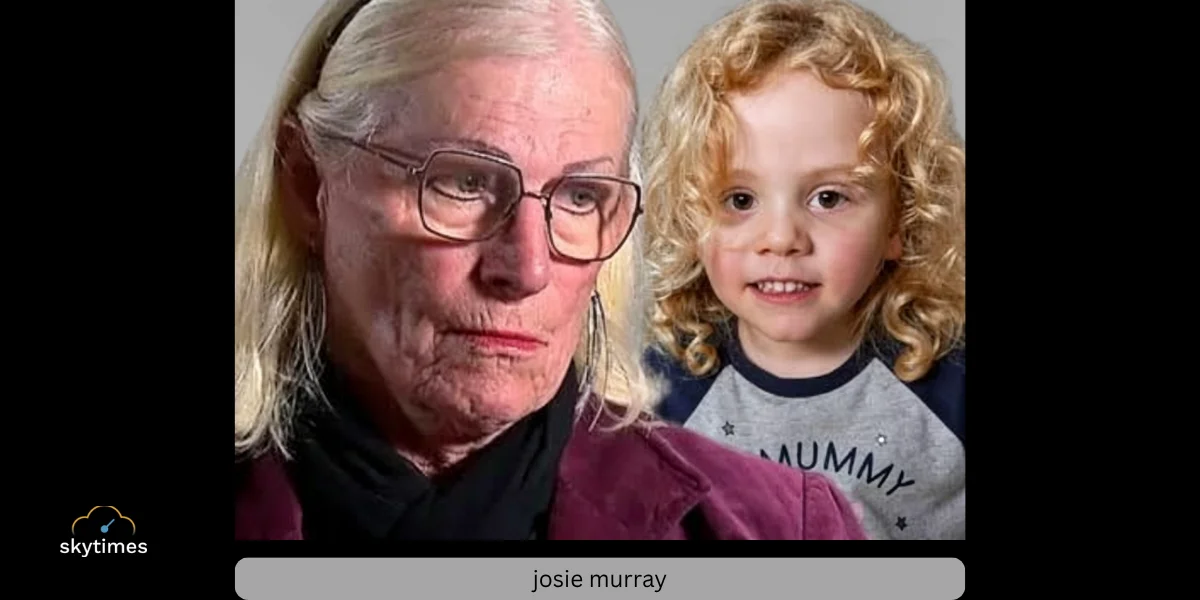
In Australia’s vast interior, stories are often shaped as much by the landscape as by the people who live on it. Josie Murray, a 75‑year‑old grazier and long‑time outback identity, has spent decades working stock, building sheds, officiating weddings, and serving as a Justice of the Peace on Oak Park Station near Yunta in Far North South Australia.
Today, however, Murray’s life is defined by a single, unresolved question: what happened to her four‑year‑old grandson, August “Gus” Lamont, on September 27, 2025? It is a mystery that has gripped regional Australia, strained a family, and left police and public opinion circling one person of interest – Josie herself.
This article traces Murray’s unusual life story, the events surrounding Gus’s disappearance, the firearms conviction that followed, and the unanswered questions that still dominate Oak Park Station.
Who Is Josie Murray?
A Life Built in the Bush
Born around 1951, Josie Murray has spent most of her 75 years in and around Australia’s rangelands. Oak Park Station, near Yunta in the Far North of South Australia, is not just home; it is a record of her working life.
Over the decades, Murray has worn an array of hats:
- Grazier and station operator – managing livestock in one of the country’s harshest environments.
- Former stockman and drover – part of the old tradition of moving cattle across long distances.
- Licensed builder – turning practical skills into formal qualifications.
- Marriage celebrant – officiating weddings in remote communities.
- Justice of the Peace – providing a local point of contact for documents and declarations.
Her story also includes a deeply personal chapter: in 2009, Murray underwent gender reassignment, transitioning later in life in a conservative, rural setting. That decision, and her visibility as a trans woman in the outback, has shaped how some people perceive her, though it is not directly tied to the criminal questions now facing her.
Grandmother to August “Gus” Lamont
Among her family roles, one mattered more than any title or qualification: grandmother. Her grandson, August “Gus” Lamont, born around 2021, was a regular presence at Oak Park.
The bond between grandparents and grandchildren on remote stations is often especially strong. Children grow up with:
- Space to roam.
- Animals to help feed and muster.
- Adults who have lived their whole lives on the land.
That setting – and the freedom it usually offers – is part of what makes the events of September 2025 so haunting.
The Disappearance of Gus Lamont
September 27, 2025: A Child Vanishes
On September 27, 2025, four‑year‑old Gus Lamont disappeared from the Oak Park Station homestead. According to initial reports, Gus had been playing near the house before he suddenly disappeared.
South Australian Police responded with what became the largest‑ever regional missing-person search in the state’s history. The scale reflected both the urgency and the terrain:
- Vast paddocks, scrub, and creek lines.
- Old wells, dams, and sheds.
- Harsh conditions where a young child could be quickly overwhelmed.
Search teams included:
- Local police and SES volunteers.
- Specialist search and rescue units.
- Community members and nearby station workers.
Despite days of sustained effort, no trace of Gus was found – no clothing, no footprints that could be definitively linked, no physical evidence that clearly explained his fate.
From Search to Suspicion
When a child disappears in an urban setting, investigators instinctively consider abduction, CCTV, and vehicle movements. In the outback, the landscape itself is often the first suspect: creeks, animals, exposure.
Over time, however, the lack of any physical evidence began to refocus attention:
- If this was an accident, why had no trace been found?
- If this was an abduction, how had a stranger reached and left such an isolated property without clear signs?
By mid‑2026, the investigation had moved decisively from pure search‑and‑rescue into a suspicious‑circumstances inquiry, with increasing scrutiny on those closest to Gus at the time.
Josie Murray as the Sole Person of Interest
Police Focus Narrows
In June 2026, Murray publicly confirmed that she was being treated as the only person of interest – effectively, the only suspect – in Gus’s disappearance.
Police have not laid charges and have not publicly detailed all their reasons. However, their working theories reportedly include the possibility of:
- An accident at or near the homestead, followed by
- A deliberate cover‑up of Gus’s body or belongings.
For investigators, the combination of isolation, time delays in reporting, and gaps in the timeline can raise difficult questions about what happened in the crucial minutes and hours after a child is last seen.
Murray’s Response
Murray has consistently denied any involvement in Gus’s disappearance.
Her stance includes several key points:
- She suggests possible abduction, arguing that an unknown party may have entered the property.
- She claims the police missed or mishandled evidence, citing what she views as flaws in the search or in early investigative steps.
- She asserts that she has told the truth and that authorities have become fixated on her because she was on the property and because of her unconventional background.
In June 2026, Murray spoke publicly in depth for the first time on 7NEWS Spotlight (aired 21 June 2026). In that interview, she:
- Reiterated her innocence.
- Criticized aspects of the investigation.
- Described the emotional toll of being both a grieving grandparent and a prime suspect.
Cooperation and Tension
Police have noted that Murray’s cooperation with detectives has diminished since late 2025.
From an investigative standpoint, reduced cooperation can:
- Limit opportunities to clarify inconsistencies.
- Fuel suspicion, rightly or wrongly, in the absence of new evidence.
From Murray’s perspective, ongoing suspicion without charge may feel like a form of punishment, eroding trust and making further engagement harder.
As of July 2026:
- No new evidence has been publicly disclosed.
- No arrests have been made.
- The investigation remains active, with Murray still treated as the prime person of interest.
The Firearms Offense: A Separate Legal Thread
While the search for Gus was ongoing, a separate legal issue emerged.
Discovery of a Sound Moderator
In January 2026, during a police search of Oak Park Station linked to the missing‑person investigation, officers discovered an unregistered sound moderator (silencer).
Under South Australian firearms law, such devices are heavily restricted. Murray had previously:
- Owned the sound moderator legally before 2017.
- Failed to re‑register or dispose of it after a change in the law tightened requirements.
Charge, Plea, and Sentence
Murray was charged with possessing an unregistered sound moderator.
She pleaded guilty, accepting that:
- The device was in her possession.
- She had not complied with the updated regulatory framework.
On June 11, 2026, the court sentenced her to:
- A $10,500 fine.
- No jail time.
Importantly, authorities and the court have stressed that this firearms case is legally unrelated to Gus’s disappearance. The timing and publicity, however, have inevitably shaped public perception, strengthening an image of Murray as someone comfortable around weapons and outside strict regulatory bounds.
Life on a Remote Station Under a Cloud of Suspicion
Emotional and Social Impact
For any grandparent, the loss – or unexplained absence – of a grandchild is devastating. For someone living remotely, that grief is compounded by isolation and, in Murray’s case, the constant presence of the homestead where Gus was last seen.
Add to that the reality that:
- Police view her as the main suspect.
- Her cooperation has partly broken down.
- Media coverage has publicly dissected her history, gender transition, and lifestyle.
The result is a deeply strained existence: part mourning, part defense, part stubborn continuity of station routines.
Community Perception
In small communities, reputations travel fast and are hard to reshape. Residents in and around Yunta – and the wider Far North pastoral community – must wrestle with two competing images:
- The long‑serving grazier, builder, celebrant, and JP they have known for years.
- The woman at the center of one of South Australia’s most baffling and emotive missing‑child cases.
Some will reserve judgment, holding to the principle that suspicion is not proof. Others may quietly, or openly, assume police would not focus so heavily on her without good reason.
Lessons and Reflections: Missing Children in Remote Australia
While the Murray–Lamont case is unique in its details, it spotlights broader issues around missing children in remote environments.
1. The Search Window Is Critical
In vast, harsh landscapes:
- Minutes and hours matter. Heat, cold, water hazards, and wildlife can quickly turn a minor separation into a life‑threatening situation.
Practical insight:
- Rural families and station workers benefit from clear protocols – where children can play, who is watching, what happens the moment a child is unaccounted for.
2. Scene Integrity vs. Community Response
When a child goes missing, the instinct is to search immediately with whoever is available. That is understandable and often necessary.
But large, uncoordinated search efforts can also:
- Disturb potential evidence.
- Blur footprints, tracks, and scent trails.
Balancing rapid community mobilization with forensic discipline is one of the hardest parts of these cases.
3. The Human Cost of Prolonged Suspicion
When a child is not found, and no offender is charged:
- Families may become divided by suspicion.
- Key figures – often the last adults with the child – may live under an informal presumption of guilt long before any formal charge is broughte.
For investigators, that ongoing pressure can create both leverage and risk:
- It may encourage some people to talk.
- It may also entrench hostility and reduce cooperation, as has happened between Murray and detectives.
Future Outlook: What Might Happen Next?
As of July 2026, the road ahead remains uncertain.
For the Investigation
South Australia Police continue to:
- Treat the case as active.
- View Murray as the primary person of interest.
- Monitor for any new information, forensic leads, or witness accounts.
Possible developments include:
- Fresh forensic analysis as technologies improve.
- New statements or tips from those who were on or near Oak Park at the time.
- A formal decision, eventually, to lay charges or to scale back the investigation if no new evidence emerges.
For Josie Murray
Parallel realities define Murray’s future:
- Legally, apart from the firearms fine, she currently faces no other charges.
- Practically, she lives under the cloud of being publicly named as the sole suspect in her grandson’s disappearance.
Any shift in that status will depend on evidence – not speculation. Until then, she remains in a kind of limbo: not convicted, not cleared, forever associated with a case that has no resolution.
Conclusion: A Station Without Answers
Oak Park Station should be a place of routines: feeding stock, checking fences, watching grandchildren chase dogs around dust‑blown yards. Instead, it has become a symbol of absence – the place where four‑year‑old Gus Lamont was last seen and never found.
At the center of that story is Josie Murray: a tough, unconventional bush woman with a lifetime of service and hard work behind her, now living under the heaviest kind of suspicion a grandparent can face.
Until Gus is found, or clear evidence emerges to explain what happened on 27 September 2025, there will be no true closure for his family, the Yunta community, or South Australia Police. The case remains a reminder that in the outback, secrets are hard to keep – but sometimes, tragically, so are answers.
For now, all that exists is a question echoing across the station: Where is Gus? And for Josie Murray, that question is both an accusation and a grief she cannot escape.