
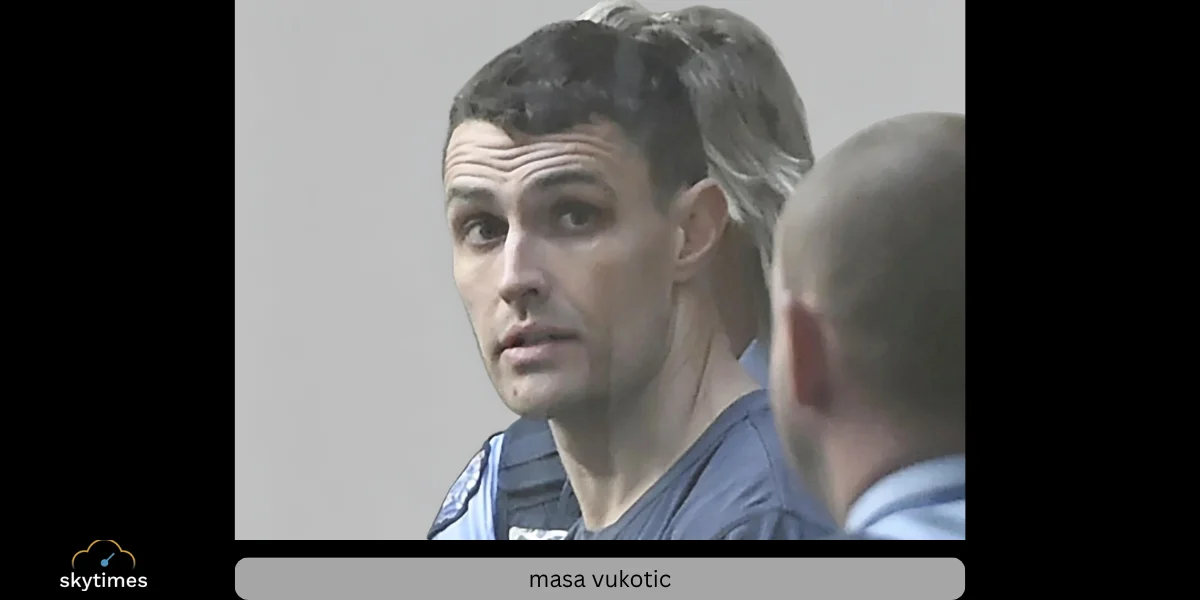
In thirty years of covering cases that expose the gaps in a justice system, few have been as clear-cut in their failure as the murder of Masa Vukotic. She was seventeen years old, walking near her own home in suburban Melbourne, when she was killed by a man who should never have been free to encounter her. Her death did not just devastate a family and a community. It forced a fundamental rethink of how Victoria’s bail system assessed dangerous offenders.
This is a difficult story to tell, but an important one. Understanding what happened to Masa Vukotic means understanding a series of decisions that, in the words of the sentencing judge, amounted to a catastrophic failure of management.
Background and Life
Masa Vukotic was a student at Canterbury Girls’ Secondary College, living with her family in Doncaster East, an eastern suburb of Melbourne. Those who knew her described her as loving, sweet, and smart, a bright presence within her close-knit community.
On the evening of March 17, 2015, Masa went for a walk in the Koonung Creek Linear Reserve, a parkland area only a few hundredmeterss fromher home, wearing headphones. It was an ordinary activity in a familiar, local setting, the kind of everyday moment that made what followed all the more shocking to the community.
The Incident
Masa was approached from behind by a man who was entirely unknown to her. He launched a violent, unprovoked attack, stabbing her repeatedly before fleeing the scene. Neighbors who heard screaming saw a man running from the area, and her body was later found near a footbridge in the reserve.
Expert tip for readers trying to understand cases involving stranger violence: Random attacks by someone with no prior connection to the victim are statistically rare compared to violence involving people known to each other, but they tend to generate outsized public fear precisely because they strike at the sense of safety in everyday, familiar spaces, which is exactly what happened across Melbourne following MMasa’sdeath.
The man responsible, Sean Christian Price, was arrested days later after further offending, including a sexual assault at a separate location. Price had a lengthy history of violent offending, including a prior five-and-a-half-year sentence for a series of assaults and rapes.
Investigation and Legal Proceedings
What emerged during the subsequent legal proceedings was deeply troubling. Price was on bail at the time of the murder, despite being assessed as a violent offender with a significant history of sexual and physical violence and known mental health issues. His supervision conditions while on bail were minimal, and there was no meaningful monitoring of his mental health treatment or medication compliance.
Key facts that emerged during his trial included:
- Price later told police that he had been planning to stab someone in the days leading up to the attack, and had specifically selected Masa after seeing her from across the road.
- He had reportedly borrowed library books on crime scene investigation and forensic evidence shortly before the murder, along with material relating to a notorious Australian serial killer.
- Price pleaded guilty to murder, rape, robbery, and attempted theft, and was later also charged with threatening to kill a correctional officer while in custody.
Common mistake in following cases involving mental health and violent offending: Assuming that a documented history of mental illness automatically explains or excuses violent behavior. In this case, the sentencing judge specifically found that Price was not mentally impaired at the time of the murder, having deliberately researched and planned the attack in the days beforehand.
In March 2016, Justice Lex Lasry of the Victorian Supreme Court sentenced Price to life imprisonment, with a non-parole period of 38 years, meaning he will not be eligible for parole until 2054. In handing down the sentence, Justice Lasry was scathing in his assessment of how Price had come to be free in the community, describing the decision to release him on bail as an astonishing and catastrophic example of mismanagement by the courts, corrections system, and executive government.
Community Response and Legacy
MMasa’sdeath sent shockwaves through Melbourne, and particularly through Doncaster East, where the randomness of the attack left many residents feeling that their own sense of safety in familiar public spaces had been shattered.
Common mistake in public commentary following cases like this one: Placing responsibility on victims for their own safety choices rather than on the systemic failures that allowed a known dangerous offender to remain free. Public commentary following Masa’s death that focused on women’s choices about walking alone was widely criticized at the time for missing the far more significant failure at the heart of the case, namely the justice system’s handling of Price himself.
Masa’s family became vocal advocates for reform in the years following her death, pushing for changes to how Victoria’s bail and mental health systems assessed and monitored dangerous offenders.
Broader Issues Raised
Masa’s case became directly linked to substantial legislative reform in Victoria, work that is often referred to informally as Masa’s Law. This reform effort was further shaped by the findings of a broader review into the state’s bail system, prompted in part by her case and several others that followed.
Key reforms and reviews connected to this period include:
- A significant tightening of Victoria’s bail laws, making it considerably harder for offenders with histories of serious violent or sexual offending to be released into the community.
- Increased scrutiny of how mental health assessments factor into bail and sentencing decisions for offenders with documented histories of violence.
- Broader reviews into the coordination between courts, corrections, and mental health services, aimed at closing the exact kind of supervision gaps that allowed Price to remain unmonitored in the community.
Conclusion
Masa Vukotic’s death was a preventable tragedy, and the findings of the court that sentenced her killer made that painfully clear. Her case became a defining moment in Victoria’s approach to bail law and the management of violent offenders, prompting reforms that continue to shape the justice system today. More than a decade on, Masa’s name remains attached not only to profound grief, but to a lasting legacy of accountability and reform that her family fought hard to see realized.