
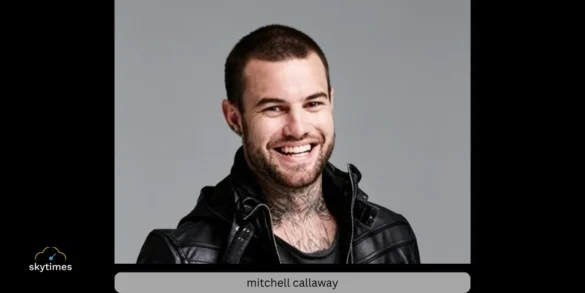
Mitchell David Callaway’s story is one of sharp contrasts: small‑town country singer turned national reality‑TV figure, inspirational comeback after a devastating injury, and later, a life overshadowed by a high‑profile legal case. His journey says as much about the pressures of sudden fame and public judgment as it does about music, resilience, and the limits of the justice system.
Early Life and Small‑Town Roots
Born around 1985 in Bowraville, a small town on the New South Wales Mid North Coast, Mitchell Callaway grew up far from the bright lights of prime‑time television.
Country towns shape musicians in particular ways:
- Community events and local pubs become early stages.
- Country and rock tend to dominate the soundtrack of everyday life.
- The line between working life and musical passion is often blurred.
Callaway fitted that mould – a working‑class young man who loved rugby league and music, long before he had any reason to imagine national exposure.
The Accident That Changed Everything
In 2010, Callaway suffered a life‑changing rugby league accident, breaking his neck. For anyone, such an injury is confronting; for a young man whose identity was entwined with physical work and sport, it was a turning point.
Instead of allowing the injury to swallow his future, Callaway:
- Shifted his focus more seriously to music.
- Used singing and songwriting to rebuild confidence and purpose.
From an expert perspective, this is a classic example of post‑traumatic pivot:
- A crisis forces a reassessment of priorities.
- Creativity becomes both therapy and a potential new career path.
For many aspiring artists, Callaway’s decision to lean into music after trauma was, at the time, an uplifting narrative of resilience.
The X Factor Australia: National Spotlight in 2011
Callaway’s true breakthrough came in 2011, when he auditioned for Season 3 of The X Factor Australia.
The Audition and Rise
His performance of “Tonight I Wanna Cry” immediately resonated with viewers and judges:
- His country‑rock tone stood out in a field often dominated by pop voices.
- The vulnerability of his delivery matched the backstory of injury and reinvention.
He was taken into the competition and mentored by Natalie Bassingthwaighte. Over the course of the series, he built a small but loyal following who responded to his understated style and authenticity.
Callaway eventually finished in 7th place, which for many reality‑TV alums is a sweet spot:
- High enough to gain genuine national exposure.
- Low enough to avoid some of the crushing expectations placed on finalists and winners.
The Reality TV Effect
Shows like The X Factor can be double‑edged swords:
- They offer a national platform almost overnight.
- But they also compress career development that would normally take years into a few intense weeks.
For Callaway, 2011 was the year he went from Bowraville local to a recognised figure in Australian music circles.
Building a Music Career: Country‑Rock Storytelling
After the show, Callaway continued to pursue a country‑rock path, drawing on personal experience and small‑town themes.
Notable Releases
He released several tracks, including:
- “Jared’s Song”
- “More Than I Thought I’d Ever Be”
These songs reflected a familiar pattern for X Factor alums:
- Capitalising on the immediate recognition generated by TV exposure.
- Trying to convert television fame into a sustainable recording and touring career.
Callaway’s voice and style sat naturally in the Australian country‑rock space:
- Honest, conversational lyrics.
- Emphasis on story rather than vocal gymnastics.
- A working‑class, unpolished authenticity that resonated with regional audiences.
Practical Lessons for Emerging Artists
There are valuable takeaways in how Callaway approached his post‑show career:
- Leverage momentum quickly: Reality‑TV visibility fades; he moved to release original music while his name was still fresh.
- Stay true to genre: Rather than chasing pop trends, he stayed in the country‑rock lane that suited his voice and identity.
- Build beyond TV: Long‑term success depends on gigs, songwriting, and fan relationships, not just television moments.
Common mistake: many reality contestants believe exposure alone guarantees a career. Callaway’s path – while not at superstar level – at least showed an understanding that real work begins after the cameras stop.
The Binnaway Tragedy and Legal Case
Callaway’s public image changed dramatically after a tragedy in 2018.
The 2018 Incident
On 2 July 23, 2018 a 9‑month‑old girl in his care died at a home in Binnaway, New South Wales.
The death triggered:
- A coronial inquiry to examine the circumstances.
- Intense scrutiny from both authorities and, later, the media.
Murder Charge in 2023
After several years of investigation, in June 2023 Callaway was:
- Arrested.
- Charged with murder in connection with the child’s death.
The delay between the incident and the charge is not unusual in complex medical and forensic matters involving infants. Determining cause and intent can be extremely challenging.
For Callaway, however, the public impact was immediate:
- A former reality‑TV figure linked to a child’s death is a headline that travels fast.
- Social media commentary often blurred the line between allegation and conclusion.
Conflicting Medical Evidence and Case Collapse
The turning point came when the medical evidence was examined in full.
By 2024, prosecutors:
- Faced conflicting medical opinions about how and why the child died.
- Concluded they could not meet the high burden of proof required for a murder conviction.
As a result:
- The murder charge was withdrawn.
- The case was dismissed, and no conviction for the child’s death was recorded against Callaway.
From a legal perspective, this is crucial:
- In serious criminal matters, especially homicide, the standard is beyond reasonable doubt.
- When experts fundamentally disagree on the cause or mechanism, securing a safe conviction becomes extremely difficult.
Separate Firearms Conviction
Alongside the homicide investigation, Callaway was convicted of unlawful firearm possession relating to the same general time period.
This does two things to public perception:
- It reinforces a narrative of poor judgment and risk‑taking.
- But it is legally and morally distinct from the far more serious, and ultimately withdrawn, murder allegation.
Public Opinion vs. Legal Reality
The Callaway case highlights a tension that has become increasingly common in the social media age.
On one hand:
- The death of a baby is profoundly emotive.
- A recognizable figure, however modestly famous, becomes a focal point for anger and grief.
On the other hand:
- The justice system is built on evidence, not sentiment.
- Conflicting medical testimony and uncertainty must be resolved in favor of the accused.
Key Principles to Understand
- Presumption of Innocence
Withdrawal of charges due to insufficient evidence means the state accepts it cannot prove guilt. That is not a technicality; it is a core safeguard. - Complexity of Infant Death Cases
Medical explanations can be subtle and disputed. Pathology, pre‑existing conditions, and timing may all be contested. - Impact of Public Figures
When the accused has any level of fame, coverage is magnified, and reputational damage can be permanent, regardless of legal outcome.
Lessons and Reflections
While only a handful of people will ever experience the extremes of Mitchell Callaway’s public journey, there are broader lessons that apply to artists, media, and audiences.
For Artists and Public Figures
- Understand your exposure: Reality TV can bring opportunity, but it also removes privacy. Mistakes, allegations, and personal crises will be amplified.
- Legal trouble never exists in a vacuum: Even unproven offenses (such as firearm possession) colour public perception in more serious matters.
- Seek strong professional support: In times of crisis, experienced legal and media advice can be the difference between managed scrutiny and uncontrolled reputational collapse.
For Media and Commentators
- Avoid assuming guilt: Arrest and charge do not equal conviction. Reporting should reflect evolving legal realities, including when cases collapse.
- Respect nuance in medical/legal evidence: Infant death cases, in particular, demand caution and context.
For the Public
- Recognise the gap between headlines and courtrooms: A withdrawn charge is not a minor administrative step; it signals genuine legal doubt.
- Hold two truths at once: A child’s death is always tragic and deserving of seriousness; it does not automatically mean criminal guilt can be proven against the person last in care.
Where Does Mitchell Callaway Fit Now?
In pure career terms, Callaway remains best known as:
- A former X Factor Australia contestant (2011) who finished 7th under the mentorship of Natalie Bassingthwaighte.
- A singer with a country‑rock style who released songs such as “Jared’s Song” and “More Than I Thought I’d Ever Be”.
The later legal saga has undeniably overshadowed that musical identity. For many, his name is now associated as much with legal headlines as with performances.
His future in the public eye, if any, will depend on several factors:
- Personal choice – whether he seeks a return to music or prefers a private life.
- Public appetite – how willing audiences are to separate unresolved emotion about the case from the legal outcome.
- Media framing – whether coverage allows space for nuance or remains locked in the most dramatic chapter of his story.
Conclusion
Mitchell Callaway’s trajectory defies simple labels. He is, at once, the country‑rock singer from Bowraville who moved a national audience on The X Factor, the young man who rebuilt his life after a serious neck injury, and the former defendant in a deeply troubling case that ultimately collapsed under the weight of conflicting medical evidence.
His story is a reminder that public lives are rarely linear. Moments of inspiration can sit alongside periods of intense scrutiny and controversy. For observers, the task is to hold on to complexity: recognizing both the power of his early musical narrative and the gravity of the tragedy that later engulfed his life, without leaping beyond what the courts could ever prove.
In the end, Mitchell Callaway remains a figure at the intersection of talent, chance, and the unforgiving glare of public attention — a cautionary tale about fame, judgment, and the limits of certainty when law, medicine, and emotion collide.