
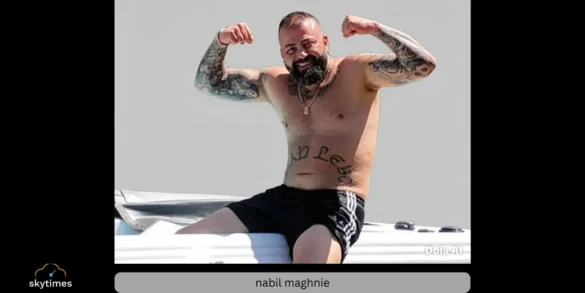
Nabil Maghnie, infamously nicknamed “Mad Leb,” was a towering figure in Melbourne’s criminal underworld. Known for his ruthless enforcement tactics and deep involvement in organised crime, his violent death in broad daylight in January 2020 sent shockwaves through the city’s northern suburbs. Despite multiple assassination attempts over the years, it was a personal dispute linked to a minor car accident that ultimately led to his demise. Yet, five years on, the murder remains unsolved, emblematic of the complex and shadowy nature of gangland violence in Australia’s second-largest city. This article delves into Maghnie’s criminal legacy, the circumstances surrounding his death, and the ongoing challenges faced by law enforcement in unraveling Melbourne’s underworld conflicts.
Nabil Maghnie: The Man Known as “Mad Leb”: Background and Criminal Career
Nabil Maghnie, also spelled Moughnieh, was a feared and influential figure whose reputation spanned decades within Melbourne’s organised crime scene.
Criminal Profile
- Age at death: 44 years old (born circa 1975/1976).
- Criminal history: Extensive, involving extortion, drug trafficking, violent enforcement, and standover tactics.
- Associations: Linked closely with the Comanchero bikie gang, one of Melbourne’s most notorious outlaw motorcycle clubs.
- Role: Acted as an enforcer and mediator within the criminal networks, known for his volatile temperament and willingness to resort to violence.
Maghnie’s nickname, “Mad Leb,” referenced both his Lebanese heritage and his unpredictable, aggressive approach to criminal dealings.
Previous Attempts on His Life
- 2011: Survived a shooting incident that highlighted ongoing threats against him.
- 2016: Suffered a severe gunshot wound to the face/head but displayed remarkable resilience by driving himself to the hospital.
These attempts underscored the violent nature of his world and the persistent feuds engulfing Melbourne’s underworld.
Nabil Maghnie: The Fatal Shooting: January 2020 Incident
On 9 January 2020, Maghnie’s life was violently ended in a dispute that began over a seemingly minor incident but escalated fatally.
Details of the Incident
- Occurred in broad daylight outside a house in Epping, a suburb in Melbourne’s north.
- The confrontation stemmed from a car accident involving Maghnie’s daughter.
- Two masked gunmen opened fire, fatally shooting Maghnie at least four times.
- Two other men, including one of his sons, were wounded in the attack.
- Despite rapid medical response, Maghnie died at the scene.
The bold nature of the hit reflected the brazen criminal conflicts that plague Melbourne’s underworld.
Nabil Maghnie: Investigation and Ongoing Mystery
Despite the high-profile nature of the murder, the case remains unresolved as of 2025–2026.
Law Enforcement Efforts
- Multiple suspects have been investigated, but no convictions have been made.
- Police believe the killing is connected to ongoing gangland feuds in Melbourne’s northern suburbs.
- The complexity of inter-gang rivalries, code of silence, and lack of witnesses hampers the investigation.
Challenges in Gangland Murder Cases
- Fear and intimidation often prevent witnesses from coming forward.
- Criminal networks operate with a high degree of secrecy and loyalty.
- Overlapping disputes and retaliations create a web of violence hard to untangle.
The unsolved status of Maghnie’s murder highlights these systemic difficulties.
Nabil Maghnie: The Broader Impact: Melbourne’s Gangland Violence
Maghnie’s assassination was a pivotal moment in a long-running saga of gang violence in Melbourne.
Consequences and Patterns
- Triggered renewed tensions and retaliatory attacks among criminal factions.
- Raised public awareness about the dangers posed by outlaw motorcycle gangs and organised crime groups.
- Prompted calls for increased police resources and legislative measures targeting gang activity.
Community and Policy Responses
- Enhanced surveillance and intelligence gathering by Victoria Police.
- Introduction of anti-gang legislation aimed at disrupting criminal enterprises.
- Community engagement programs to reduce gang recruitment and crime.
Maghnie’s death remains a symbol of the ongoing battle between law enforcement and organised crime.
Practical Lessons and Expert Insights
The case of Nabil Maghnie offers important lessons for tackling organised crime and improving public safety.
Key Takeaways
- The importance of community trust and protection for witnesses is paramount.
- Multi-agency cooperation and technological tools (e.g., surveillance, forensics) are vital.
- Addressing the social and economic roots of gang involvement can reduce violence.
- Persistent law enforcement pressure and legislative backing can shift the balance.
Common Pitfalls to Avoid
- Underestimating the influence and reach of organised crime groups.
- Fragmented policing efforts leading to intelligence gaps.
- Overlooking the need for victim and witness support systems.
Future Outlook: Towards Safer Communities
As Melbourne continues to grapple with gangland violence, the legacy of figures like Maghnie shapes strategies moving forward.
Moving Forward
- Continued focus on intelligence-led policing targeting key players.
- Strengthening laws to deter gang-related crimes.
- Community education and intervention to break cycles of violence.
- Enhanced rehabilitation and support for those exiting criminal networks.
Progress depends on sustained commitment from authorities, communities, and policymakers.
Conclusion
Nabil Maghnie’s life and violent death encapsulate the harsh realities of Melbourne’s organised crime underworld. His reputation as “Mad Leb” and his ultimate fate reflect a world marked by loyalty, brutality, and unresolved vendettas. While his murder remains unsolved, the ongoing investigation and public attention serve as a stark reminder of the challenges in dismantling entrenched criminal networks. Ultimately, the pursuit of justice in cases like Maghnie’s underscores the need for comprehensive strategies combining law enforcement rigor, community engagement, and social reform to create safer, more resilient communities.