
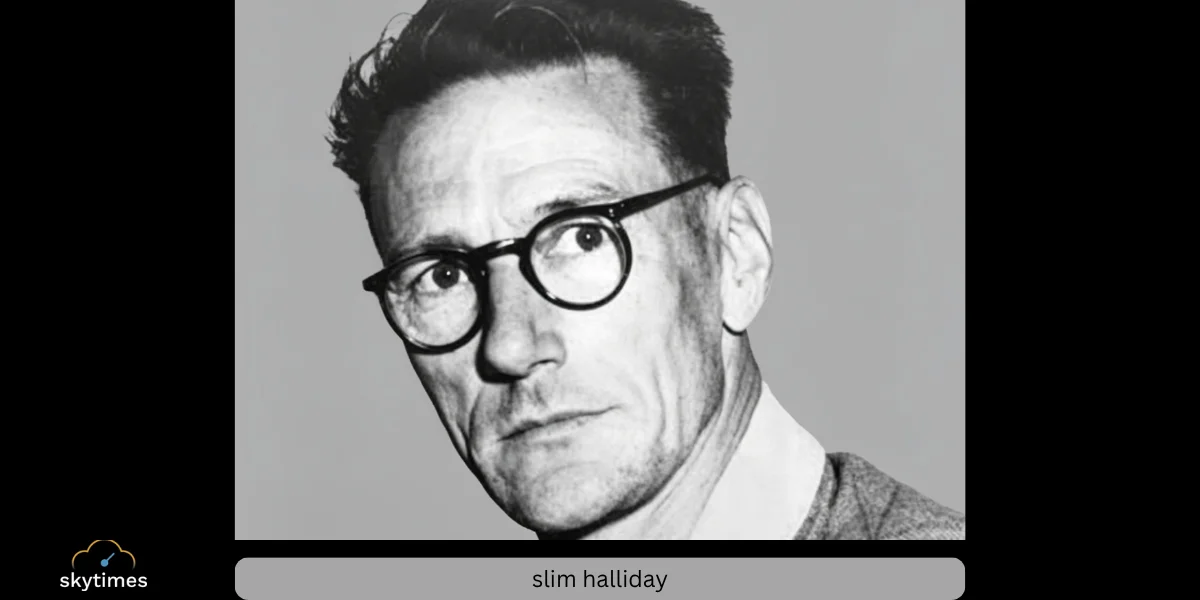
In the annals of Australian true crime, few names evoke the same sense of audacity and notoriety as Arthur Ernest “Slim” Halliday. Known to the public as “The Houdini of Boggo Road,” Halliday was not merely a prisoner; he was a persistent challenge to the Queensland penal system. For decades, his name was synonymous with daring breakouts, relentless determination, and an uncanny ability to turn the most fortified walls into mere hurdles.
As we look back at his life, Halliday emerges as a complex figure. To the authorities, he was a frustrating recidivist; to the public, he was a larger-than-life character whose exploits captured the imagination of a nation. His story, a journey from petty crime to life imprisonment,t remains one of the most compelling chapters in Queensland’s history.
Slim Halliday: Early Life and Criminal Beginnings
Born in 1910, Arthur “Slim” Halliday grew up during a time of immense social and economic upheaval. His early life was largely shaped by the struggles of the Great Depression, an era that pushed many into the margins of society. Like many of his contemporaries, Halliday turned to petty crime as a means of survival, transitioning from a train-fare dodger to a cat burglar.
His early career was characterized by a series of short, unremarkable prison sentences. However, it was during these formative years behind bars that Halliday developed the skills and the mindset that would later define his notoriety. He was not just another inmate; he was highly intelligent, observant, and possessed a restless spirit that refused to be contained by prison walls.
Slim Halliday Daring Escapes: A Persistent Defiance
Halliday’s reputation as “The Houdini of Boggo Road” was hard-earned. Brisbane’s Boggo Road Gaol was an intimidating, castle-like structure, but for Halliday, it was a puzzle to be solved. He became famous for his two successful escapes in the 1940s, both executed with remarkable ingenuity.
The Tactics of a Master Escapee
- Identifying Weaknesses: Halliday possessed an uncanny ability to spot “blind spots” in the prison’s surveillance. He understood that even the most formidable fortresses have architectural vulnerabilities.
- The 1940 Breakout: In his first major escape, he managed to slip past guards in broad daylight, vanishing before authorities realized he was gone. He remained free for two weeks, fueling the public’s fascination with his movements.
- The “Halliday’s Leap”: Following his recapture, authorities went to great lengths to secure the prison, even building larger guardhouses on the walls to cover the blind spot he had previously exploited. Undeterred, Halliday and two accomplices identified a new weak point and executed a second daring escape in 1946.
These exploits made him a folk hero of sorts. While his actions were criminal, the public couldn’t help but admire the sheer audacity of a man who repeatedly outsmarted the state’s most powerful institution.
Slim Halliday: Life in Prison and the Murder Conviction
Despite his brilliance at escaping, Halliday was ultimately better at running than staying free. His time outside the walls was always short-lived, and he spent a significant portion of his adult life behind bars.
The turning point in his criminal career came in the 1950s. In 1952, he was arrested and later convicted of the murder of taxi driver Athol McGowan. This charge shifted his status from that of a notorious escape artist to a convicted murderer, resulting in a life sentence.
His time at Boggo Road became even more restricted following this conviction. Prison officials, wary of his history, placed him under constant surveillance. His cell door was fitted with extra bolts, and his bed was bolted to the wall—measures designed to prevent the ingenuity that had defined his earlier years. Despite these restrictions, he continued to attempt escape, including a 1953 incident where he set fire to mattresses in an attempt to flee through the workshop roof.
Public Perception and Media Legacy
For forty years, the front pages of newspapers charted Halliday’s “career” inside Boggo Road. The media’s coverage was intense, turning him into a household name. This sustained public attention served to immortalize him as an icon of Queensland history.
In later years, Halliday’s story gained a new layer of cultural significance. He was featured in literature and media, perhaps most notably as the inspiration for a character in Trent Dalton’s acclaimed novel Boy Swallows Universe. In this portrayal, the “crim” is reimagined as a mentor and father figure, highlighting how history is often reshaped to reflect the complexity of human character.
Later Life and Death
Halliday was finally released from Boggo Road in the late 1970s, having spent the better part of his life within its walls. He lived out his remaining years away from the notoriety that had defined his youth, eventually passing away in 1987.
By the time of his death, the Boggo Road Gaol itself was beginning to show its age, eventually closing its doors and transitioning into a site of historical preservation. Halliday remains a major historical icon of the site, a reminder of a bygone era of penal history.
Legacy in Australian True Crime
Arthur “Slim” Halliday’s legacy is complex. To modern historians, he represents the harsh reality of the mid-20th-century Australian justice system—an environment where punishment was often dehumanizing, and prisons were frequently overflowing with those caught in the cycle of poverty and crime.
Yet, he also represents a unique moment in Australian history where “the criminal” became a public curiosity. His ability to manipulate the system made him a legend, but his long years of incarceration remind us of the ultimate cost of his path. Today, he is remembered as a symbol of Boggo Road—a man whose life was inextricably tied to the walls he tried so desperately to escape.
Conclusion: Final Reflections
- The Audacity of Hope: Halliday’s escapes were driven by a refusal to accept his confinement, a trait that both defined his criminal life and sparked his public legend.
- The Changing Face of Justice: His story serves as a mirror for how Queensland’s approach to crime and punishment evolved throughout the 20th century.
- An Enduring Icon: Even decades after his passing, the “Houdini of Boggo Road” remains a subject of curiosity, reminding us that some stories are too strange and too persistent to be forgotten.
In the end, Slim Halliday was a man of contradictions: intelligent yet troubled, determined yet trapped, and infamous yet strangely admired. He remains a foundational figure for anyone interested in the gritty, storied, and often dark history of Australian crime.