
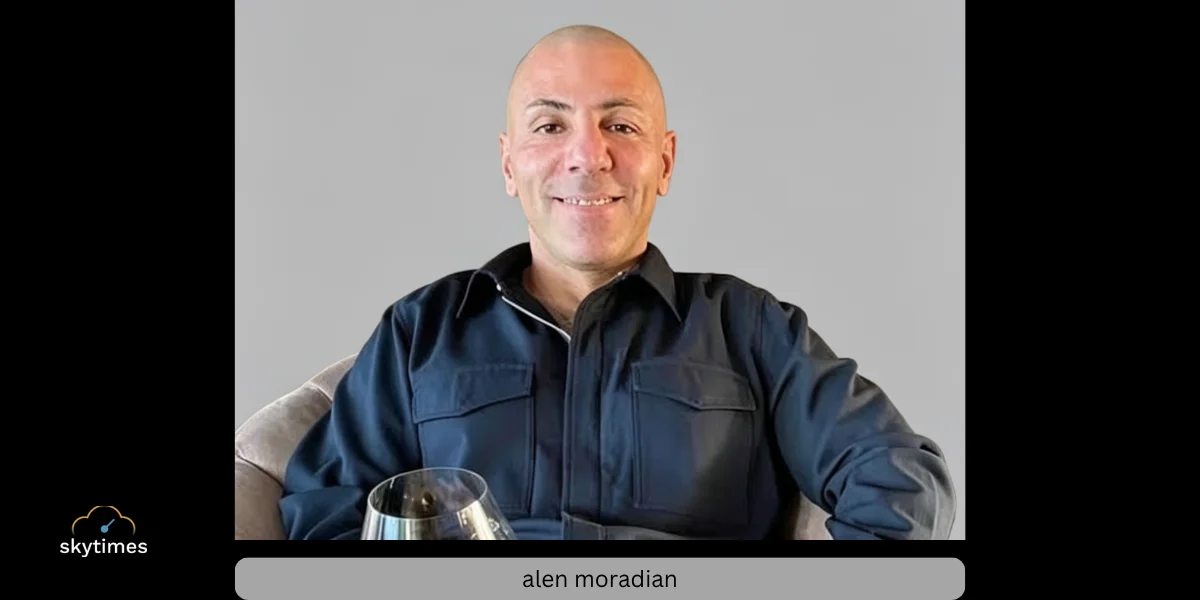
The story of Alen Moradian is a stark illustration of how a life built on power, drugs, and money can end in violence and paranoia. Once a key player in Sydney’s cocaine trade and closely linked to the Comanchero outlaw motorcycle gang, Moradian went from living a lavish, high-risk lifestyle to being gunned down in a Bondi Junction car park in broad daylight. His rise and fall say as much about Australia’s underworld as they do about the man himself.
Early Life and Emergence in Sydney’s Underworld
Public records reveal little about Moradian’s early years,saside fromd his approximate birth year of 1975. What is clear is that by the mid-2000s, he had become a serious operator within Sydney’s organised crime landscape.
- Name: Alen Moradian
- Nicknames: “Big Head”, “Fathead”
- Base: Sydney, New South Wales, Australia
- Key Affiliation: Comanchero Outlaw Motorcycle Gang, broader Sydney organized crime network
Nicknames like “Big Head” and “Fathead” hint at a larger-than-life persona, but in the underworld, reputation is currency. Moradian cultivated the image of a man who was comfortable with risk, scale, and conspicuous wealth – an image that would later help bring him down.
Building a Cocaine Empire
By the mid-2000s, Moradian was central to a cocaine importation and distribution network that moved commercial quantities of drugs into Australia.
The Cocaine Operation (2006–2007)
Moradian’s operation focused on importing and supplying cocaine from the United States into Sydney. The evidence eventually brought to court painted a picture of a well-resourced, confident trafficker:
- Offence: Import and supply of commercial quantities of cocaine
- Period: Around 2006–2007
- Scale:
- He admitted responsibility for at least 40 kilograms of cocaine.
- Prosecutors alleged the network may have imported up to 200 kilograms.
Even at the low end of those figures, this is not street-level dealing. It is organized crime on an industrial scale, with extensive logistics, trusted contacts, and significant financial backing.
Weapons, Wealth, and the Symbolism of Power
When authorities finally moved against Moradian’s operation, what they found underlined just how far he had gone down the path of underworld power:
- Weapons seized:
- Machine gun
- Grenade launcher
- Gold-plated pistol
- Assets: Millions of dollars in cash and other property were seized.
These items were not merely tools; they were symbols. In the criminal world:
- Heavy weaponry signals both capacity for violence and a need for serious protection.
- Gold-plated firearms and luxury assets reflect a performative display of status, designed to impress allies and intimidate rivals.
One of the most telling warnings came not from police, but from inside his own home. His wife, Natasha Youkhana, is reported to have told him bluntly that he “wouldn’t survive” his flashy lifestyle. She recognized something often underestimated: the more visible the wealth, the more visible the rich.
Arrest, Conviction, and Prison
After extensive investigations, Moradian’s criminal career finally collided with the criminal justice system.
Sentencing
In 2011, Moradian was sentenced to 16 years and 9 months in prison for his role in the cocaine importation and supply operation. The sentence reflected:
- The large quantities of drugs involved.
- The sophisticated and well-armed nature of the enterprise.
- The broader damage to the community that flows from large-scale drug trafficking.
Despite the lengthy sentence, Moradian did not serve the full term. He was released in December 2017, after serving around 10 years behind bars.
Life After Release
Upon release, many offenders attempt to step back from the life that put them in prison. In Moradian’s case, however, reports and later events suggest that he remained firmly embedded in Sydney’s underworld. Old networks, unresolved debts, and ongoing rivalries are not easily left behind.
Common mistake among ex-offenders at this level: believing that time in prison has “reset” the board. In reality:
- Old disputes often simmer rather than disappear.
- Money owed, perceived betrayals, and shifting alliances remain live issues.
- A return to a flashy, conspicuous lifestyle can quickly reignite jealousy and hostility.
Moradian appeared to fall into all three traps.
The Road to a Targeted Hit
On June 27, 2023, at the age of 48, Alen Moradian was shot dead in his car in an underground carpark at Bondi Junction in Sydney’s eastern suburbs. It was daylight, brazen, and clearly premeditated.
The Killing
Key known elements of the attack include:
- Location: Underground carpark, Bondi Junction.
- Timing: Daylight – designed to send a message as much as to eliminate a target.
- Method: Multiple shots fired into Moradian’s car.
- Police characterisation: A “targeted hit”, not a random act.
Nearby, police discovered burned-out luxury vehicles, believed to have been used as getaway cars. This is a classic organized crime tactic:
- Use a high-end vehicle to reduce suspicion and enable rapid escape.
- Burn it shortly after to destroy forensic evidence and sever the trail.
Possible Motives
While the legal process is ongoing, a working theory in investigative circles is that Moradian’s murder was linked to:
- A $500,000 underworld debt, and
- Broader gang disputes within and around Sydney’s organized crime network.
In the underworld, large debts rarely remain purely financial. They quickly become matters of pride, trust, and power. A man who once controlled tens of kilograms of cocaine and flaunted extreme wealth becomes an irresistible target if rivals believe:
- He cannot or will not pay.
- He remains influential enough to pose a future threat.
- His death would tilt the balance of power within or between gangs.
The Investigation and Arrests
Following the killing, police treated the case as a high-priority organised crime investigation. Over time, it led to a widening net of suspects and associates.
- Status: Eight people have been arrested and charged over Moradian’s murder.
- Nature of charges: Related to direct involvement in the killing, planning, or supporting roles.
- Case: Ongoing; the full picture of who ordered the hit and why is still before the courts.
From an investigative perspective, targeted hits of this kind are rarely the work of a lone gunman. They typically involve:
- Intelligence gathering: Tracking routines, vehicles, and vulnerabilities.
- Logistics: Securing weapons, vehicles, safe houses, and communication channels.
- Execution team: Driver, shooter, lookout, and sometimes backup.
- Aftercare: Burning vehicles, disposing of weapons, managing phones, and coordinating alibis.
The number of arrests underscores that Moradian’s death was not an impulsive act but part of a structured criminal plan.
Lessons from Moradian’s Rise and Fall
The life and death of Alen Moradian carry lessons that reach beyond a single criminal biography.
1. The Illusion of Security in Wealth
Moradian’s riches, expensive lifestyle, and cache of weapons might have made him feel untouchable. In reality, they:
- Attracted attention from both law enforcement and rivals.
- Fuelled resentment in the underworld, where envy can quickly turn lethal.
- Anchored him in a lifestyle that even his wife believed he could not survive.
2. The Inescapability of Underworld Debts
In legitimate business, insolvency may mean bankruptcy and rehabilitation. In organized crime, large debts often lead to violent enforcement. The suspected $500,000 underworld debt linked to Moradian’s killing illustrates this harsh reality:
- Debts become tests of loyalty and strength.
- Failure to resolve them can be interpreted as weakness or defiance.
- Violence becomes both punishment and public messaging.
3. The Long Shadow of Past Crimes
Release from prison does not erase networks or reputations. For someone of Moradian’s stature:
- Old allies may have become competitors.
- Former subordinates may see an opportunity to rise.
- Rivals may view his return as an unwelcome resurgence.
The same notoriety that once made him powerful likely made him a prime target.
Common Misconceptions About Figures Like Moradian
When we look at high-profile underworld figures, several misconceptions often cloud understanding.
1. “They know what they’re doing; they’ll stay safe.”
Even the most experienced criminals miscalculate risk – especially when ego, wealth, and rivalry are involved. Moradian’s fate shows how vulnerable even well-connected figures can be.
2. “Prison changes everything.”
Time inside may harden or temporarily sideline someone, but it rarely dissolves the criminal ecosystem around them. Old links, debts, and grudges often survive the prison years.
3. “If they’re heavily armed, they’re protected.”
Weapons can deter some threats, but they also escalate the stakes. In organised crime, the presence of heavy weaponry often triggers more sophisticated, more determined attacks.
The Broader Outlook: Organized Crime in Sydney
Moradian’s story is one chapter in a larger narrative about organised crime in Sydney and beyond.
Looking ahead, several trends are likely to persist:
- Professionalized violence: Targeted hits in public spaces, supported by planning and logistics, will remain a feature of serious underworld disputes.
- Shifting alliances: Groups like outlaw motorcycle gangs, ethnic crime networks, and ad hoc crews will continue to form and dissolve alliances based on profit and opportunity.
- Law enforcement adaptation: Each high-profile killing prompts stronger coordination, better intelligence-sharing, and more focused task forces.
From a policing and policy perspective, cases like Moradian’s reinforce the need to:
- Follow the money flows, not just the drugs.
- Disrupt the logistics chains that enable importation.
- Target key facilitators – the people who move cash, firearms, and information.
Conclusion: A Predictable Yet Avoidable Ending
Alen Moradian’s life followed a path that has become grimly familiar in modern organised crime: rapid accumulation of wealth and power, ostentatious living, deep entanglement with violent networks, imprisonment, and finally a public, targeted killing.
His wife’s warning – that he “wouldn’t survive” his flashy lifestyle – turned out to be tragically prescient. Moradian chose visibility over discretion, status over safety, and the underworld’s ruthless calculus eventually caught up with him.
For observers, his story is less a mystery than a cautionary tale. In the world he inhabited, power is fragile, debts are dangerous, and the line between feared kingpin and hunted target is thinner than it looks from the outside.