
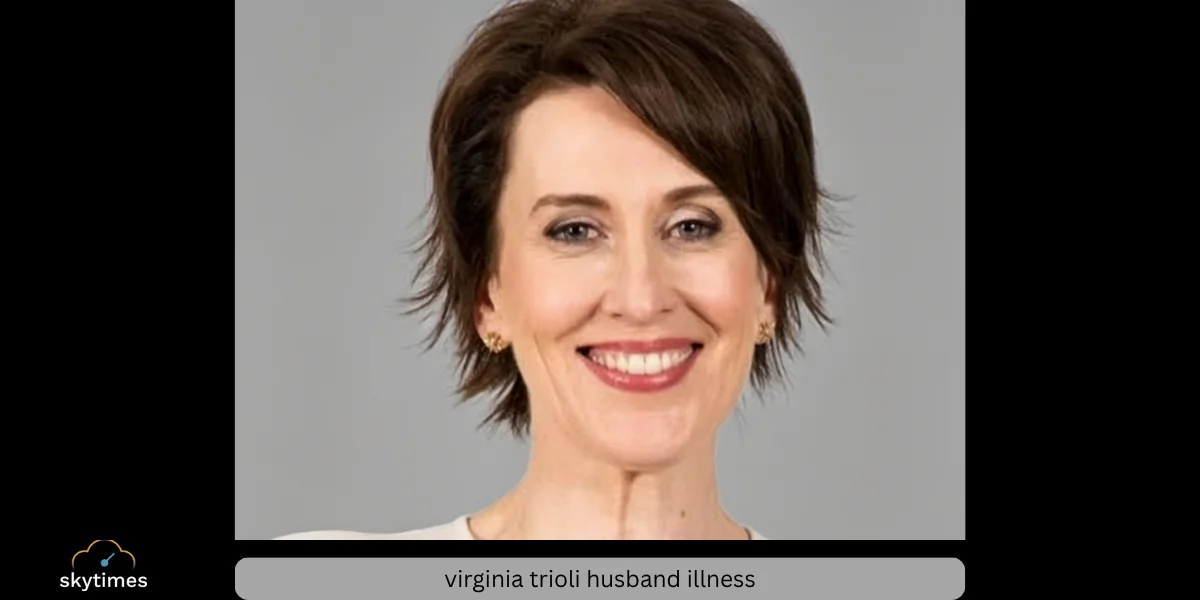
Virginia Trioli stands as one of Australia’s most accomplished, formidable, and respected journalists, broadcasters, and authors. With a career spanning well over three decades, she has cemented her place as a permanent pillar of the Australian media landscape, celebrated for her razor-sharp intellect, direct and uncompromising interviewing style, and unwavering commitment to public-interest broadcasting.
Virginia Trioli: Early Life, Heritage, and Academic Foundation
Born in 1965 in the regional Victorian city of Bendigo, Virginia Frances Trioli grew up in Melbourne as one of seven children in a bustling household. Her father was an Italian immigrant, and her mother was Australian, a cultural blend that often provided her with a rich appreciation for diverse perspectives.
Her intellectual curiosity drew her toward the humanities and the arts. She pursued her higher education at La Trobe University in Melbourne, where she immersed herself in fine arts and cultural studies, ultimately graduating with a Bachelor of Arts with honors in 1987. This deep foundation in fine arts would quietly shadow her entire journalistic career, bubbling to the surface whenever she engaged with cultural figures, artists, and creators.
Virginia Trioli: The Print Years and Early Accolades
Trioli’s professional entry into the media began in 1990 when she secured a highly competitive cadetship at The Age newspaper in Melbourne. In an era when print newsrooms were fast-paced, high-pressure environments dominated by competitive scoops, Trioli quickly established herself as a versatile and rigorous reporter, features writer, and opinion columnist.
She later expanded her print credentials by writing for publications like The Bulletin, tackling complex economic, social, and political subjects with equal ease. Her exceptional talent for investigative financial and business journalism culminated in a major career milestone when she won her first Walkley Award in 1995 for Best Business Report, putting the broader Australian media industry on notice that a formidable new voice had arrived.
Virginia Trioli: A Defining Career at the ABC
In 1999, Trioli made the pivotal transition to the Australian Broadcasting Corporation (ABC), beginning a nearly three-decade tenure that would define her as a household name across the nation. Over the next 27 years, she inhabited almost every major chair the public broadcaster had to offer, moving fluidly between hard-hitting political television and intimate radio current affairs.
- News Breakfast Anchor: As a founding co-host of ABC TV’s News Breakfast, Trioli helped shape morning viewing habits across the country. Her on-air chemistry and professional partnership with co-host Michael Rowland became legendary, guiding viewers through major national and international breaking events with a steady, reassuring hand.
- Current Affairs Heavyweight: Trioli didn’t just report the news; she interrogated it. Over the years, she sat in the presenter’s chair for some of the ABC’s most rigorous current affairs and debate programs, including Lateline, Q&A, and 7.30. Her interviewing style was defined by a refusal to let politicians dodge questions, earning her the deep respect of viewers and the wary caution of public figures.
- Radio Broadcast Powerhouse: Beyond television, Trioli commanded the airwaves on ABC Radio. She hosted prominent morning programs on both ABC Radio Sydney and ABC Radio Melbourne (succeeding broadcaster Jon Faine on Melbourne’s mornings show in late 2019). During times of immense social crisis—including Melbourne’s grueling COVID-19 lockdowns—her voice provided vital companionship, accountability, and community connection.
- The Arts and Creative Types: Returning full-circle to her early academic passions, Trioli later fronted the acclaimed television series Creative Types with Virginia Trioli, traveling across Australia to interview leading artists, musicians, actors, and writers about the inner mechanics of creativity.
In June 2026, Trioli made headlines across the Australian media sector by announcing her departure from the ABC after 27 years. Explaining her decision, she noted that her work on Creative Types had sparked a realization: after spending decades interviewing creative people, she was ready to fully deploy her own independent creative skills.
Virginia Trioli: Literary Contributions and Cultural Commentary
Trioli’s impact has extended well beyond daily journalism and broadcasting into long-form literature and cultural criticism.
In 1996, she published her first book, Generation F: Sex, Power and the Young Feminist. Released during a volatile period of cultural discourse, the book served as a fierce, articulate response to shifting generational definitions of feminism, power dynamics, and sexual assault in Australia, cementing her reputation as a sharp cultural commentator.
Decades later, she returned to book publishing with A Bit on the Side: Reflections on What Makes Life Delicious (2024). Drawing richly on her Italian heritage, family life, personal anecdotes, and decades behind the media scenes, the book explored the sensory and emotional joys of food, memory, and connection, showcasing a warmer, more intimate side of her public persona.
Virginia Trioli: Personal Life and Family
Despite living much of her life under the intense glare of the public spotlight, Virginia Trioli has maintained a grounded and stable personal life. She is married to fellow distinguished journalist Russell Skelton, a prominent media figure who has served as a contributing editor at The Age and formerly headed the ABC’s fact-checking unit. The couple married in 2003 and welcomed their son, Addison, in 2012.
Due to their long-term on-air partnership, viewers occasionally confused her professional relationship with former News Breakfast co-host Michael Rowland with a personal one; however, Rowland has been happily married to his wife, Nicky, since 2002, while Trioli and Skelton share a long-standing marriage anchored in mutual respect for each other’s journalistic backgrounds.
Conclusion
Virginia Trioli’s remarkable 27-year run at the national broadcaster and broader media footprint represent the gold standard of Australian public journalism. Whether she was holding powerful politicians to account on live television, comforting a locked-down city over morning radio, or dissecting the nuances of modern culture through her books, she remained steadfastly devoted to truth, clarity, and public accountability. As she steps away from the daily news cycle to focus on independent writing and television scripts, her legacy as a towering figure in Australian media remains permanently secure.